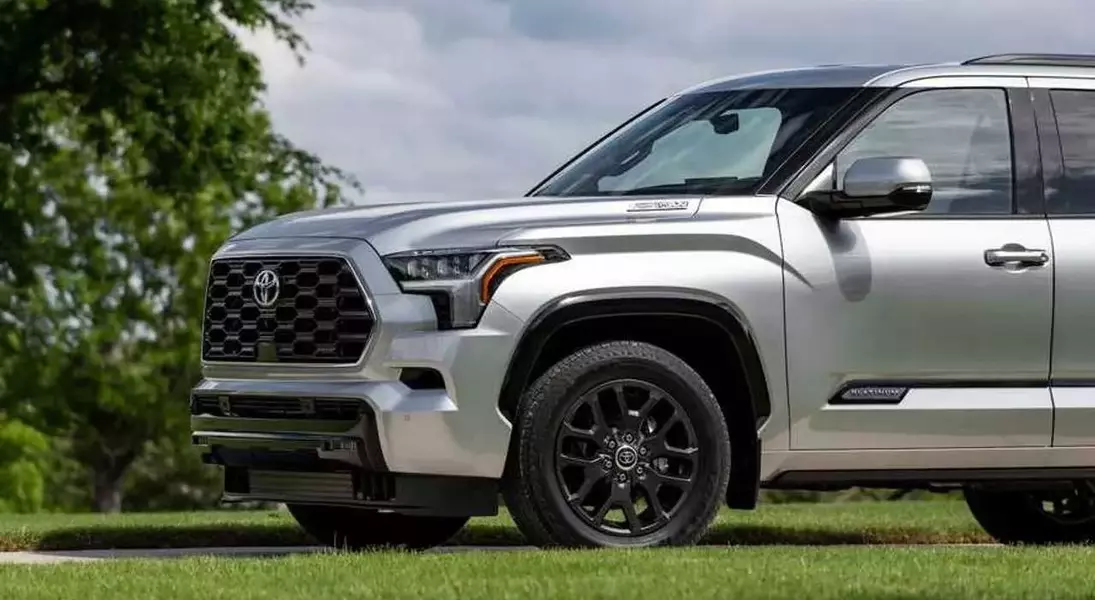

Recent market trends indicate a notable increase in fuel expenses, significantly impacting vehicle owners across various segments. A comprehensive analysis highlights that certain vehicle types, especially larger models and those driven for extensive distances, are experiencing the most substantial financial burden from these rising costs. This shift is prompting consumers to re-evaluate their automotive choices, with a growing emphasis on fuel-efficient alternatives like hybrid vehicles.
Amidst the escalating cost of gasoline, a recent investigation sheds light on how different vehicle segments are grappling with increased fuel expenditures. The study reveals that owners of large SUVs and trucks, such as the Toyota Sequoia and Chevrolet Suburban, are facing the most acute impact, with their annual fuel expenses dramatically outpacing the national average increase. For instance, Toyota Sequoia owners witnessed an annual fuel cost surge of $1,623, significantly higher than the average $706 increase. This trend is largely attributed to the lower fuel economy inherent in these larger models, making them particularly vulnerable to price fluctuations at the pump. The list of vehicles with the highest increases predominantly features sizable models like the Nissan Armada and Jeep Wagoneer, underscoring the correlation between vehicle size, fuel consumption, and financial strain. Owners of these vehicles are now confronted with annual fuel bills ranging from approximately $4,000 to over $5,000, presenting a considerable challenge to household budgets.
Interestingly, minivans, despite not being the largest vehicles, also feature prominently on the list of those hit hardest by rising fuel costs. This is primarily due to their higher average annual mileage; minivan owners typically drive close to 19,300 miles each year, nearly 5,000 miles more than truck owners. This extensive usage translates into higher overall fuel consumption and, consequently, elevated annual fuel costs, averaging around $3,610 for minivans compared to $3,146 for trucks. In contrast, passenger cars remain the most economical choice, experiencing a more modest increase of $606, bringing their annual fuel cost to about $1,922. The study also emphasizes the growing financial advantage of hybrid vehicles. Even with comparable or higher annual mileage than conventional internal combustion engine (ICE) vehicles, hybrid owners can expect to save approximately $700 per year on fuel. This significant saving highlights the increasing appeal of hybrid technology as a practical solution to mitigate the impact of volatile fuel prices, prompting a noticeable shift in consumer purchasing decisions towards more fuel-efficient options.
The Disproportionate Impact of Fuel Price Hikes on Large Vehicle Owners
The recent surge in fuel prices has created a stark contrast in economic impact across various vehicle owner groups. Owners of larger vehicles, particularly full-size SUVs and heavy-duty trucks, are bearing the brunt of these increases. The study identifies models like the Toyota Sequoia, Chevrolet Suburban, and Nissan Armada as leading the charge in heightened annual fuel costs. This phenomenon is largely due to the inherent fuel inefficiency of these vehicles, which consume more gasoline per mile traveled. As a result, when gas prices rise, the financial burden on these owners amplifies far beyond what typical car owners experience. The data reveals that the annual fuel expenditure for these larger vehicles can easily exceed $4,000, with some models approaching or surpassing the $5,000 mark. This substantial cost difference underscores the direct relationship between vehicle size and vulnerability to fluctuating fuel market conditions, compelling many to reconsider their vehicle choices.
Specifically, the iSeeCars study pinpoints the Toyota Sequoia as the vehicle category experiencing the most significant increase in annual fuel expenses, with owners facing an additional $1,623. This is more than double the average increase seen across all vehicle types, which stands at $706. Following closely are other large models such as the Chevrolet Suburban, Nissan Armada, GMC Yukon XL, and Jeep Wagoneer, all of which demand annual fuel costs well above $4,000. These figures demonstrate that the sheer volume of fuel required to operate these large vehicles, combined with their typical usage patterns, leads to a magnified financial impact when pump prices climb. The study serves as a critical indicator for potential buyers, highlighting that while larger vehicles offer space and utility, they also come with a higher operational cost, particularly in an environment of escalating fuel prices. This situation is compelling a shift in consumer behavior, driving increased interest in more fuel-efficient alternatives.
Minivans and Hybrids: A Tale of Usage and Efficiency in Fuel Economy
Beyond the realm of large SUVs, the study brings to light interesting dynamics concerning minivans and hybrid vehicles in the context of rising fuel costs. Minivan owners, despite driving vehicles that are not necessarily the largest, incur higher annual fuel expenses primarily because they tend to drive significantly more miles each year compared to other segments. This higher utilization offsets any relative fuel efficiency they might possess compared to full-size SUVs. Conversely, hybrid vehicles emerge as the clear winners in terms of fuel economy and cost savings. Their advanced powertrain technology allows them to achieve superior mileage, resulting in substantially lower annual fuel expenditures, even when driven extensively. This highlights a crucial distinction: while overall mileage dictates total fuel consumption, the underlying efficiency of the powertrain determines the cost per mile.
The data from the iSeeCars study illustrates that Chrysler Pacifica owners, representing the minivan segment, face an annual fuel cost of $3,918. This figure is notably high, not due to extreme inefficiency per se, but because minivan owners average 19,292 miles annually, nearly 5,000 miles more than truck owners. This extensive usage pattern significantly inflates their overall fuel expenditure. In stark contrast, conventional hybrid vehicle owners, despite often driving comparable or even greater distances than internal combustion engine vehicle owners, benefit from an average annual saving of $700 on fuel. This demonstrates the powerful impact of hybrid technology on reducing running costs, positioning them as an increasingly attractive option for consumers looking to mitigate the financial strain of high gas prices. The average annual fuel cost for all internal combustion vehicles is now $2,240, making the hybrid's savings even more compelling and reflecting a growing consumer preference for sustainable and economical transportation solutions.
