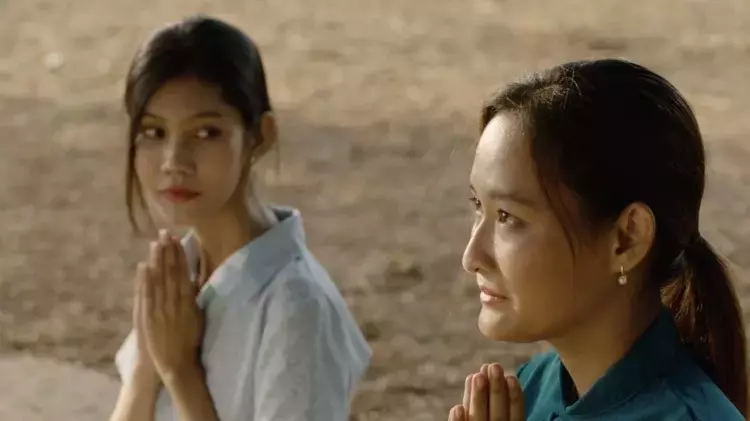
"Fruit Gathering," the critically acclaimed debut from writer-director Aung Phyoe, delves into the complex life of San Kyi, a young woman navigating the intricate landscape between her traditional rural upbringing and the bustling industrial environment of Yangon. The film masterfully explores themes of familial obligation, the bonds of friendship, and the stirrings of an unconventional desire, earning significant recognition at the Karlovy Vary film festival for its delicate portrayal of an intimate relationship in a restrictive society.
The Dualities of Urban Industry and Rural Heritage
The narrative introduces San Kyi, who, alongside her mother and grandmother, has relocated from the countryside to the industrial heart of Yangon. Despite her mother's hopes for a more upwardly mobile career path, San Kyi opts for a job in a garment factory, seeking simplicity in her work. This setting, though harsh and demanding, becomes the backdrop for her personal awakening. The film vividly contrasts the relentless rhythm of factory life, with its constant noise and strict oversight, against the serene imagery of her agricultural past, particularly her childhood spent amidst mango farms and spiritual ceremonies.
This juxtaposition highlights San Kyi's internal conflict as she struggles to reconcile her origins with her present circumstances. While the factory floor is a place of arduous labor and impersonal interactions, it is also where she encounters Theint Theint Oo, a vibrant colleague who will profoundly impact her life. The working conditions, though challenging, are presented with a nuanced realism, avoiding sensationalism but effectively conveying the pressures faced by laborers in Myanmar's textile industry. San Kyi's initial reluctance to engage in collective action for workers' rights underscores her cautious nature, a trait that evolves as her experiences shape her worldview.
A Budding Connection Amidst Societal Constraints
San Kyi's bond with Theint Theint Oo forms the emotional core of "Fruit Gathering." What begins as a workplace friendship gradually blossoms into a deeper, more intimate connection, challenging the unspoken norms of their conservative society. Theint Theint, with her captivating smile and streetwise demeanor, draws San Kyi into a world of shared moments and ambiguous flirtations, creating a palpable tension that suggests more than mere camaraderie. Their deepening relationship, marked by shared activities and intimate sleepovers, subtly points towards a romantic undercurrent, despite Theint Theint's casual mentions of a male partner.
This burgeoning affection unfolds against the backdrop of a deeply patriarchal Myanmar, where female relationships are traditionally narrowly defined. The film skillfully portrays the intensity of San Kyi's feelings and the societal limitations that prevent an open acknowledgment of their bond. The narrative takes an unexpected turn, shifting its focus from the explicit development of their relationship to San Kyi's individual growth and self-discovery. Through a series of personal challenges and revelations, she begins to perceive the world and her place within it differently. Director Aung Phyoe employs subtle visual metaphors, such as flooded apartments and other watery imagery, to symbolize the fluid and often uncontrollable nature of desire, infusing the storytelling with a poetic sensibility that is both delicate and profound.
