This report details a fascinating shift in the stance of former President Donald Trump regarding Nvidia, a leading artificial intelligence chip manufacturer. It highlights an initial intent to dismantle the company due to its overwhelming market share, followed by a remarkable change of opinion influenced directly by Nvidia's CEO, Jensen Huang. The narrative unfolds to explain how this change impacted both U.S. policy towards China regarding chip sales and Nvidia's global market position.
When Perception Meets Reality: The Nvidia Saga and Presidential Persuasion
The President's Initial Unfamiliarity and Intent to Dismantle
Not long ago, the former President admitted to having no knowledge of Nvidia, a company that has since ascended to become the world's most valuable technology enterprise. Upon learning of its extensive reach and market control, he reportedly expressed a desire to break it up, citing concerns about a lack of competition within the industry. This candid admission came during a significant address concerning his newly introduced Artificial Intelligence Action Plan.
A Moment of Revelation: Understanding Nvidia's Unrivaled Position
In a memorable recount, the former President described a conversation with an unnamed advisor who informed him of the daunting challenge of fragmenting Nvidia. When pressed for details on the company's market share, the advisor revealed a near-monopoly. This stunning revelation, coupled with the acknowledgment that it would take a decade for competitors to even approach Nvidia's technological prowess—even if the company operated with extreme inefficiency—prompted a reevaluation of his initial strategy. This insightful exchange led him to abandon the idea of regulatory intervention.
Jensen Huang's Strategic Influence and a Policy Shift
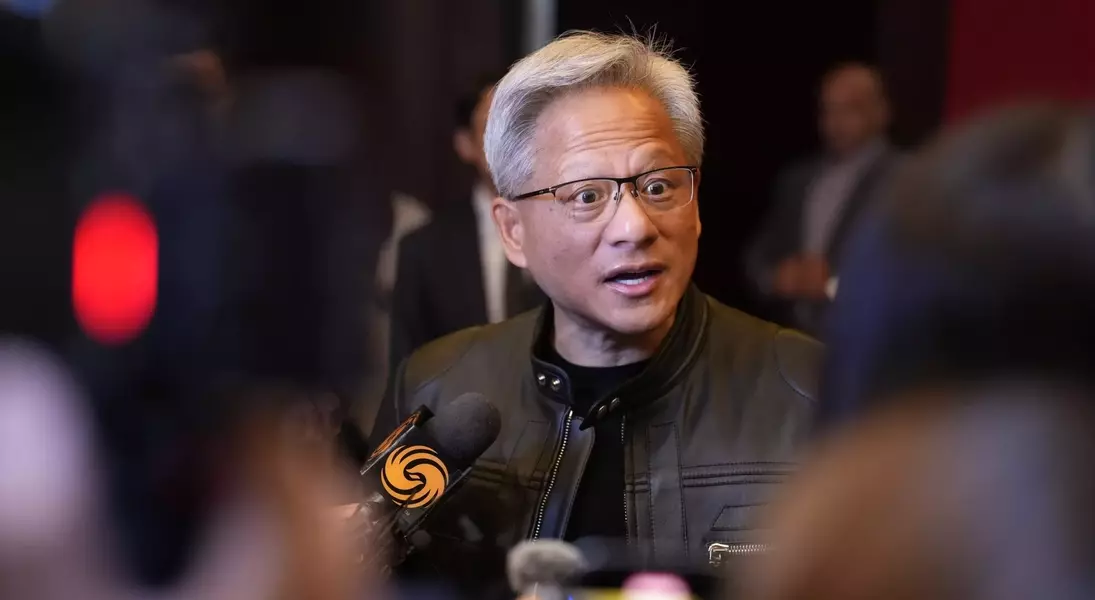
The turning point in this narrative was the successful engagement between Nvidia's CEO, Jensen Huang, and the former administration. Huang effectively persuaded the government to greenlight the sale of Nvidia's advanced H20 chips to China. This decision marked a crucial reversal of prior restrictions, which were in place due to fears that such technology could bolster a rival nation's AI capabilities. To mitigate these concerns, officials emphasized that the chips permitted for export were not Nvidia's most cutting-edge, a strategic move aimed at integrating Chinese developers into the American technological ecosystem.
Market Dynamics and Political Realities
The policy adjustment proved immensely beneficial for Nvidia, which had already achieved an unprecedented valuation, becoming the first publicly traded entity to reach a $4 trillion market capitalization. While the current administration had reportedly initiated antitrust inquiries into the company, the former President's revised perspective suggests that future legal challenges from that quarter are unlikely. This episode underscores the complex interplay between corporate power, technological innovation, and geopolitical strategy.
