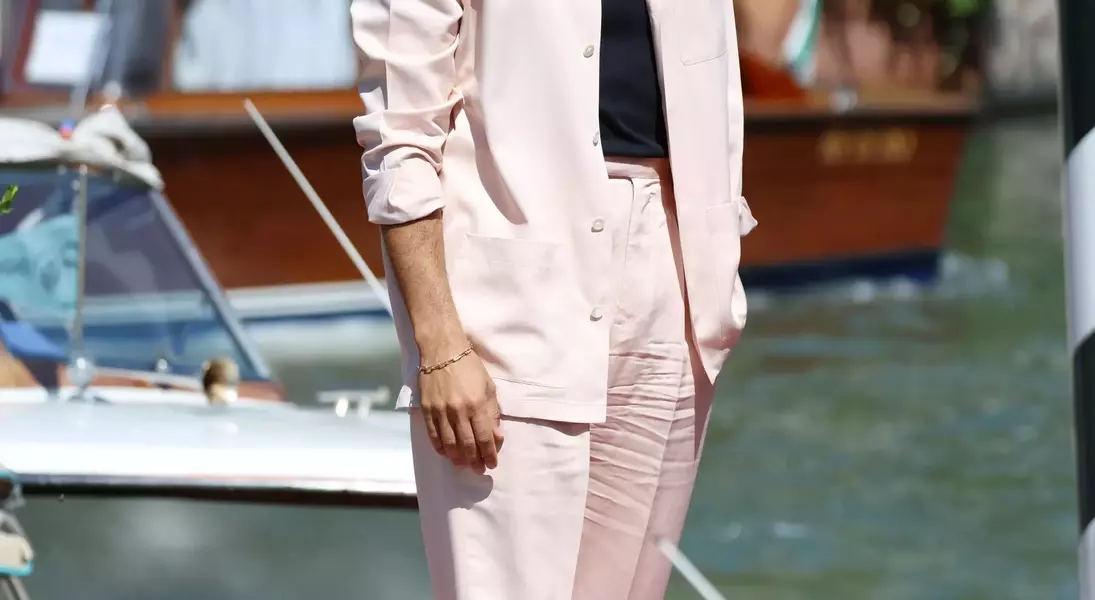
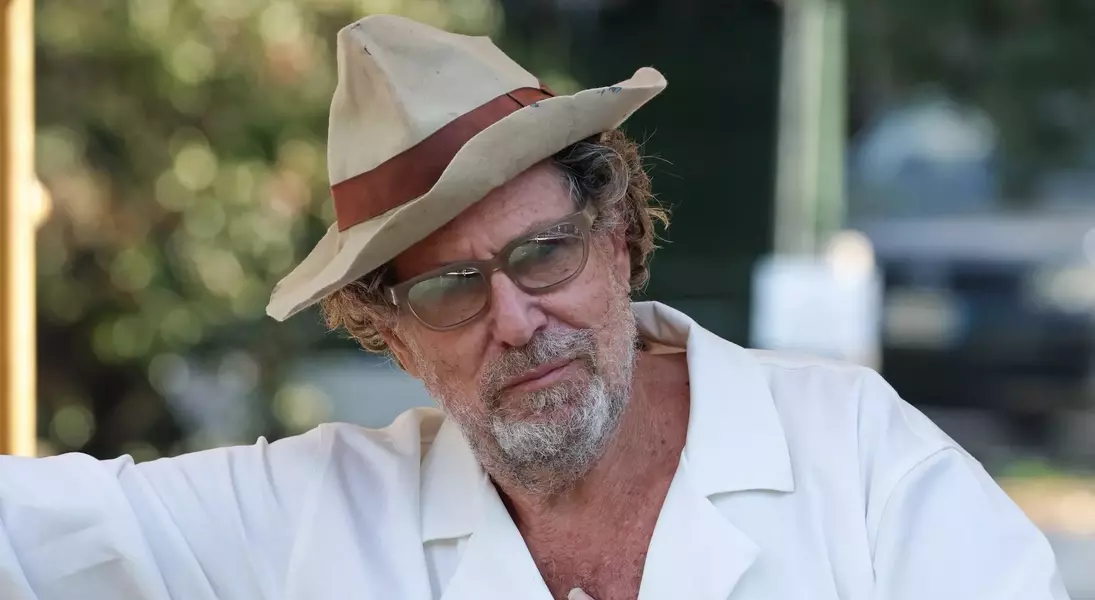
At the prestigious Venice Film Festival, acclaimed artist and director Julian Schnabel navigated delicate political waters while passionately advocating for the autonomy of artistic expression. His recent press conference became a platform for robust defense of his cinematic choices, asserting that performers should not face ostracism due to their backgrounds or associations, particularly in the contentious context of global conflicts. This declaration underscored a core belief in the separation of art from geopolitical disputes. Simultaneously, Schnabel offered insights into the genesis and production of his latest magnum opus, 'In the Hand of Dante,' revealing the intricate creative journey that brought this ambitious project to fruition with a constellation of renowned actors.
Filmmaker Julian Schnabel Champions Artistic Freedom Amidst Geopolitical Tensions at the Venice Film Festival
On a radiant autumn day, September 3, 2025, at the illustrious 82nd Venice Film Festival, director Julian Schnabel found himself at the heart of a significant press conference for his new cinematic venture, 'In the Hand of Dante.' Held at the grand Hotel Excelsior, a beacon of cinematic gatherings, the event took an unexpected turn as discussions veered towards the ongoing conflict in Gaza and its ripple effects within the entertainment industry. Schnabel, with unwavering resolve, firmly dismissed notions of boycotting artists based on their nationalities or past affiliations. He emphasized that his casting decisions for 'In the Hand of Dante' were solely based on the actors' formidable talents and their exceptional contributions to the film, unequivocally stating that 'there's no reason to boycott artists.' This bold stance came in the wake of specific demands from pro-Palestinian organizations to rescind invitations to certain Israeli and American actors from the festival roster, including the esteemed Gal Gadot and Gerard Butler, due to their perceived connections to the Israeli military or support for the Friends of the IDF. Schnabel subtly steered the conversation back to the cinematic artistry, urging a focus on the film's merits rather than external political issues.
His latest feature, 'In the Hand of Dante,' presented as an out-of-competition selection, boasts a truly stellar ensemble cast. Joining Gadot and Butler are luminaries such as Oscar Isaac, Al Pacino, John Malkovich, and Jason Momoa, alongside cinematic titan Martin Scorsese in a captivating cameo. The narrative weaves a compelling crime drama around a rare, handwritten manuscript of Dante Alighieri's 'Divine Comedy,' which mysteriously travels from the Vatican's hallowed archives to the gritty streets of New York, landing in the hands of a formidable mob boss. The plot then follows the protagonist's desperate quest to authenticate this invaluable literary artifact. Julian Schnabel, co-adapting the screenplay with Louise Kugelberg from Nick Tosches's original novel, entrusted the multifaceted Oscar Isaac with the challenging dual roles of Tosches and Dante himself. Schnabel recounted the project's long and winding path, tracing its origins back nearly fifteen years to a serendipitous conversation with his dear friend, Johnny Depp, who initially sparked the idea. Despite unforeseen detours and personal shifts over the years, the project eventually found its footing, culminating in Isaac's fervent commitment to embodying these complex characters. The film, a collaborative effort by DreamCrew Entertainment, MeMo Films, TWIN Productions, and Artofficial Productions, is poised for international distribution through WME Independent. This marks another significant collaboration for Schnabel and Isaac, following their acclaimed work on 2018's 'At Eternity’s Gate,' a film that garnered Willem Dafoe a Best Actor award at the very same festival. The Venice Film Festival, running from August 27 to September 6, 2025, also celebrated Schnabel's distinguished career with the prestigious Cartier Glory to the Filmmaker Award, a testament to his unique and profound contributions to contemporary cinema.
From a reflective standpoint, Julian Schnabel's assertive stance at the Venice Film Festival prompts a crucial dialogue about the role of artists and the integrity of art in an increasingly polarized world. His defense of his actors, particularly Gal Gadot, transcends mere professional loyalty; it underscores a fundamental principle that artistic contributions should be evaluated independently of personal political affiliations or national origins. In an era where cancel culture and ideological boycotts are prevalent, Schnabel's message serves as a powerful reminder of art's universal language and its capacity to transcend boundaries. It highlights the importance of maintaining creative spaces as sanctuaries for expression, free from the pressures of external political agendas. As an audience member, one might find inspiration in his dedication to the craft, observing how he transforms a fifteen-year dream into a tangible film, despite numerous challenges. This commitment reaffirms that true artistic vision, coupled with perseverance, can overcome significant obstacles and deliver profound narratives to the global stage.
