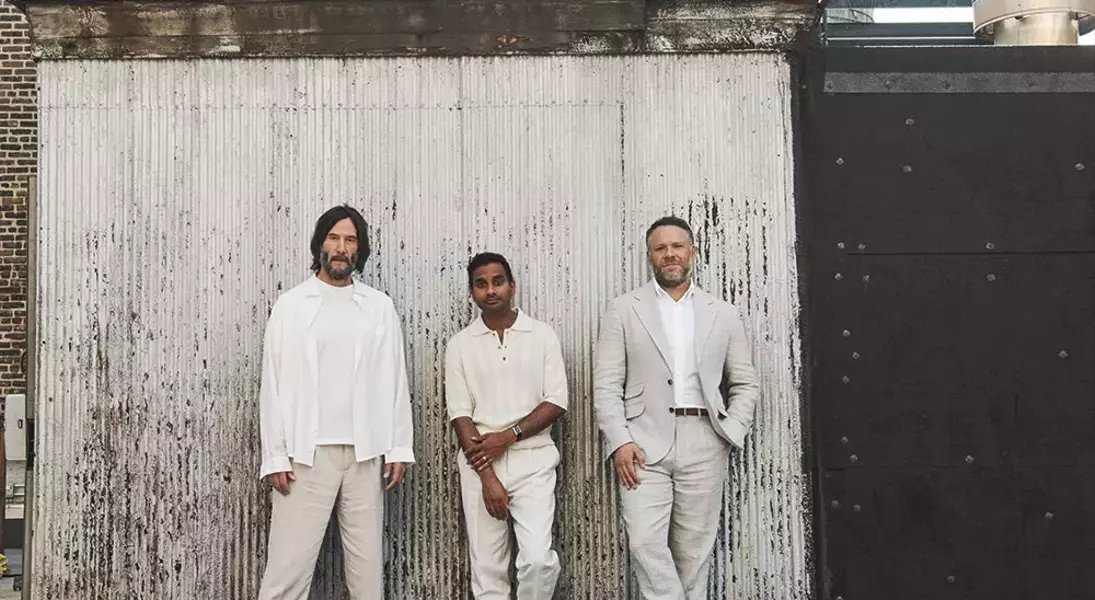
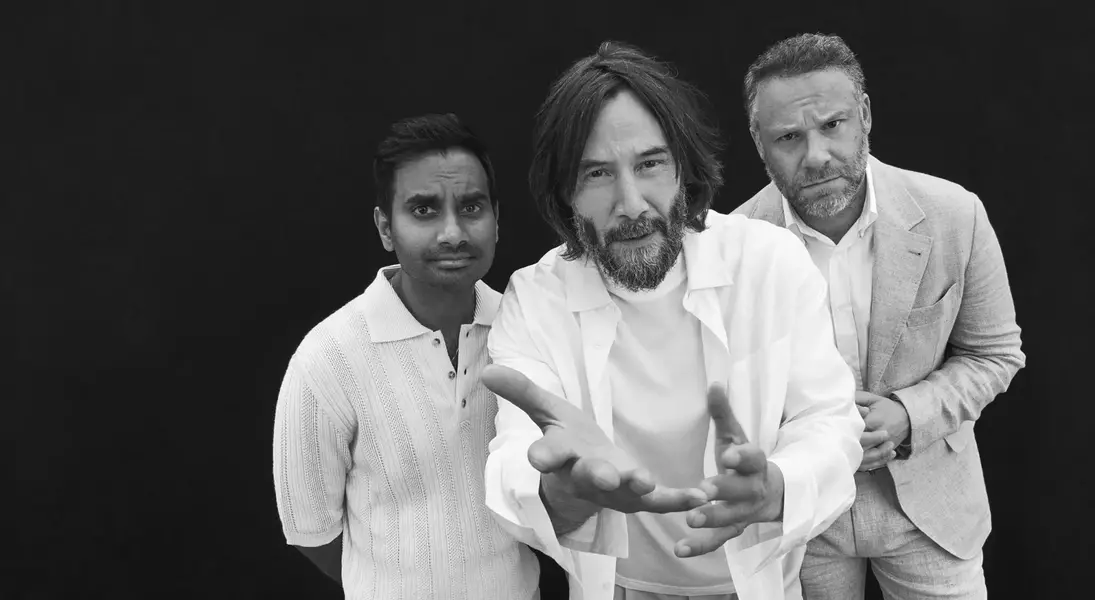
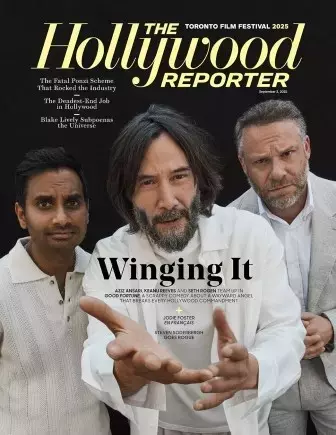
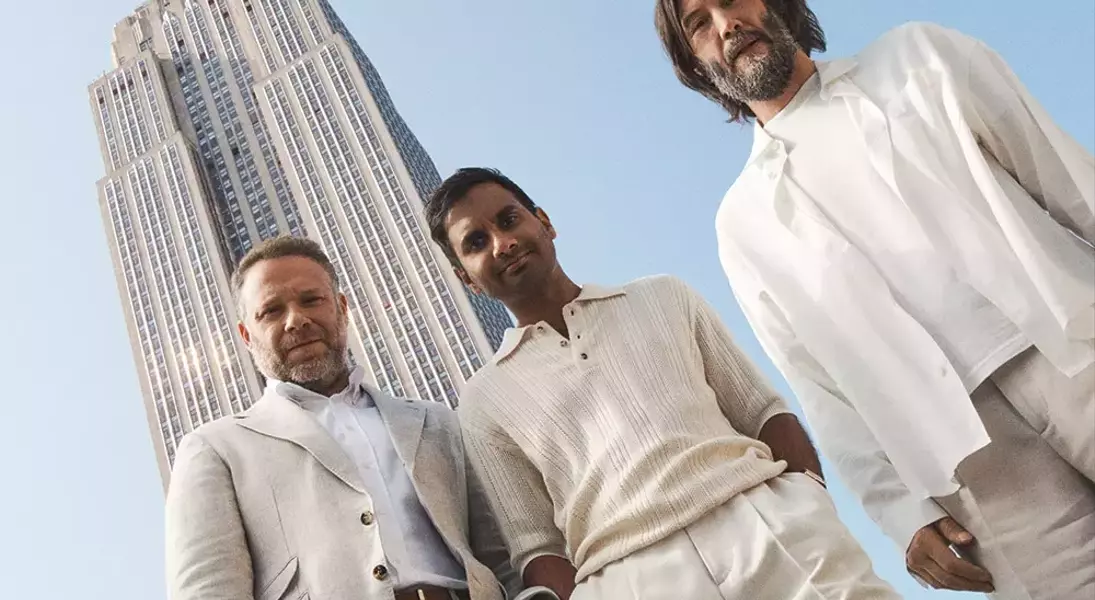
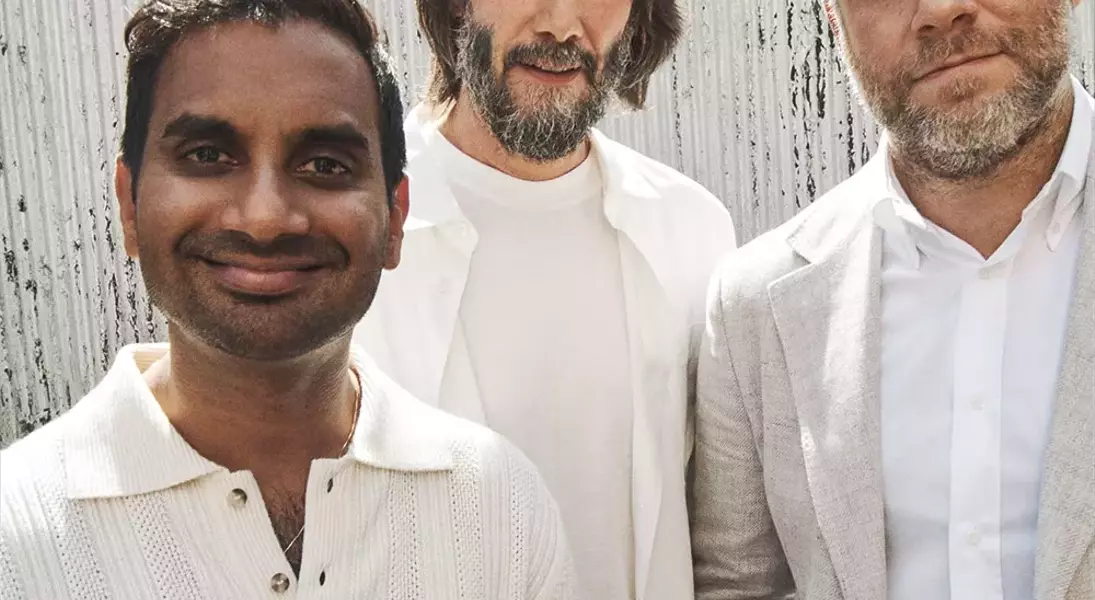
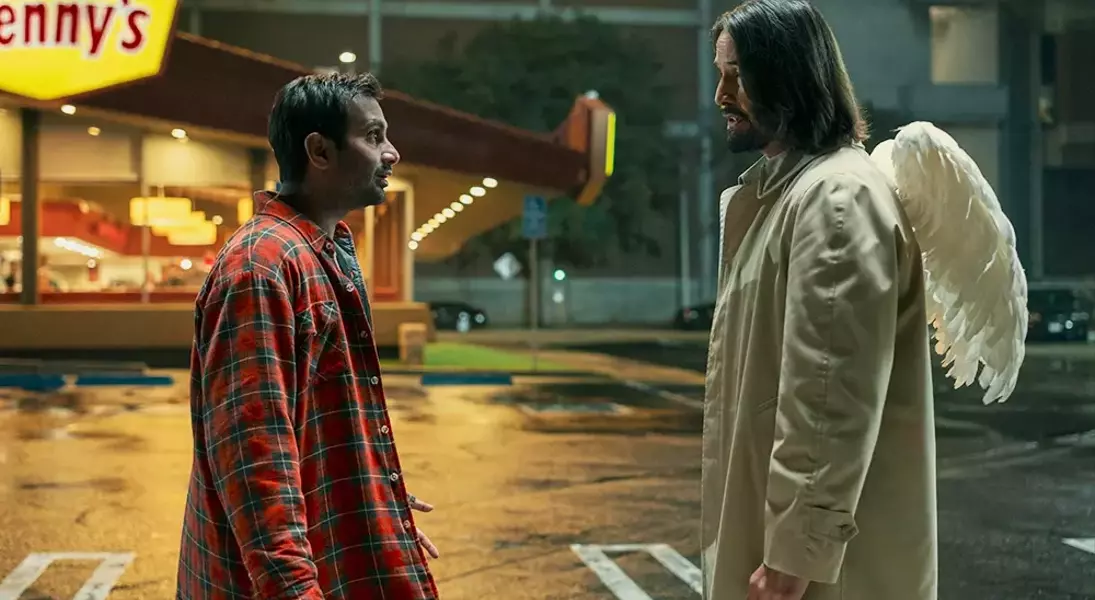
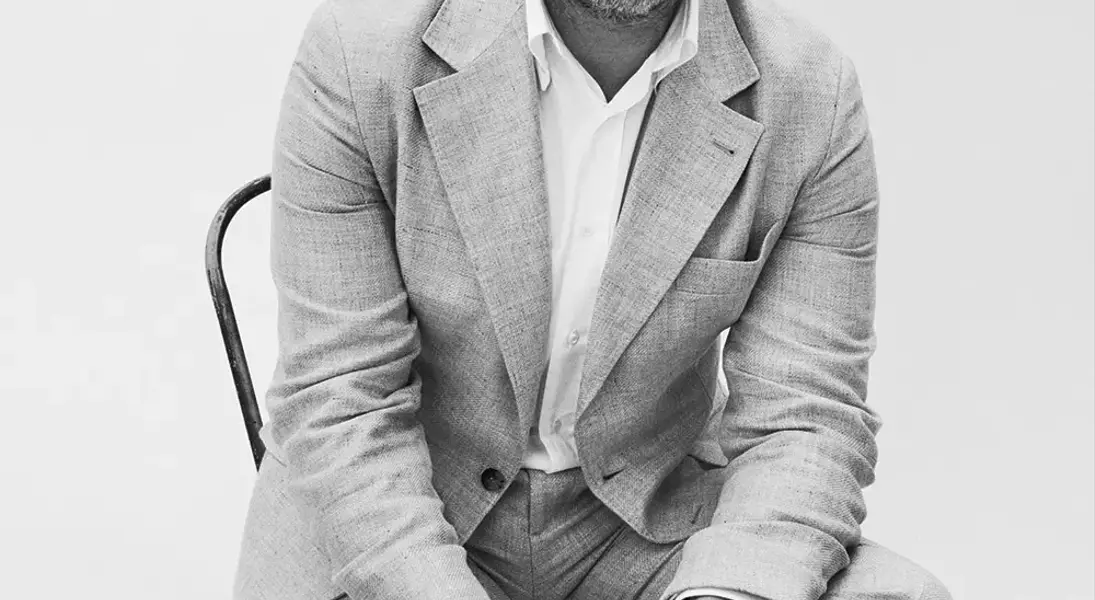
Aziz Ansari's latest cinematic endeavor, \"Good Fortune,\" arrives as a profound testament to artistic resilience, navigating a landscape fraught with personal and professional obstacles. This comedic exploration of societal inequality, featuring an ensemble cast including Keanu Reeves and Seth Rogen, emerges after a tumultuous period for Ansari, marked by the abrupt halt of a prior project and the enduring shadow of #MeToo accusations. The film's journey itself mirrors its central themes of struggle and perseverance, as evidenced by a significant on-set injury to one of its lead actors. Yet, through collective determination, the production forged ahead, culminating in a highly anticipated premiere at the Toronto International Film Festival and a subsequent nationwide release, symbolizing Ansari's earnest efforts to reassert his creative vision and address his past.
During the production of \"Good Fortune,\" a pivotal moment of unforeseen difficulty arose when action icon Keanu Reeves, portraying a celestial figure in the narrative, sustained a severe knee injury. This unexpected incident plunged the filming into immediate disarray, casting a pall over Ansari's directorial debut. For Ansari, this setback was particularly poignant, as \"Good Fortune\" represented a critical 'Plan B' following the premature termination of his more ambitious undertaking, \"Being Mortal.\" That prior film, a deep dive into mortality, was shelved due to allegations of inappropriate conduct against its star, Bill Murray. This unfortunate turn of events resonated deeply with Ansari, who had previously faced public scrutiny stemming from #MeToo allegations. With no alternative project readily available, the continuation of \"Good Fortune\" became paramount for his career trajectory.
Reflecting on the incident, Ansari recounted Reeves' injury with a mix of shock and humor during an interview at the Whitby Hotel in Manhattan. Reeves himself described the injury vividly, likening his vertically snapped kneecap to a potato chip, an injury that resulted in considerable pain and bleeding. Seth Rogen, ever the comedian, playfully channeled his character from \"The Studio,\" Matt Remick, musing about absurd solutions for Reeves' participation despite his inability to walk. Despite the severity of his injury, Reeves' unwavering dedication to the project shone through. He committed to filming what he could within the confines of his physical limitations and returned for reshoots once his knee had recovered. This commitment proved invaluable, preventing further disruption and keeping Ansari's cinematic aspirations on track. The film is now set to debut at the 2025 Toronto International Film Festival on September 6th, followed by a wide theatrical release in the U.S. on October 17th.
For Aziz Ansari, the stakes involved with \"Good Fortune\" are undeniably high, carrying immense personal and professional significance. It has been a decade since his groundbreaking Netflix series, \"Master of None,\" a show that pioneered diverse storytelling and paved the way for a new wave of acclaimed narratives. Almost eight years have passed since the controversial #MeToo allegations surfaced, an event that profoundly impacted his public image and sparked widespread debate regarding the movement's scope and journalistic ethics. Furthermore, it has been three years since the crushing disappointment of \"Being Mortal's\" cancellation, a project that was intended to launch his feature film directing career. Consequently, the reception of \"Good Fortune\" represents not merely a career milestone but a crucial chapter in Ansari's ongoing narrative of professional and personal redemption.
Ansari's journey into the entertainment world began in the vibrant underground comedy scene of early 2000s New York, following his move from South Carolina to attend NYU. His innate talent quickly distinguished him, leading to roles in sketch comedy shows like \"Human Giant\" and films such as Judd Apatow's \"Funny People.\" It was during these formative years that he forged a significant connection with Seth Rogen, a partnership that would prove instrumental in his later career. His breakout role as Tom Haverford in \"Parks and Recreation\" solidified his status as a comedic force, and his collaboration with writer Alan Yang eventually led to the creation of \"Master of None.\" This series, lauded for its innovative storytelling and diverse perspectives, tackled subjects ranging from modern dating to the immigrant experience, often drawing from Ansari's own family history.
The creative evolution of \"Master of None\" saw Ansari bravely steer its third season in an unexpected direction, focusing on the character of Lena Waithe rather than his own. This decision, a deliberate challenge to conventional narrative structures, aimed to explore new artistic territory, despite acknowledging that it might diverge from audience expectations. The period between seasons two and three also brought significant personal turmoil. The 2018 #MeToo accusations, detailed in an article on Babe.net, created a media firestorm, forcing Ansari to address the incident publicly and privately. He maintains that the encounter was consensual and expressed regret for the woman's discomfort, using his 2019 Netflix special, \"Right Now,\" to reflect on the experience and its broader implications for societal conversations around consent. He refutes the notion of a 'hiatus,' asserting that he continued to work and chose to address the issue on his own terms.
The genesis of \"Good Fortune\" was deeply rooted in Ansari's observations of economic disparity in Los Angeles. He envisioned a story contrasting the struggles of a debt-laden gig worker, Arj, with the privileged life of a wealthy tech executive, Jeff. This narrative concept, sparked by the prevalence of such contrasting realities in L.A., formed the core of the film. The character of Arj, who begins the film lamenting the death of the American dream, serves as a voice for many feeling the strain of economic hardship in 2025. In crafting the script, Ansari meticulously researched the complexities of economic struggle, consulting with sociologists and economists to ensure an accurate portrayal. The inclusion of a bumbling angel character, inspired by classic films like \"It's a Wonderful Life,\" provided the plot with its crucial fantastical element. While Rogen initially considered playing the angel, he gravitated toward the role of the affluent tech bro, Jeff, leaving the angelic part open for Keanu Reeves. Reeves, impressed by the script and Ansari's vision, embraced the comedic role, even enduring a physical injury during production. His portrayal of the demoted angel, who grapples with earthly vices, adds a unique depth to the film's blend of humor and social commentary.
Ultimately, \"Good Fortune\" transcends mere comedy, evolving into a poignant examination of social inequalities and the human condition. Reeves eloquently articulated the film's deeper purpose, highlighting its delicate yet firm exploration of sociological, cultural, wage disparity, and status questions. He believes the film has the power to foster understanding, compassion, and empathy, thus elevating it to a work of art. For Ansari, this film represents a significant step in rebuilding his career and artistic identity after a period of intense personal and professional challenges. It is a story born from his own journey, reflecting on past experiences and confronting societal issues with a unique blend of humor and heartfelt sincerity, marking a crucial moment in his continuing narrative as a filmmaker and comedian.
