
Figma, the innovative design software company, recently faced a substantial dip in its stock value after its inaugural quarterly earnings report as a public entity. This sharp decline, which saw shares plummet by approximately 20%, was primarily triggered by a forecast of decelerating growth rates in the coming quarters. Despite robust revenue and a healthy profit margin, the market's reaction underscores investor sensitivity to growth momentum, especially for newly public companies. The situation sheds light on the inherent risks and heightened scrutiny that often accompany initial public offerings, prompting a reevaluation of Figma's market position and future trajectory.
Figma's Market Performance: A Deep Dive into Recent Shifts
In the vibrant summer of 2025, specifically in late July, design software powerhouse Figma embarked on its journey as a publicly traded company, marking one of the most anticipated initial public offerings in recent memory. However, the initial market enthusiasm quickly waned. By September 4, following the release of its first quarterly financial results as a public entity, Figma's stock experienced a significant downturn, plummeting by approximately 20%. This sharp decline sent ripples through the investment community, prompting a critical reevaluation of the company's prospects.
The primary catalyst for this investor exodus was the pronounced deceleration in Figma's growth rate. While the company reported an impressive $250 million in revenue for the second quarter of 2025, representing a 41% year-over-year increase—a figure that stands commendably high among many publicly traded firms—and a healthy net income of $28 million, the forward-looking projections painted a less optimistic picture. Management's guidance indicated a further slowdown, with third-quarter revenue growth expected to drop to 33%, and a projected dip to merely 30% for the fourth quarter of 2025.
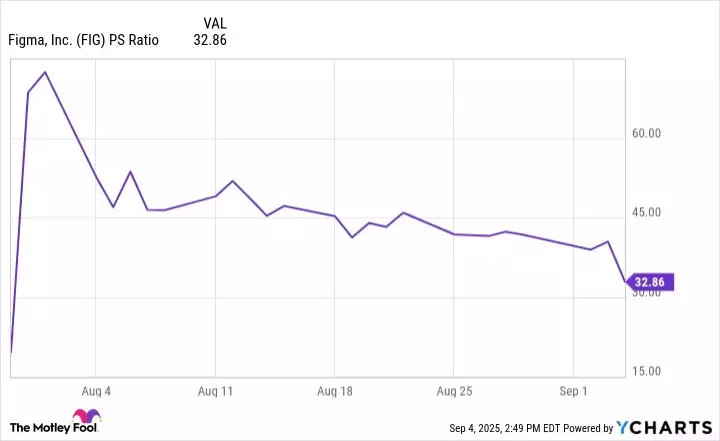
This rapid deceleration in growth, from a 46% rate in the first quarter of 2025, raised alarm bells. The market's apprehension intensified, with concerns surfacing regarding potential competitive pressures, particularly from advancements in generative artificial intelligence. While Figma's services are highly valued by major corporations like Netflix and Duolingo, the looming question of whether AI tools could offer more cost-effective alternatives weighs heavily on investor sentiment. This uncertainty, coupled with a valuation that still hovers around 27 to 30 times sales—a lofty figure even for rapidly expanding software companies—contributed to the dramatic sell-off. The fact that the stock had soared to such heights initially, partly due to a limited supply of shares post-IPO, further amplified the volatility when growth expectations shifted. Even after the significant pullback, shares remain substantially above their initial IPO price of $33, underscoring the initial investor hunger for the stock.
Reflections on Investment Dynamics and Future Outlook for Emerging Companies
The recent trajectory of Figma's stock offers a compelling lesson for both seasoned and nascent investors: the initial exuberance surrounding an IPO, while understandable, often masks underlying volatility. It highlights the critical importance of a robust, long-term investment thesis, one that extends beyond immediate growth figures and considers a company's ability to innovate and adapt through challenging periods. For companies like Figma, the true test of value will lie not just in maintaining growth, but in their capacity for "big swings"—strategic moves, be it through acquisitions, technological advancements, or new market entries, that can redefine their competitive landscape and create sustained shareholder value. This situation underscores that patience and a deep understanding of market cycles are paramount, as even the most promising ventures can experience significant fluctuations before realizing their full potential. It serves as a potent reminder that investing is a marathon, not a sprint, particularly in the fast-evolving tech sector.
