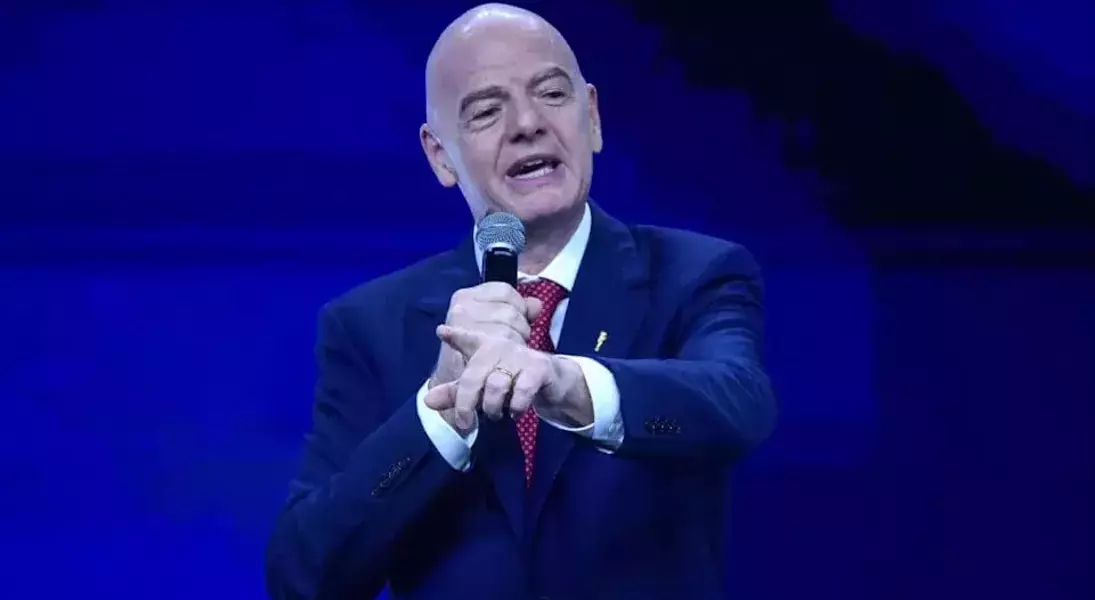
FIFA President Gianni Infantino's recent pronouncements regarding the necessity of greater female involvement in football have ignited a contentious discussion, highlighting the persistent disparities within the sport's power structures. His speech at UEFA's congress in Brussels, where he championed increased opportunities for women, has been met with both cautious optimism and pointed criticism. Observers note the paradox of a leader advocating for change within a system he has significantly influenced, questioning the sincerity and potential impact of his statements. This discourse underscores the ongoing struggle for equitable representation and challenges the sport's governing body to translate rhetoric into meaningful action.
Infantino's Call for Inclusion: A Scrutiny of FIFA's Gender Dynamics
In a significant address at UEFA's congress in Brussels on , FIFA President Gianni Infantino declared a pressing need for more women in prominent positions within the realm of football. This declaration followed an insightful conversation the preceding evening with Laura McAllister, Vice-President of UEFA's executive committee, who eloquently articulated the stark underrepresentation of women in leadership roles. Infantino echoed McAllister’s sentiments, emphasizing the importance of creating diverse job opportunities and providing robust support for women aspiring to influential football positions, including coaching roles within women’s teams.
However, the pronounced irony of Infantino’s statements has not gone unnoticed. As the head of FIFA, the global governing body of football, he possesses the authority to implement the very changes he advocates. Critics highlight that FIFA's existing framework includes a minimal quota of one woman per regional confederation. Furthermore, the institutional networks and voting blocs, predominantly male, alongside the potential pressures for women to conform to specific agendas to secure positions, continue to impede genuine progress. Despite the top-tier appointment of Jill Ellis as FIFA’s chief football officer in 2024, a notable stride, the broader landscape reveals a slow pace of change. Out of the 37 seats on FIFA's council, only eight are occupied by women, with six of these mandated by a statutory requirement enacted in February 2016 to increase female representation. This reform was part of Infantino’s inaugural pledge upon succeeding Sepp Blatter, aiming to revitalize FIFA's image. A decade later, the number of non-mandated women on the council has grown by a mere two. While 83 percent of football associations now feature at least one woman on their executive committee, only 10 of FIFA's 211 member associations are led by female presidents.
This ongoing disparity has been a concern previously voiced by influential figures such as Laura McAllister, U.S. women’s national team head coach Emma Hayes, Norwegian Football Federation president Lise Klaveness, and former England head coach Hope Powell. Infantino’s recent comments, while acknowledging this issue, are perceived by some as merely superficial, especially given his past rhetoric. Notably, his 2019 advice to "involve women in whatever you do, and you will be happy because everyone has a smile when a woman is in the room" and his infamous 2023 speech suggesting women could simply "open the doors" themselves, cast a shadow of skepticism over his current advocacy. The prudent qualification that there should be more women coaches specifically in women’s football further reinforces concerns that influential roles for women are ideally confined to their designated sphere, despite the proven capabilities of women like Sarah Booth and Sarai Bareman, who have been instrumental in the growth of women's football.
The discourse surrounding Gianni Infantino's comments on female representation within football reveals a critical juncture for the sport. While his public acknowledgment of the need for greater inclusion is a step, albeit a small one, it underscores the profound responsibility that leaders hold in driving systemic change. True progress demands more than rhetorical support; it necessitates concrete actions, policy reforms, and a genuine commitment to dismantle existing barriers. The ongoing challenge for FIFA and its affiliates is to move beyond performative advocacy towards creating truly equitable opportunities, ensuring that women are not only present but are genuinely empowered to lead and shape the future of global football. The journey toward gender parity in football leadership is far from over, and its success hinges on the willingness of those in power to critically examine their own roles and enact transformative change.
