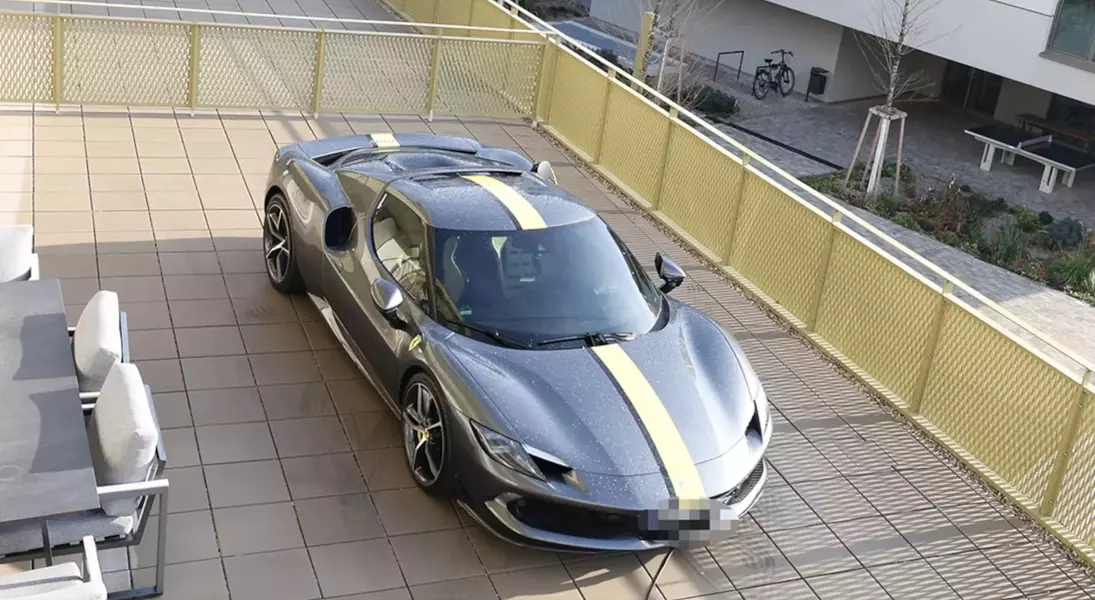
A recent event in Vienna brought to light the challenges faced by supercar owners who wish to integrate their prized possessions into their living spaces. An individual's audacious decision to hoist a Ferrari 296 GTB onto his apartment terrace, driven by a desire for a unique display and secure winter storage, was met with swift disapproval from local authorities. This incident underscores a broader discussion about the line between personal luxury and public safety, prompting a re-evaluation of such unconventional automotive placements.
This peculiar episode in Vienna serves as a cautionary tale for those who might consider similarly elaborate displays of their luxury vehicles. While the appeal of showcasing a high-performance automobile like the Ferrari 296 GTB in a prominent, unconventional setting is understandable, the reality of urban regulations and safety concerns often intervenes. The owner's short-lived triumph, costing a significant sum, highlights the potential financial and logistical pitfalls of such endeavors when they clash with municipal oversight.
The Viennese Ferrari Fiasco: A Bold Display Meets Regulatory Scrutiny
In a striking display of automotive passion and personal wealth, a Vienna-based car enthusiast undertook the audacious task of craning his Ferrari 296 GTB onto the terrace of his apartment. This extraordinary maneuver was reportedly motivated by a dual purpose: to create a distinctive, illuminated showcase for his high-performance vehicle and to secure a safe, indoor storage solution for the winter months, avoiding street parking. The spectacle, however, was short-lived, as local building inspectors swiftly intervened. Citing significant fire hazards and broader safety concerns associated with such an unconventional placement, authorities mandated the immediate removal of the supercar within a week, marking a swift end to the owner's ambitious display. This incident highlights the inherent conflict between individual desires for extravagant expression and the practical necessities of urban safety and regulatory compliance.
The owner, a 28-year-old entrepreneur in the auto parts industry, had encountered difficulties securing an additional garage space for his Ferrari 296 GTB within his apartment complex, despite owning several other luxury vehicles. Frustrated by this setback, he devised the elaborate plan to hoist the 819-horsepower hybrid supercar onto his terrace, envisioning it as a prominent work of art encased in glass. The cost of this intricate operation reportedly ran into the four-figure range. However, the unique 'parking' solution quickly drew the attention of local authorities. Concerns over fire risks, particularly given the car's fuel and battery components, alongside potential structural integrity issues of the balcony, led to the official order for its removal. This situation starkly contrasts with the more permissive environments found in some luxury developments, such as those in Dubai or certain high-end residential buildings, where integrated car display systems are designed and permitted. The incident underscores the varying interpretations and enforcement of building and safety codes across different locales, illustrating that what might be acceptable in one urban landscape is strictly prohibited in another.
Navigating Supercar Ownership: From Terrace to Warehouse
Following the regulatory intervention, the owner of the Ferrari 296 GTB was compelled to reverse his innovative, albeit unauthorized, parking solution. The supercar, originally intended for a lavish terrace display and secure winter storage, has now found a more conventional, albeit less glamorous, home in his company's warehouse. This outcome, while practical and compliant with safety regulations, has left the owner feeling a sense of frustration, noting the disparity between Vienna's strictures and the more flamboyant possibilities afforded to supercar enthusiasts in other global cities. The incident sparks a broader debate about the balance between personal luxury, the public's perception of such displays, and the essential role of authorities in upholding safety standards within residential areas. It prompts consideration of whether such bold statements of wealth, particularly when they involve potential risks, are genuinely harmless or if they represent an unnecessary challenge to established community norms and safety protocols.
The saga of the Ferrari on the terrace concluded with the 296 GTB being relocated to a company warehouse, a far cry from the owner's initial vision of an illuminated glass showcase. This forced removal, which likely incurred additional costs similar to its initial placement, reflects the immovable reality of local ordinances. The owner's remarks about the situation being unique to his location, contrasting it with the perceived freedom in places like Dubai where supercars are sometimes openly integrated into living spaces, highlight a cultural and regulatory divide. The episode has ignited discussions among the public and automotive enthusiasts alike. On one side, some view it as an overreaction from authorities, suggesting that the display was a harmless personal choice. On the other, the potential fire risks, especially given the Ferrari 296 GTB's history of recalls related to fire hazards, and the general safety implications of parking a heavy vehicle on a residential balcony, are seen as legitimate concerns that justify the authorities' intervention. This situation serves as a vivid example of how individual extravagance can collide with community safety standards and regulatory frameworks, forcing a re-evaluation of what constitutes acceptable displays of luxury within urban environments.
