
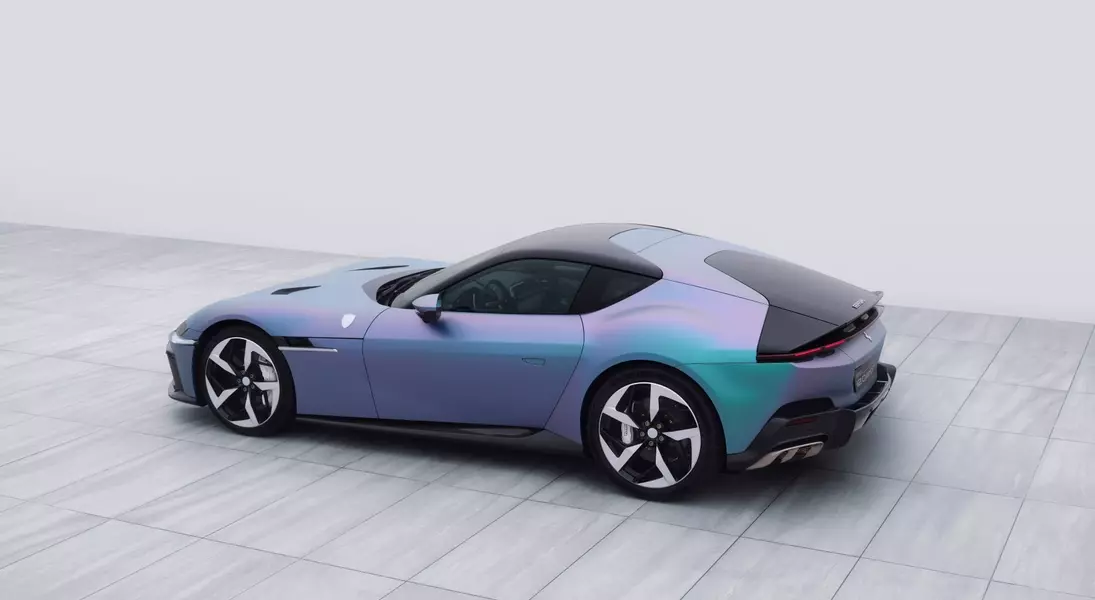
Ferrari has announced a recall affecting 80 units of its high-performance 12Cilindri model in the United States. The issue concerns the rear and side windows, which possess a tint that is excessively dark, failing to meet federal safety regulations. This non-compliance could compromise driver visibility, particularly in low-light conditions, thereby escalating the potential for accidents. The manufacturer plans to remedy this by installing new, compliant glass and will offer reimbursement to any owners who have independently addressed the problem before receiving official notification. This proactive measure aims to ensure both regulatory adherence and the safety of their clientele.
Ferrari's recall of 80 12Cilindri vehicles in the U.S. stems from a discovery during pre-delivery inspections: the rear and side window tint was found to be too dark, violating Federal Motor Vehicle Safety Standard No. 205. This standard mandates a minimum of 70 percent light transmittance for outward-facing glass to prevent impaired visibility and reduce crash risks. The company attributes this oversight to an internal error in specifying technical features for the U.S. market. Owners of affected vehicles will receive official notification by May 15, instructing them to arrange appointments at authorized Ferrari dealerships for the replacement of the non-compliant windows with glass that adheres to safety regulations. Furthermore, Ferrari will compensate owners who have already borne the cost of rectifying this issue, ensuring a comprehensive resolution.
Ferrari's Recall: Addressing Non-Compliant Window Tint
Ferrari is initiating a recall for 80 12Cilindri models in the United States. The recall addresses an issue where the rear and side windows are tinted too darkly, failing to meet federal safety regulations. This non-compliance, discovered during pre-delivery inspections, means the windows allow less than the required 70 percent of light to pass through. Such a condition could significantly impede driver visibility, particularly in challenging light conditions, and subsequently increase the risk of collisions. This recall underscores the importance of adhering to stringent safety standards even for luxury automotive manufacturers.
The root cause of the overly dark window tint on the Ferrari 12Cilindri models has been identified as an internal technical specification error for the U.S. market. Federal Motor Vehicle Safety Standard No. 205 explicitly requires that all outward-facing glass must permit at least 70 percent light transmittance. Windows that fail to meet this threshold are considered a safety hazard, as they can impair a driver's ability to see clearly, thus elevating the likelihood of an accident. To resolve this, Ferrari will replace the non-compliant windows with new, clearer glass that adheres to all FMVSS regulations. Additionally, Ferrari has committed to reimbursing any owners who, prior to the official recall notification, took it upon themselves to replace the tinted windows. Owners are expected to be notified by May 15 to schedule the necessary repairs at an authorized Ferrari dealership, ensuring that all affected vehicles are brought into compliance swiftly and efficiently.
Ensuring Driver Safety Through Regulatory Compliance
The recall of Ferrari's 12Cilindri models highlights the critical role of regulatory compliance in automotive safety. Even a seemingly minor detail like window tint can have substantial implications for driver visibility and, consequently, road safety. By proactively addressing this issue and replacing the non-compliant windows, Ferrari is demonstrating its commitment to ensuring that its vehicles not only offer exceptional performance but also meet the highest safety standards set by regulatory bodies like the National Highway Traffic Safety Administration (NHTSA). This action reinforces the principle that all components of a vehicle must contribute positively to a safe driving experience.
The National Highway Traffic Safety Administration (NHTSA) plays a crucial role in overseeing automotive safety standards, and its regulations, such as FMVSS No. 205, are designed to prevent potential hazards. In this specific case, the regulation ensures that vehicle glass allows sufficient light transmittance to maintain optimal driver visibility. Ferrari's swift response to rectify the dark window tint issue on its 12Cilindri models demonstrates adherence to these critical safety guidelines. The company's plan to replace the non-compliant glass with new, regulation-abiding windows, coupled with the commitment to reimburse owners who have already made the necessary repairs, illustrates a comprehensive approach to addressing the recall. This process not only resolves the immediate safety concern but also reinforces public trust in the manufacturer's dedication to passenger and road user safety, emphasizing that even the most luxurious vehicles must not compromise on fundamental safety requirements.
