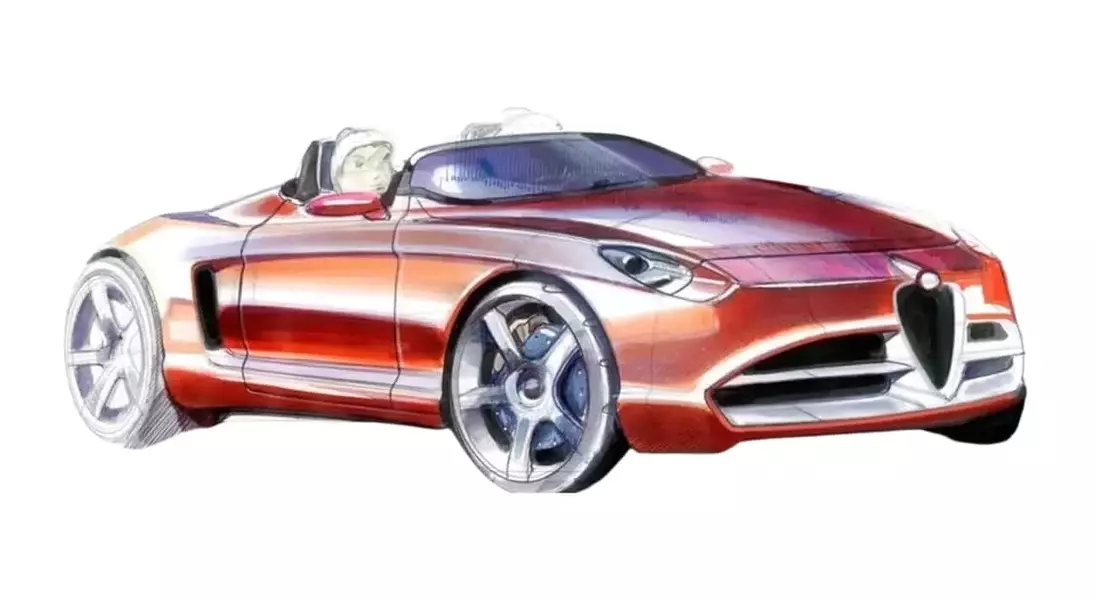
In 2008, Alfa Romeo considered developing a mid-engine sports car designed to compete directly with the Porsche Boxster, a revelation brought to light by former designer Juan Manuel Diaz. This ambitious project, though ultimately unrealized, aimed to significantly bolster Alfa Romeo's standing in the premium compact sports car segment. The proposed design integrated classic Alfa Romeo styling cues, such as the distinctive trilobe grille, with a sleek, sculpted form that exuded elegant sportiness. Had it come to fruition, this convertible would have offered a compelling alternative in a market dominated by established German rivals, redefining Alfa Romeo's product portfolio for the 2000s.
The concept underscored a strategic vision to position Alfa Romeo as a formidable contender against brands like Audi and Porsche, allowing Maserati to focus on its luxury vehicle offerings. The design sketches showcase a car that was not only visually striking but also promised an agile and engaging driving experience, characteristic of the brand's performance heritage. While details on its powertrain remained conceptual, speculation pointed to engines like the 1.75 TBi, later seen in the Alfa Romeo 4C, as a potential fit. This 'what if' scenario provides a fascinating glimpse into the automotive landscape that might have been, where Alfa Romeo could have offered a spirited, open-top sports car embodying both beauty and precision.
The Vision for a Porsche Boxster Competitor
Former Alfa Romeo designer Juan Manuel Diaz recently shared conceptual drawings from 2008 for a mid-engine sports car, revealing an ambitious but ultimately unfulfilled plan to create a direct competitor to the Porsche Boxster. The project sought to establish Alfa Romeo as a significant player in the premium compact sports car category, aiming for a vehicle that combined beauty, precision, and an engaging driving experience. This strategic move was intended to sharpen Alfa Romeo's competitive edge against top-tier German manufacturers, while simultaneously carving out a distinct market niche for the brand. The design emphasized aesthetic appeal and performance, embodying the essence of a true driver's car.
The brief for this project was explicit: to develop a compact sports car that could rival the Boxster's performance and design prowess. The sketches highlight a convertible body style with Alfa Romeo’s iconic trilobe grille and fluid, sculpted lines that transitioned seamlessly between soft curves and sharp edges. This design language aimed to convey both elegance and athleticism, aligning with the brand's heritage of producing visually stunning and high-performing vehicles. Although the project never moved past the conceptual stage, it illustrates a pivotal moment in Alfa Romeo's history where a bold step was contemplated to expand its market presence and solidify its reputation as a maker of desirable sports cars.
Design and Engineering Considerations
The proposed Alfa Romeo convertible showcased a striking design that married traditional brand elements with contemporary sports car aesthetics. Central to its visual identity was the classic trilobe grille, a signature feature seamlessly integrated into a sculpted front end. The bodywork featured a dynamic interplay of gentle curves and sharp contours, giving the car a sense of elegant motion and refined sportiness, echoing the sophisticated yet athletic appeal of rivals like the Porsche Boxster. This attention to detail in design was meant to project an image of a finely crafted, high-performance machine, capable of captivating enthusiasts with its visual presence alone.
While specific engine details for the concept car were not finalized, it was understood that a suitable powertrain would be crucial for its competitive positioning. Given the timeline, the 1.75 TBi engine, which debuted in 2009 and later powered the Alfa Romeo 4C, would have been a strong candidate due to its performance characteristics and compact nature. The discontinuation of the Busso V6 engine prior to the project meant a new-generation power unit was necessary. The mid-engine layout, chosen for optimal weight distribution and dynamic handling, would have further enhanced the car's agility and responsiveness, promising a driving experience that was both thrilling and precise, true to Alfa Romeo's performance DNA.
