A year has passed since New York’s Fashion Workers Act was signed into law, a pivotal moment for the modeling industry. This groundbreaking legislation was designed to enhance workplace safeguards for models and to impose stricter regulatory frameworks on the agencies that represent them. With the one-year grace period for mandatory registration now over, management companies are required to formally register with the New York Department of Labor (NYDL), a crucial step towards ensuring that models can confidently identify and engage with legitimate representation.
Since the Fashion Workers Act came into effect, 67 companies have successfully registered as model management entities, including prominent names like DNA Models and Elite Model Agency. Other major players, such as IMG Models and Wilhelmina, were actively in the process of completing their registrations as the deadline approached. Sara Ziff, the founder and executive director of the Model Alliance, a non-profit advocating for industry workers, emphasized the significance of this development. She highlighted that registration brings essential clarity to the authenticity of management companies, serving as a vital tool in combating a history of systemic abuses and instances of human trafficking within the industry, particularly affecting young women. Ziff remarked that while progress may be gradual, it is nonetheless a welcome and necessary change.
Beyond the registration requirement, the Fashion Workers Act mandates a suite of comprehensive protections for models. These include guarantees of financial transparency, the prior delivery of contracts for review, adherence to specific legal standards for assignments involving nudity or sexually explicit content, and a cap of 20% on commissions. Agencies must also provide detailed disclosures of expenses and deductions, with prior written approval. Contracts are now limited to a maximum term of three years, upfront fees are prohibited, and agreements must be renewed every two years, at least 90 days before expiration. Ziff underscores that this registry empowers models to differentiate between credible businesses and fraudulent operations. She cautions, however, that while registration is a positive indicator, it does not automatically guarantee full compliance with all aspects of the Act. Conversely, an unregistered company should raise significant red flags for any model seeking representation.
Agencies that fail to adhere to these regulations face substantial financial penalties, with initial violations incurring fines of up to $3,000, and subsequent infractions reaching up to $5,000. The Act also grants models the right to file complaints with the NYDL within six years of alleged misconduct and explicitly forbids any retaliatory actions. Jeffrey Weston, a partner at ArentFox Schiff, elaborated that if a model management company is found to have breached the Act, it will be held accountable for actual damages, reasonable attorneys’ fees, costs, and liquidated damages, unless the company can demonstrate a good-faith belief in its compliance. Furthermore, the Act extends certain responsibilities to clients who hire models. These duties encompass providing overtime pay, ensuring meal breaks, securing liability insurance, establishing written anti-harassment policies, and permitting models to bring a representative to sets. These provisions are explicitly designed to be obligations for brands.
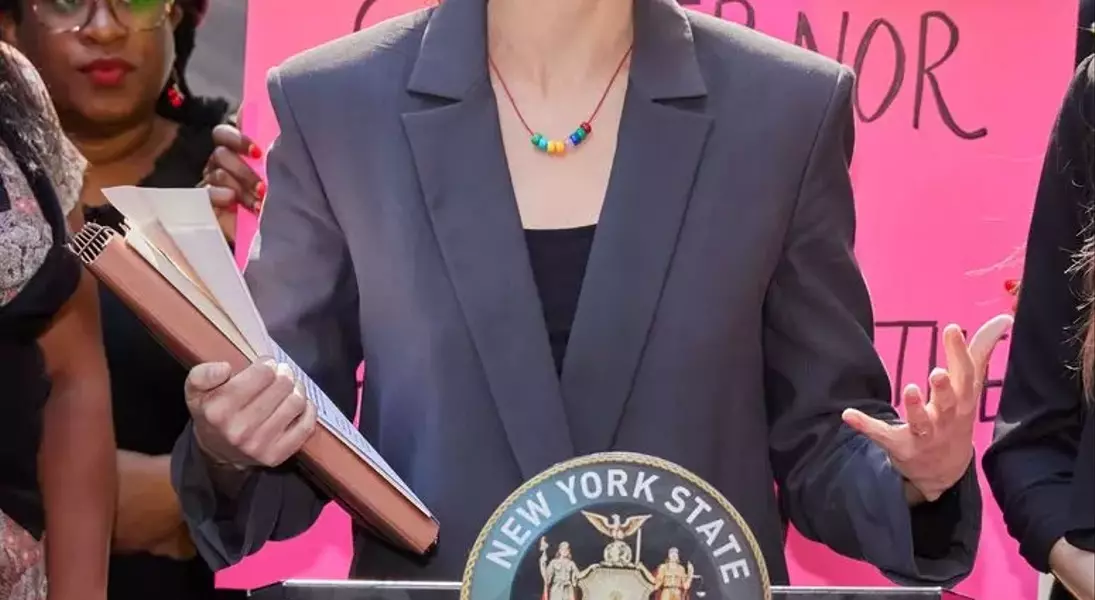
The Model Alliance is now concentrating its efforts on the effective implementation and enforcement of the Act, with robust government backing. Ziff highlighted a recent event celebrating the one-year anniversary of the Act’s passage, which was attended by the Commissioner of the New York City Department of Consumer and Worker Protection, underscoring the strong governmental support for these initiatives. Ziff acknowledged that while the law has set a new benchmark for worker protections in fashion, its passage is merely the initial phase. The subsequent crucial steps involve ensuring widespread awareness of workers' rights, clarifying companies' responsibilities, and, most importantly, addressing violations promptly and effectively as they arise.
For the Model Alliance, enforcement of the Fashion Workers Act operates on two key fronts. Firstly, the organization is dedicated to equipping models with the necessary resources to fully comprehend their rights. Secondly, it offers avenues for redress when these rights are infringed upon. Since the law's inception, approximately one-third of the hundreds of inquiries received by the Model Alliance have pertained to scams or potential trafficking schemes. With the Act now firmly in place, models possess a private right of action to pursue legal recourse against agencies that violate its provisions. While the Model Alliance cannot provide direct legal counsel, it plays a vital role in connecting models with appropriate legal professionals. Ziff emphasizes that the Fashion Workers Act establishes a foundational level of protection that the organization previously lacked, stating that they now possess robust enforcement mechanisms. This legislative change also necessitates a re-evaluation of operational practices by companies. Ziff points out that the industry has historically functioned with minimal safeguards for models, often requiring them to sign one-sided contracts and work without full knowledge of job terms, including payment. Agencies wielded immense power without a legal obligation to act in the models' best interests, a dynamic that the new law aims to rectify.
Today, the landscape has shifted. The law is designed to grant models transparency in contracts, shield them from unjustified fees and expenses, and guarantee fundamental health and safety standards. Ziff candidly expressed that while these protections seem basic, their formal enactment is a cause for celebration given the historical lack thereof. Moving forward, the Model Alliance is actively pursuing collaborations with various governmental bodies and industry stakeholders to ensure comprehensive awareness and engagement with these new regulations. Jeffrey Weston from ArentFox Schiff noted that his firm is advising clients to conduct direct meetings with teams involved in negotiating agreements or dealing with models and third parties. These sessions, often conducted in person, provide a platform for open discussion of real-world scenarios and strategies for achieving legal compliance. Weston highlights that these meetings are instrumental in helping clients grasp the new requirements and receive practical guidance on adherence.
A notable gray area within the Act, as identified by Weston, is the precise definition of 'client.' This term encompasses any entity receiving services from models, regardless of whether they are hired directly by a brand or through a staffing agency. If a brand directly engages a model, bypassing a model management company, the Act's stipulations regarding the brand's obligation to comply with model management company requirements remain ambiguous. Weston suggests that brands seeking to proactively mitigate risks should consider adhering to both client and, where applicable, model management company requirements. For brands, the most secure approach appears to be engaging models through established agencies, thereby ensuring that they are not held solely liable for responsibilities typically assigned to model management companies, in addition to their own client duties.
In the modeling sector, a primary concern surrounding artificial intelligence (AI) revolves around the unauthorized use of a model’s likeness. Over the four years since the Fashion Workers Act was first proposed in 2022, discussions regarding AI’s role and application within the industry have intensified. Weston noted a recent increase in lawsuits filed by models alleging inappropriate use of AI-generated images by companies, including alterations to original poses that sometimes rendered them more provocative. The Act specifically stipulates that if a model’s digital replica, meaning an AI-generated representation of their face or body, is created or utilized, explicit consent from the model is mandatory. Weston advises companies to proceed with caution in this evolving area. He recommends that companies audit existing contracts to integrate AI likeness rights as required by the Act, as broad boilerplate grants of likeness are often inadequate. Weston further encourages companies to clearly define key terms, such as 'stylistic alterations,' to eliminate ambiguity concerning what can be done with AI-generated images. Additionally, companies should explicitly outline the post-contract implications for any AI-generated or AI-altered depictions of models.
Sara Ziff underscored the pioneering nature of the Fashion Workers Act as one of the first pieces of legislation to address the integration of generative AI in the workplace. She emphasized that at a time when AI is rapidly transforming numerous industries, the Act champions a fundamental principle: workers deserve a voice in how these technologies are deployed. Ziff concluded that while this legislation is not a panacea, it is laying a crucial groundwork for labor rights in the digital age.
