
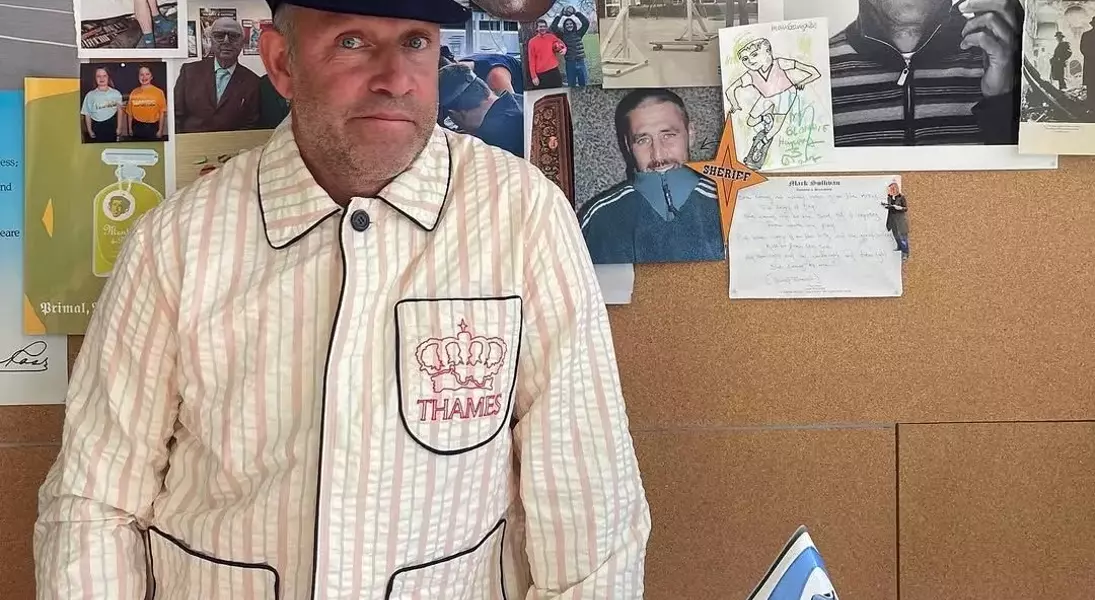
This report delves into the remarkable journey of Blondey McCoy, the visionary behind the Thames MMXX brand, as he inaugurates his first physical retail space. The narrative explores McCoy's evolution from a burgeoning skateboarding talent to a recognized figure in the fashion world, highlighting his brand's inception as a school art project and its growth into a prominent streetwear entity. The discussion also sheds light on his distinctive philosophy regarding collaborations, emphasizing genuine connections with individuals over corporate partnerships, and his belief in the inherent creativity within all facets of business. This piece aims to provide insight into McCoy's strategic choices, his understanding of brand longevity, and his dedication to fostering authentic engagement with his ever-expanding customer base.
Blondey McCoy's Journey: From Skateboard Deck to Fashion Empire in London
In a recent conversation, Blondey McCoy, the multifaceted individual renowned for his skate and fashion label, Thames MMXX, shared insights into the opening of his inaugural store on London's bustling Brewer Street, a mere three weeks prior. McCoy's career trajectory is anything but conventional. He embarked on his entrepreneurial path at an exceptionally young age, conceptualizing Thames MMXX as a GCSE art project, which officially launched in 2012. This coincided with his sponsorship by Palace Skateboards, marking the beginning of his dual identity within the skateboarding and fashion spheres.
By 2013, McCoy's influence began to ripple through the industry, culminating in a cover feature for i-D magazine. His ascent into the fashion consciousness was solidified by 2017, where he was recognized as a burgeoning artist, model, and entrepreneur. The recent opening of his London store signifies a significant milestone in his journey.
A key highlight of the discussion revolved around Thames MMXX's latest venture: a collaboration with legendary professional skateboarder, Mark Gonzales. This partnership resulted in two new skateboards, aptly named American Racer 1 and American Racer 2. McCoy detailed how Gonzales's original, hand-drawn sketches, complete with accompanying notes, were meticulously scanned at high resolution. These authentic designs were then translated into custom board shapes, produced by BBS Manufacturing in Tijuana, Mexico. The boards meticulously retain the rustic charm of the original drawings, showcasing the texture of pastels and the raised ink of black lines, a testament to the faithful reproduction of Gonzales's artistic vision.
McCoy also articulated his selective approach to collaborations, stating a preference for working with individuals rather than established brands. He believes that true collaborative efforts should yield results greater than the sum of their individual parts, creating something that neither party could achieve independently. He criticizes superficial brand collaborations that often culminate in little more than dual-logo merchandise. His focus remains on establishing Thames MMXX as an institution, known for its distinct identity and offerings.
Reflecting on the longevity of Thames MMXX, which he started as a teenager, McCoy attributes its sustained success to a combination of serendipity and a strong brand name. He also highlighted the unique bond he shares with his customer base, many of whom have grown up with the brand since its early days of selling T-shirts and hoodies. This personal connection has translated into customers, now adults, visiting the Brewer Street store to purchase their first suits or ties from a brand they've admired for years.
McCoy's perspective on his role within the brand is also noteworthy. While he appreciates design, he resists the sole title of 'designer.' Instead, he views himself as a communicator, utilizing clothing, skateboarding, video series, and newsletters as conduits for human interaction. He emphasizes that the desire to connect with people is the core motivation, while the specific medium is merely a mechanical means to an end. He also candidly acknowledged the business aspect of his artistic endeavors, stating that Thames MMXX, originating from his art project, is indeed his art. He describes it as a continuous growth process, driven by reaching new audiences rather than purely financial metrics. He views himself as an entity between a designer and a businessman, constantly striving for growth and innovation within the creative and commercial landscape.
Blondey McCoy's narrative is a compelling illustration of the evolving landscape where creative passion and astute business acumen converge. His journey from an aspiring skateboarder to a successful fashion entrepreneur offers valuable lessons on authenticity, strategic partnerships, and the power of cultivating a loyal community. His emphasis on personal connection, genuine collaboration, and the continuous pursuit of growth resonates deeply in a market often saturated with fleeting trends. McCoy's approach suggests that true longevity in the fashion industry, or any creative endeavor, is not just about producing aesthetically pleasing products, but about building meaningful relationships and a distinctive identity that stands the test of time.
