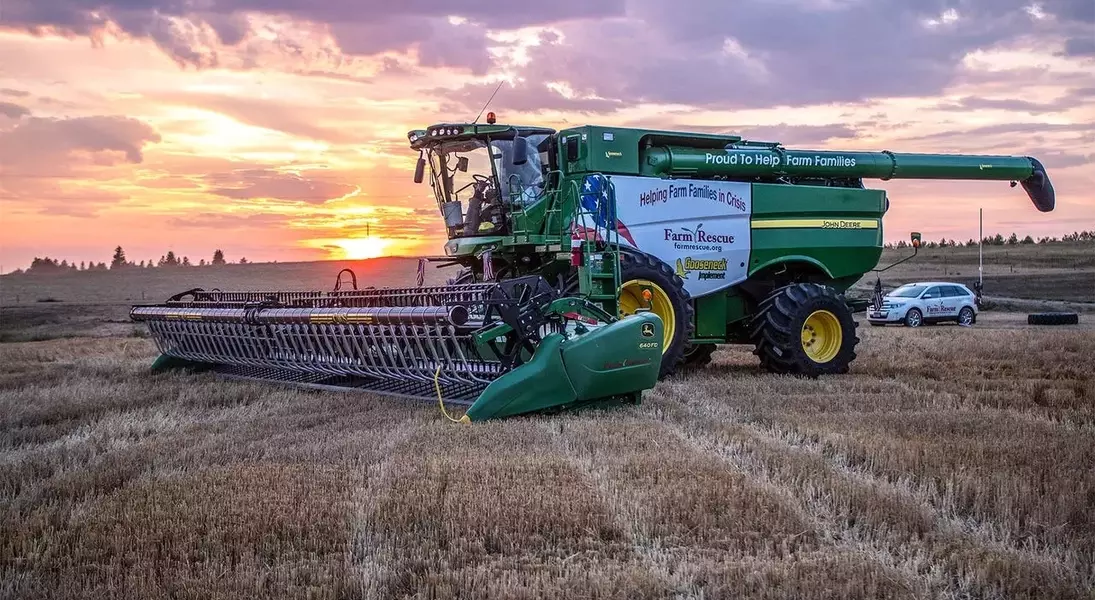
Farm Rescue, a prominent non-profit organization, is set to highlight its crucial humanitarian efforts at the annual Farm Progress Show. This initiative aims to shed light on their extensive work in assisting agricultural families facing adversity, ranging from personal injury and illness to natural calamities. The organization, which relies heavily on a network of dedicated volunteers and generous donors, will leverage the show as a vital platform to attract more individuals eager to contribute to their expanding operations. This participation underscores the increasing recognition of the challenges confronting farming communities and the collective responsibility to support them.
Established in 2005 by Bill Gross, a former North Dakota farm resident who later became an airline pilot, Farm Rescue has been instrumental in providing critical support to farmers and ranchers. Their services encompass a wide array of essential farm activities, including planting, harvesting, haying, and livestock care. What began as an localized effort in North Dakota has blossomed into a multi-state operation, now serving 10 states: North Dakota, South Dakota, Montana, Minnesota, Iowa, Nebraska, Wisconsin, Illinois, Kansas, and Kentucky. Over the past two decades, Farm Rescue has provided a lifeline to more than 1,200 families, demonstrating a consistent commitment to its mission. Tim Sullivan, the executive director of donor experiences for Farm Rescue, emphasizes that the organization's growth reflects the enduring importance of its work within the agricultural sector.
Farm Rescue operates on a model of providing services at no cost or a minimal fee, sustained by a combination of individual donations, matching funds, and corporate sponsorships. Their extensive network of volunteers utilizes the organization's equipment to carry out farm work, offering not only practical aid but also crucial emotional support to families navigating difficult times. Sullivan highlights the profound impact of their interventions, stating that the inability to plant, harvest, or care for livestock can be devastating for a farmer's livelihood, underscoring the organization's dedication to safeguarding these critical operations. With an annual budget of $4 million, the organization acquires, leases, and maintains a substantial fleet of modern agricultural machinery, including combines, planters, tractors, semis, and pickups. The significant investment in equipment, fuel, and volunteer support reflects the comprehensive nature of their aid, ensuring that tasks are completed efficiently and effectively.
Looking ahead, Farm Progress is slated to become the official media partner for Farm Rescue, further amplifying the non-profit's outreach. Beyond the Farm Progress Show in Illinois, Farm Rescue will also participate in Husker Harvest Days in Nebraska later this September. These events serve as key opportunities for the organization to connect with the public and prospective volunteers. Sullivan states that their presence at these shows is geared towards fostering community support during challenging agricultural periods. Their exhibit will feature a central tent where staff and volunteers will engage with visitors, sharing stories of their impact and outlining opportunities for community involvement. Attendees will also have the chance to see John Deere equipment used by Farm Rescue and witness demonstrations from LifeLyfts, showcasing accessibility solutions for farmers with disabilities, such as adapting equipment with hand controls for paralyzed individuals.
The volunteers, affectionately known as 'Angels in Blue'—a nod to their dark-blue t-shirts bearing the organization's logo—are the backbone of Farm Rescue. Comprising over 700 individuals, many of whom utilize their vacation time, participate in corporate volunteer programs, or are retirees, these selfless individuals travel from across the country at their own expense to assist families in need. Ben Smith, the field operations manager for several states, plays a pivotal role in connecting with crisis-stricken families and coordinating the logistical support and volunteer efforts. Terry Johnston, manager of industry engagement, who grew up on a family farm, joined Farm Rescue to contribute to the industry that shaped him, providing vital assistance to ensure struggling farm families have the chance to recover and continue their essential work.
