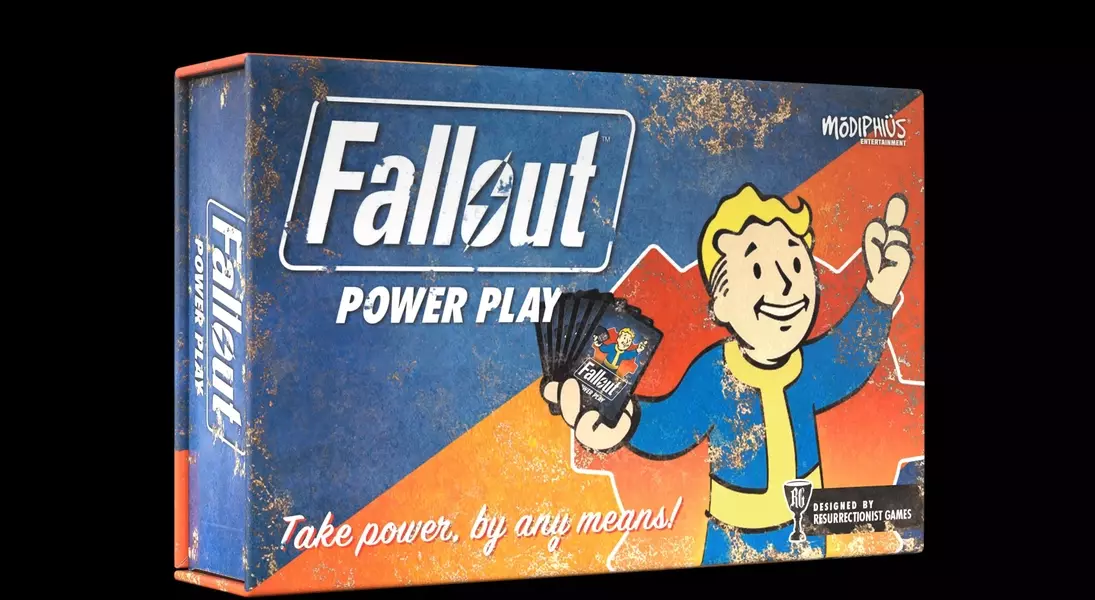
The Fallout universe has seen a recent explosion of content, exciting long-time enthusiasts with new series episodes, game enhancements, and even a fresh card game. However, not all additions have met the high expectations set by the franchise. Among these, the new card game, Fallout: Power Play, designed to immerse players in the post-apocalyptic struggle for dominance, struggles to deliver a compelling experience. While its visual presentation is commendable, the game's fundamental design issues, including imbalanced mechanics and a sluggish pace, hinder its potential to truly engage players in the chaotic world of the Wasteland.
Despite the recent influx of exciting Fallout content, the card game 'Fallout: Power Play' emerges as a notable disappointment. While visually appealing and compact, its gameplay is marred by poor balance, slow progression, and ambiguous rules. Players assume control of different factions, each with unique abilities, but the reactive nature of play and the difficulty in formulating strategies lead to frustration. The game's quests, intended to mirror the video game experience, often prove unfeasible due to a lack of necessary components or unclear objectives, further detracting from the overall enjoyment. Ultimately, 'Power Play' fails to capture the immersive and brutal essence of the Wasteland, offering a less-than-satisfying experience for both newcomers and dedicated fans of the Fallout series.
Dissecting the Flaws of Fallout: Power Play's Gameplay
Fallout: Power Play, while boasting an attractive presentation, unfortunately, fails to deliver a satisfying gameplay experience. The core mechanics, which involve players taking turns to play cards representing agents and quests across various battlefronts in the Wasteland, are designed to be highly reactive. However, this reactivity often leads to a lack of strategic depth, making it difficult for players to plan meaningful moves. The game's pace is surprisingly slow, a direct consequence of its emphasis on disrupting opponents and the limited points earned each round. Furthermore, inconsistencies in card definitions and rule interpretations, such as the ambiguous targeting of effects and the distinction between 'Enclave Trooper' and 'Hellfire Trooper', create unnecessary confusion and disputes among players. These fundamental design shortcomings collectively contribute to a frustrating and unengaging experience, preventing the game from truly capturing the dynamic and dangerous nature of the Fallout universe.
The gameplay of Fallout: Power Play is characterized by a series of mechanical and design deficiencies that undermine its potential. Players begin each round by drawing four cards, which they then deploy to various locations in the Wasteland with the aim of accumulating influence. Agents possess a power rating used for attacking or asserting dominance, while quests offer specific effects and objectives. However, the game's reactive nature, where placing a low-power agent often invites immediate disruption, discourages proactive strategy. The advantage of playing first, intended as a catch-up mechanism, paradoxically highlights the game's structural flaws, as it can leave players with hands unsuited for the existing board state. Passing a turn, a seemingly tactical option, offers no significant advantage for subsequent rounds, and the small deck sizes, while seemingly balanced, are mitigated by 'scavenging' mechanics that prevent card depletion from being a significant concern. The inclusion of neutral threats like Deathclaws and automated turrets adds little to the strategic depth, often failing to alter the power balance meaningfully. This combination of slow progression, focus on player interference, and poorly conceived quest mechanics ultimately results in a tedious and unfulfilling gameplay loop that struggles to emulate the excitement of its video game counterpart.
The Critical Reception and Missed Potential of the Wasteland Card Game
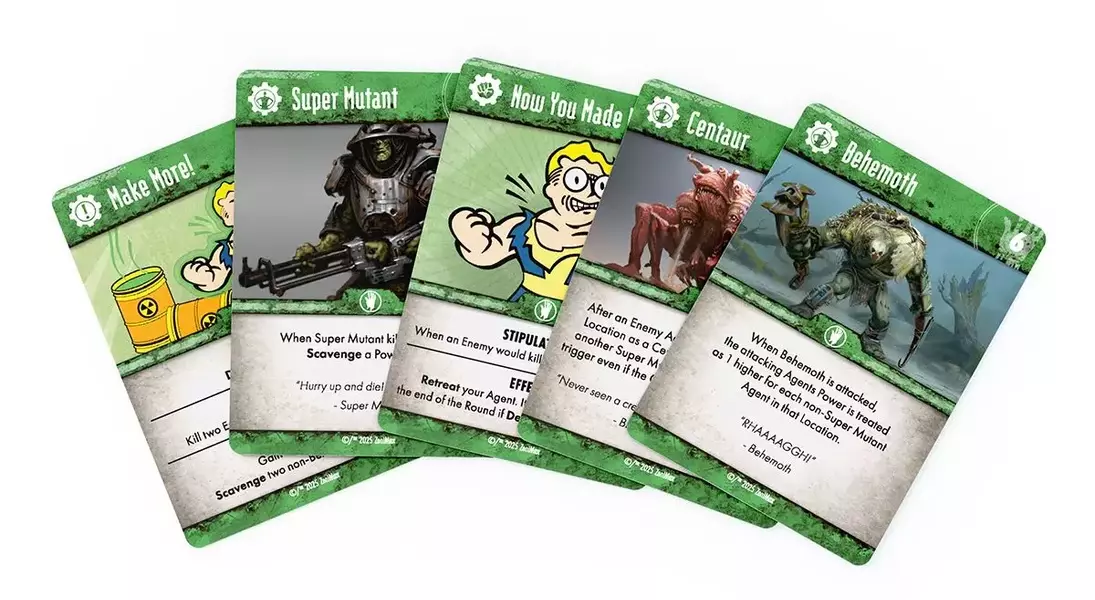
The reception for Fallout: Power Play highlights its significant missed potential within the beloved Fallout franchise. Despite the game's appealing art style, featuring the iconic Vault Boy and more realistic, albeit sometimes blurry, illustrations, the overall experience is marred by a lack of clarity and engaging design. The quests, intended to immerse players in the narrative of the Wasteland, often prove impractical due to insufficient tokens for tracking progress or ambiguous rules regarding their completion. This vagueness extends to card text, where terms like 'Enclave Trooper' lack clear definitions, leading to player arguments and a fragmented understanding of the game's mechanics. Ultimately, Fallout: Power Play fails to deliver a fun or cohesive experience, even for dedicated fans. Its numerous flaws make it an unlikely gateway for new players to the franchise and suggest that existing enthusiasts would be better served exploring other avenues to engage with the rich, post-apocalyptic world of Fallout.
Fallout: Power Play, despite its promising premise as a card game set in the iconic Wasteland, has largely fallen short of expectations, garnering critical feedback that points to several key areas of concern. The game's visual design, while generally praised for its charming Vault Boy artwork, is let down by inconsistencies in its more realistic illustrations, which occasionally appear blurry. More fundamentally, the game's rules and quest design present significant hurdles to player enjoyment. Quests, which are meant to evoke the narrative depth of the video games, frequently suffer from a scarcity of tracking tokens and an absence of clear guidelines for scenarios where objectives might become unattainable, such as when a target quest is removed from play. Furthermore, the imprecise language used on certain cards, like the interchangeable use of 'Enclave Trooper' and 'Hellfire Trooper,' creates unnecessary confusion and detracts from strategic clarity. These issues collectively prevent Fallout: Power Play from offering a fluid, engaging, or strategically satisfying experience, leaving both casual players and devoted franchise followers feeling underwhelmed and prompting a search for alternative ways to explore the captivating world of Fallout.
