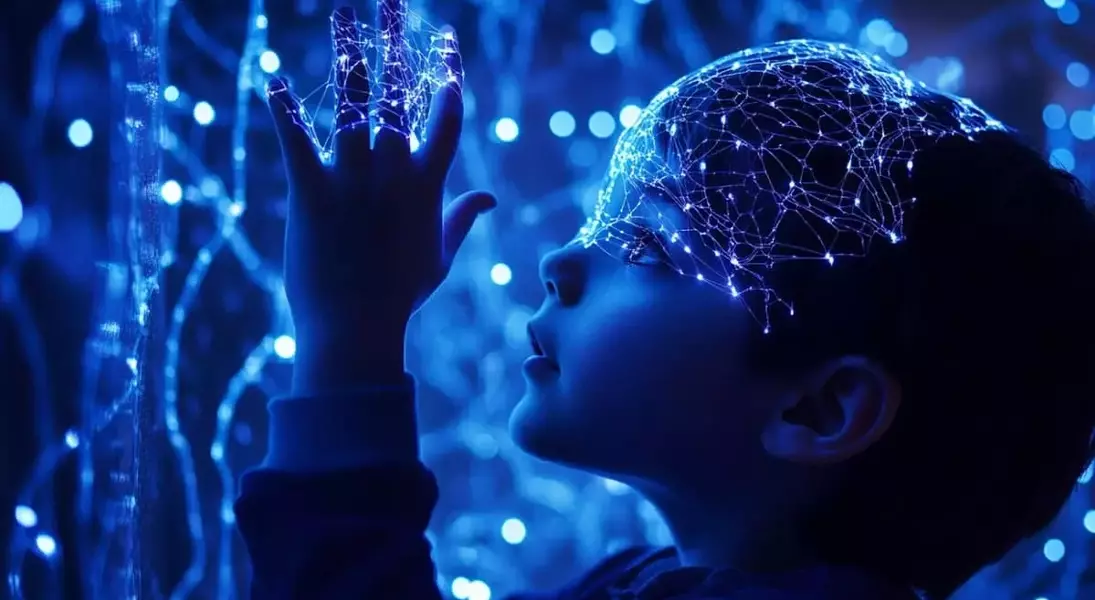
A groundbreaking study sheds light on how individuals with autism process tactile sensations, revealing insights into repetitive behaviors such as stimming. Researchers have uncovered a unique neural response pattern in adults with autism when exposed to both active and passive touch.
Utilizing advanced technologies like EEG, virtual reality, and vibrotactile stimulation, scientists crafted an immersive experimental setup to simulate realistic touch experiences. Participants engaged in tasks involving either reaching out to initiate contact or receiving touches passively. For neurotypical individuals, the brain allocates fewer resources during self-initiated touch due to its ability to predict outcomes. However, for those with autism, the distinction between initiating and receiving touch is less pronounced, indicating potential challenges in predicting sensory consequences. This discovery could explain why repetitive movements are prevalent among autistic individuals, serving as tools for emotional regulation or coping mechanisms in overwhelming environments.
The implications of this research extend beyond understanding sensory processing differences. By delving deeper into how the brain handles various types of touch, researchers hope to uncover healthier ways for autistic individuals to express themselves without resorting to harmful behaviors. Lead author Emily Isenstein emphasizes that comprehending benign tactile sensations brings us closer to deciphering more severe self-injurious actions within the autism spectrum. The collaborative nature of this project highlights the importance of interdisciplinary approaches in advancing scientific knowledge. Combining expertise from multiple fields allowed the team to create innovative methodologies, setting the stage for future investigations into complex motor patterns associated with autism.
This study not only contributes to our understanding of autism but also underscores the value of embracing diversity in human experience. Recognizing and respecting these differences can lead to more inclusive societies where everyone has opportunities to thrive. As science continues to unravel the mysteries surrounding neurological conditions, it fosters hope for improved support systems tailored specifically for those who perceive the world uniquely. Such advancements remind us of the boundless potential inherent in humanity's quest for knowledge and compassion.
