Honda has consistently engineered vehicles, from motorcycles to cars, that command attention with their powerful, high-revving engines. The brand's commitment to performance and precision is not just seen, but also heard, through the distinctive roar of its racing machines. This article takes an immersive journey into Honda's rich automotive history, highlighting the evolution of its iconic engine sounds, which have captivated enthusiasts worldwide for over six decades.
The meticulous preservation of these engineering marvels at the Honda Collection Hall museum, where each vehicle remains in operational condition, allows for a rare auditory experience. This dedication ensures that the legacy of Honda's racing triumphs, characterized by their thrilling engine notes, continues to inspire and resonate with new generations of fans. Through digital compilations, these historic sounds are made accessible, bridging geographical gaps and allowing a global audience to experience the thrilling symphony of Honda's engineering prowess.
The Evolution of Honda's Signature Engine Notes
Honda's journey in motorsports is marked by a series of engineering breakthroughs, each contributing to a distinctive soundscape that defines the brand's performance heritage. From the early V-12 engines of Formula 1 to the high-pitched screams of two-stroke motorcycles and the guttural roar of modern GT cars, Honda has consistently pushed the boundaries of automotive sound. These mechanical symphonies are more than just noise; they are a testament to the meticulous design and powerful performance that Honda has delivered throughout its history, encapsulating the very essence of speed and precision in an audible form.
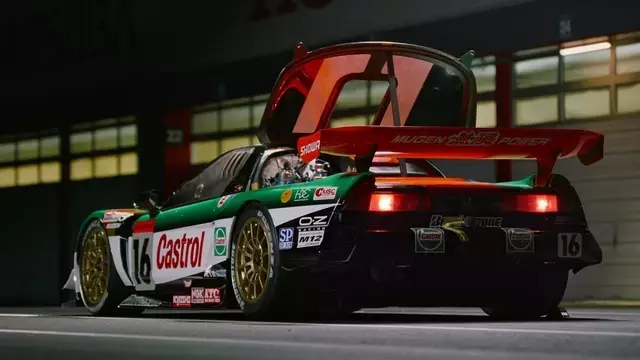
The auditory experience begins with the 1965 RA272, a V-12 Formula 1 car whose engine erupts into a furious, small-displacement aria, showcasing Honda's early dominance in engine design. This historical vehicle, clocking 10,000 rpm, reflects an era when Honda focused on out-motoring competitors, despite chassis limitations. Transitioning to two wheels, the 1985 NSR500 racing motorcycle, with its V-4 two-stroke engine, delivers a "snap, crackle, and pop" that signifies its legendary status, boasting over 100 wins and 10 World Championships. The 2000 NSX-GT, with its V-6 engine, presents a malevolent potential at idle, transforming into a scalpel-sharp throttle response that epitomizes precision. The article culminates with the awe-inspiring 3.4-liter V-8 of the HSV-010 GT, capable of reaching a 10,300-rpm redline, illustrating Honda's enduring capability to produce engines that are as aurally thrilling as they are mechanically advanced. This array of engines showcases the distinct character and performance legacy embedded in each Honda racing machine.
Preserving Automotive History Through Sound
The Honda Collection Hall museum serves as a vital custodian of the brand's extensive motorsports legacy, ensuring that the legendary vehicles and their unique engine sounds are preserved for future generations. Unlike static displays, the museum's commitment to maintaining these machines in full working order allows for their vibrant history to be experienced dynamically. This approach provides an unparalleled opportunity for enthusiasts to connect with Honda's past, not just visually, but through the powerful, emotive force of sound that defines its racing pedigree.
Located at the Twin Ring Motegi racing circuit in Japan, the Honda Collection Hall is a treasure trove of rev-happy performance machinery. The museum's unique policy of regularly running these rare vehicles, from Isle of Man TT-winning motorcycles to early racing cars, transforms a visit into an auditory spectacle. While a trip to Japan might be out of reach for many, Honda has thoughtfully created an accessible alternative by releasing high-definition audio and video recordings of these machines. These digital assets allow enthusiasts worldwide to experience the thrilling roar of a 1965 RA272 V-12, the distinctive crackle of a 1985 NSR500 two-stroke V-4, or the menacing growl of a 2000 NSX-GT's V-6, all from the comfort of their own homes. This initiative effectively bridges the gap between historical preservation and global accessibility, ensuring Honda's powerful acoustic legacy continues to resonate.
