
Animated features are navigating a complex landscape within the film industry, characterized by their undeniable box office dominance contrasted with a pervasive struggle for critical recognition. While these films consistently generate billions globally and often outperform live-action contenders, there's a deep-seated perception among some industry insiders that animation is merely entertainment for children, an idea that many creators find deeply frustrating and disrespectful. This dichotomy highlights a pivotal moment for animation, as it seeks to transcend genre limitations and be acknowledged as a versatile artistic medium deserving of the highest accolades, including the Best Picture Oscar.
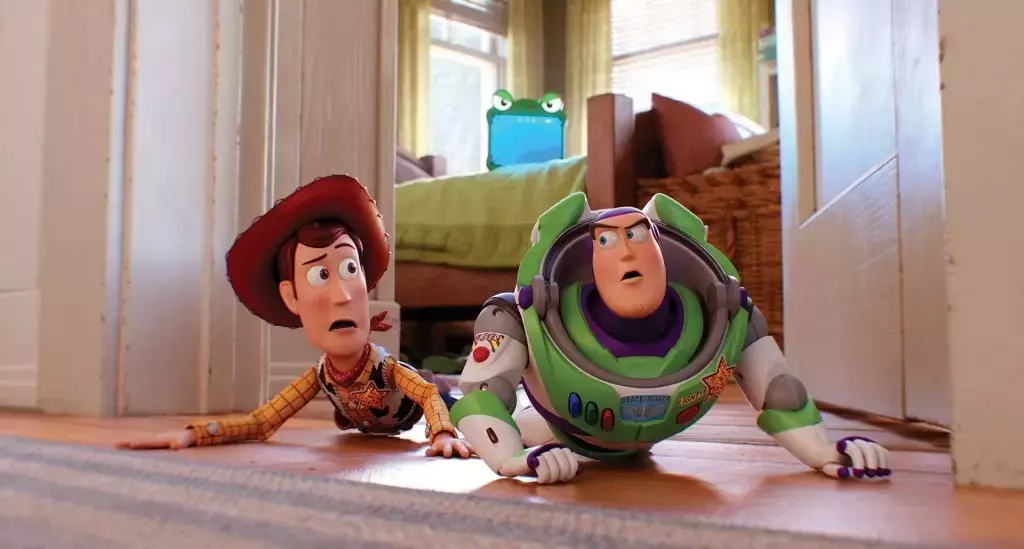
The sentiment of animation being undervalued was vividly illustrated by Travis Knight, CEO of Laika Studios, during an Oscars Nominees Luncheon in 2020. Knight, whose film 'Missing Link' was nominated, encountered a screenwriter who dismissively stated they only voted based on their children's preferences. This incident, Knight recounts, fueled his outrage, exposing a quiet consensus within the industry: animation as a mere diversion for kids. Yet, this belittling view stands in stark contrast to animation's robust financial performance. In 2026 alone, films like Universal and Illumination's 'The Super Mario Galaxy Movie' breached the $1 billion mark globally, while Pixar's 'Hoppers' achieved a significant opening, and 'Toy Story 5' commanded the year's best domestic debut. Historically, animated movies have topped the annual box office charts seven times since 1992, with 'Inside Out 2' and 'Zootopia 2' leading the last two consecutive years, an unprecedented achievement. These figures unequivocally demonstrate animation's crucial role in bolstering studio revenues. However, despite this commercial triumph, the animation sector has experienced significant staff reductions, with Pixar cutting 14% of its workforce in 2024 and Netflix restructuring its animation unit in 2023. This paradoxical situation leaves animators feeling undervalued, as their creative contributions generate massive profits but don't always translate into job security or enhanced industry standing.
The condescension towards animation is, to some extent, recognized as an internal issue by its own practitioners. Pete Docter, Pixar's chief creative officer, acknowledges that a significant portion of animated films, while successful, might perpetuate the 'babysitter material' image through their lighthearted and comedic nature. He suggests that the industry could elevate its creative ambition. Meanwhile, Jim Morris, Pixar's president, points to the undeniable financial power of animation, noting that films like 'Moana 2' have outgrossed all Best Picture nominees combined in recent years, essentially 'propping up' many studios. This commercial resilience provides studios with the freedom to invest in new, potentially riskier projects, proving animation's strategic importance beyond mere entertainment. Guillermo del Toro's impactful statement during his Oscar campaign for 'Pinocchio' in 2022 encapsulated the core argument: 'Animation is not a genre; it is a medium,' emphasizing its artistic breadth and potential.
Laika Studios, for instance, consciously avoids labeling its projects as 'animation,' instead marketing them simply as 'films,' trusting audiences to engage with the storytelling regardless of the medium. David Burke, Laika's chief marketing and operations officer, highlights their refusal to be confined by categorization. The debate also extends to the Academy Awards. Since the introduction of the Best Animated Feature category in 2001, it has served as both a recognition and a barrier, acknowledging the work while often segregating it from the main Best Picture competition. Only three animated films, 'Beauty and the Beast,' 'Up,' and 'Toy Story 3,' have ever received Best Picture nominations, a number the animation community believes should be much higher. Solutions vary among filmmakers: Jim Morris advocates for increasing the representation of animation professionals across various Academy branches to ultimately shift voting dynamics. Jared Bush, chief creative officer at Walt Disney Animation Studios, believes the answer lies in creating emotionally resonant films that connect deeply with audiences, mirroring the success of live-action Best Picture winners. Chris Meledandri, founder of Illumination, downplays the bias, suggesting that the industry has evolved past such prejudices and now appreciates the artistry of animation. However, Mexican animator Jorge Gutiérrez remains pessimistic, believing an animated film will likely never win Best Picture due to the sheer size and live-action bias of the Academy's voting body. Despite these differing views, the hope persists within the animation community that one day, the Academy will fully recognize the medium's profound artistic merit and storytelling power.
