
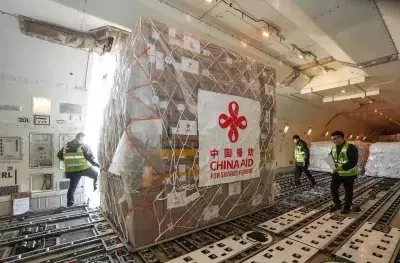
The landscape of international assistance is currently undergoing a significant transformation, marked by a fascinating interplay between two of the world's leading powers, the United States and China. Both nations are recalibrating their approaches to foreign aid, moving away from long-established norms and venturing into new strategic territories. This evolving dynamic signals a period of both convergence and intensified competition, with profound implications for global development and geopolitical influence.
Navigating New Frontiers: The Reshaping of International Assistance by Global Powers
The Strategic Importance of International Aid for Global Influence
For an extended period, foreign aid has served as a critical instrument for both the United States and China to cultivate soft power and extend their global influence. By providing essential public services, particularly in low-income nations, they have aimed to alleviate poverty, combat diseases, and foster long-term collaborations. This engagement has traditionally been a cornerstone of their respective foreign policies, contributing to their standing on the world stage.
Recent Shifts in Foreign Aid Methodologies
Historically, the United States and China maintained divergent philosophies regarding international assistance. However, recent developments have seen a notable shift. The previous U.S. administration initiated a significant dismantling of its conventional foreign aid infrastructure, embarking on a new trajectory. Concurrently, China has also been adapting its strategy, notably increasing its contributions to international bodies while curtailing some of its once-prominent large-scale infrastructure projects. This confluence of changes is creating a unique moment in global aid, characterized by both aligned approaches and increased rivalry.
China's Evolving Foreign Aid Narrative: From Solidarity to Global Ambition
China's approach to international aid has progressed through distinct phases since the mid-20th century. Initially, in the 1950s, it focused on anti-imperialist solidarity, supporting emerging communist states while itself being a recipient of Soviet aid. The 1990s marked a shift towards aid that fostered China's own development, promoting economic cooperation and trade. In the 2010s, under new leadership, China's aid strategy entered a third phase, explicitly aimed at projecting soft power and engaging in great power competition, often through bilateral agreements and extensive infrastructure projects like the Belt and Road Initiative.
Challenges and Criticisms of China's Aid Model
Despite its ambitions, China's foreign aid model, particularly its emphasis on large infrastructure projects funded by bilateral loans, has faced considerable scrutiny. Critics, including the U.S. and recipient countries, have highlighted concerns regarding the long-term efficacy and sustainability of these projects. Research has indicated that while Chinese aid is appreciated, it often lacks consideration for local needs and mechanisms for maintaining projects once completed. Furthermore, the opaque nature of bilateral negotiations and the perception of predatory lending have led to accusations of undermining trust and fostering corruption, ultimately detracting from China's soft power objectives.
China's Strategic Refinement: Towards Smaller-Scale and Multilateral Engagement
In response to these criticisms and in an effort to enhance its global standing, China has, over the past five years, begun to pivot its foreign aid strategy. Moving away from massive bilateral deals, it is now increasingly focusing on funding smaller, more targeted projects in developing nations and deepening its engagement with multilateral organizations like the United Nations. This strategic adjustment includes initiatives like the Global Development Initiative, which emphasizes "small and beautiful" projects aimed at directly addressing poverty and health issues, such as refurbishing medical facilities, providing equipment, and supporting local infrastructure development.
The Potential for China to Assume a Greater Global Leadership Role
The changes in U.S. foreign aid policy, particularly the cutbacks under the previous administration, have sparked discussions among experts about China's potential to step into a more prominent global leadership role. China's actions, such as increased donations to international health organizations and significant humanitarian aid in response to crises, suggest a strategic move to position itself as a responsible global power. This aligns with its broader vision for a world order with China at its center. However, while China is increasing its influence, it is doing so cautiously, not yet fully committing to filling all the gaps left by the U.S., but steadily advancing its presence in international development and health.
The United States' Shifting Paradigm: Echoes of Past Criticisms
The United States' recent reorientation of its foreign aid policy, particularly the "America First Global Health Strategy," signals a move towards a more transactional model. This new approach prioritizes U.S. political and economic interests, focusing on bilateral agreements that aim to secure resources and create business opportunities for American enterprises. This shift bears a striking resemblance to China's previous aid model, leading some experts to warn of similar potential pitfalls. Critics suggest that an overly commercialized approach could compromise health outcomes and replicate the very challenges that China encountered, emphasizing the importance of prioritizing actual health needs over purely commercial interests.
