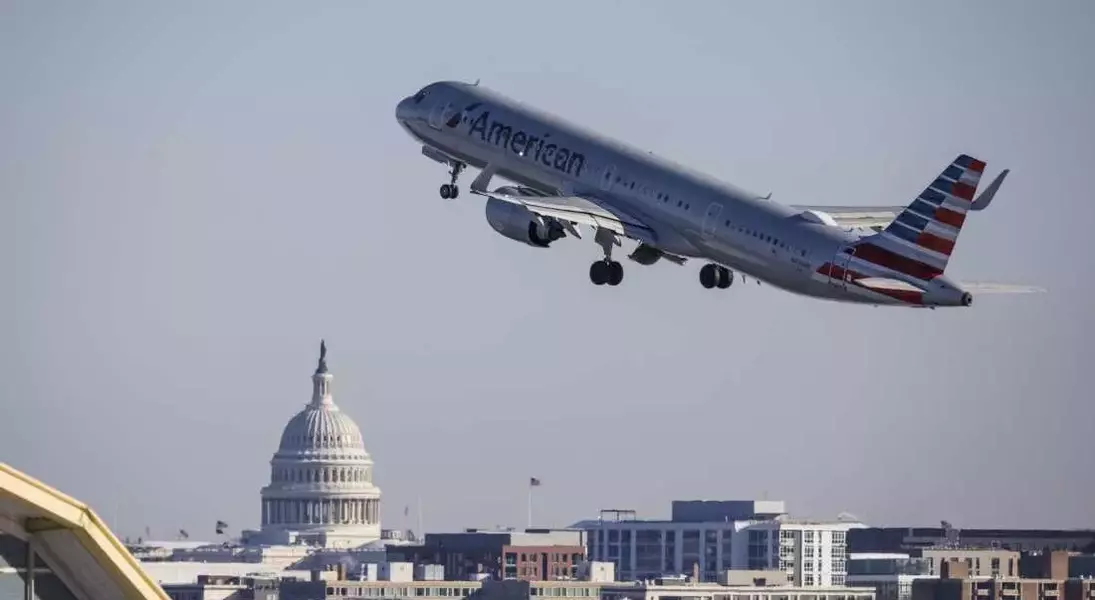

In a significant legislative setback, the U.S. House of Representatives has struck down a pivotal aviation safety bill, known as the ROTOR Act. This decision, reached through a narrow vote, unfolded just one day after the Pentagon unexpectedly withdrew its backing for the bipartisan measure. The legislation, which had previously garnered unanimous approval in the Senate and strong support from the families affected by a tragic midair collision, aimed to enhance air safety protocols. However, the Pentagon's last-minute objections, citing potential financial strains and operational security concerns, appear to have swayed a considerable number of representatives.
House Rejects Key Aviation Safety Measure Amid Pentagon's Sudden Opposition
On a tense Tuesday in Washington, D.C., the U.S. House of Representatives delivered a blow to aviation safety advocates by rejecting the ROTOR Act. This proposed legislation, designed to mandate expanded use of the Automatic Dependent Surveillance-Broadcast (ADS-B) safety system and tighten exemptions for military helicopters, failed to achieve the necessary two-thirds majority for passage, with 264 votes in favor and 133 opposed. The dramatic turn of events followed the Pentagon's abrupt decision to withdraw its support for the bill on Monday, a move that left many puzzled and disappointed. Pentagon spokesperson Sean Parnell cited "unresolved budgetary burdens and operational security risks" as the reasons for their change of stance, though he offered no specific details. This shift proved critical, as the bill had enjoyed robust backing from a coalition of senators, aviation industry trade unions, and, most poignantly, the families of the 67 victims of a deadly midair collision near Ronald Reagan Washington National Airport last year. The National Transportation Safety Board (NTSB) had explicitly stated that the ADS-B technology, central to the ROTOR Act, could have prevented the collision between a U.S. Army Black Hawk helicopter and an American Airlines passenger jet by providing pilots with more reaction time. NTSB Chair Jennifer Homendy voiced her frustration on social media, questioning, "How many more people need to die before we act?" However, the bill encountered significant resistance from influential Republican committee leaders in the House, including Mike Rogers, R-Ala., chairman of the House Armed Services Committee, and Sam Graves, R-Mo., chairman of the House Transportation and Infrastructure Committee. Rogers argued that the bill could compromise national security by forcing military aircraft to broadcast their locations, while Graves deemed it an "unworkable government mandate." Both representatives instead championed an alternative measure, the ALERT Act, which lacks the broader endorsements of the NTSB and victim families. Despite this setback, families of the victims of Flight 5342 and Senator Ted Cruz, a co-author of the ROTOR Act, have vowed to continue their fight for its passage, emphasizing the importance of uniform safety rules for all aircraft in U.S. airspace.
This legislative defeat underscores the complex interplay between national security interests, budgetary constraints, and public safety. While the Pentagon's concerns about operational security and budget are understandable, the lack of transparency regarding these specifics raises questions about the true motivations behind their last-minute withdrawal. The NTSB's clear endorsement of ADS-B technology as a life-saving measure, coupled with the impassioned pleas of victims' families, highlights a profound disconnect between technical safety recommendations and political realities. The incident also reveals potential divisions within the Republican party regarding aviation policy. Moving forward, a more transparent dialogue is imperative to bridge these gaps and ensure that crucial safety enhancements are not sacrificed for political expediency or unarticulated concerns. The ongoing commitment of victims' families and Senator Cruz provides a glimmer of hope that this vital safety legislation may yet find its way to becoming law, ensuring that future air travelers and military personnel are afforded the highest possible level of protection.
