A wave of intensifying dissent has swept through Microsoft, as a dedicated group of employees and allies takes audacious steps to challenge the company's controversial contracts. What began as a formal appeal has dramatically escalated into direct, disruptive actions, forcing the tech giant to confront internal and external pressures regarding its ethical responsibilities.
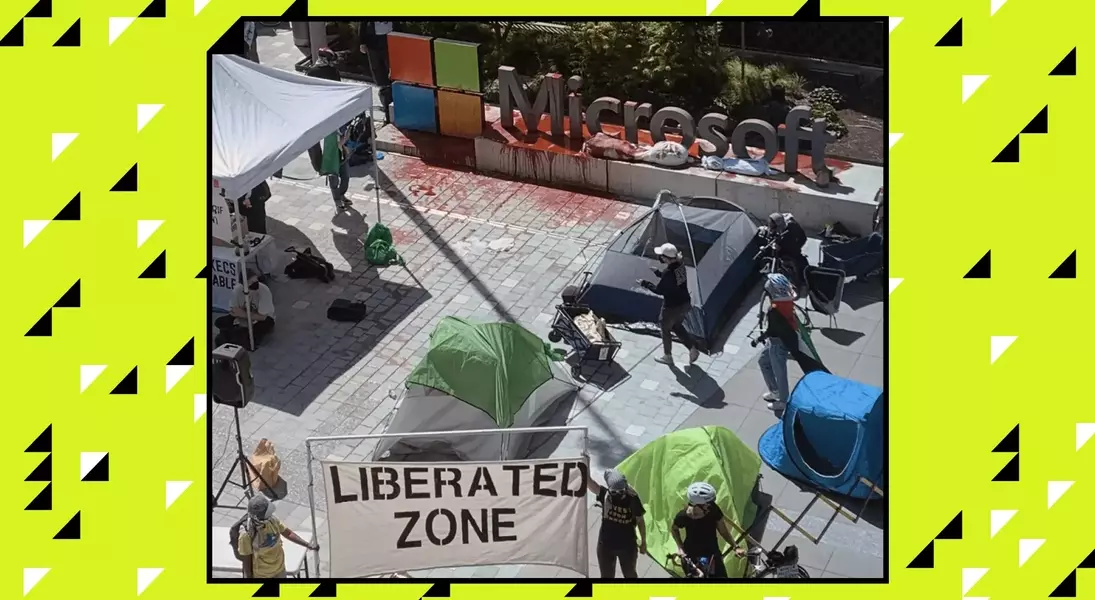
A protest at Microsoft’s headquarters in Redmond, Washington. Image: The Verge, No Azure for Apartheid 
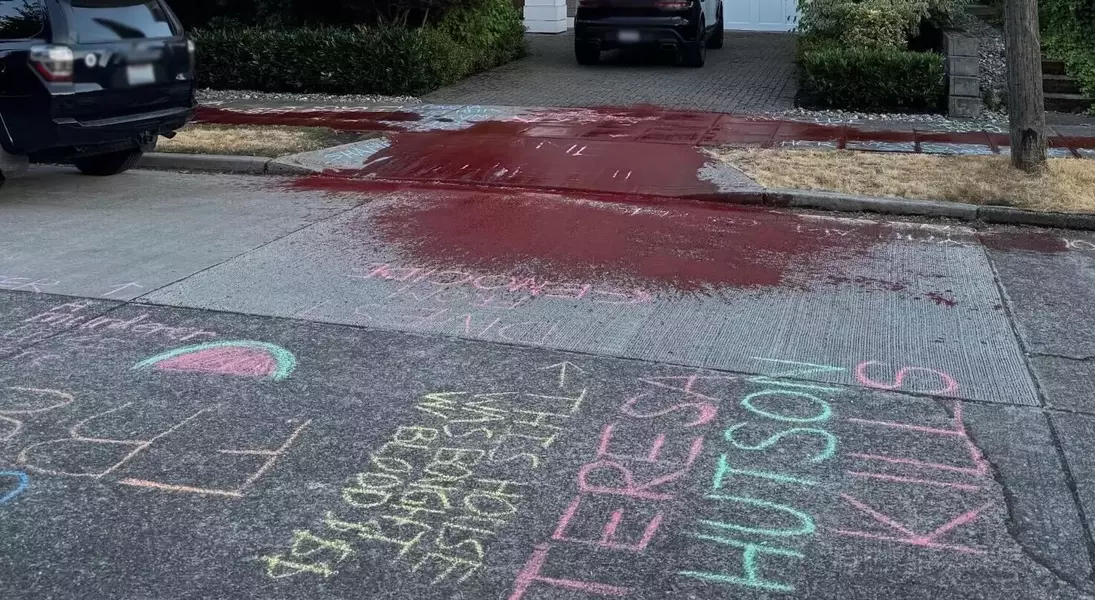
The chalk and red paint outside a Microsoft executive’s home (blurred and cropped to remove identifying details). Image: No Azure for Apartheid 
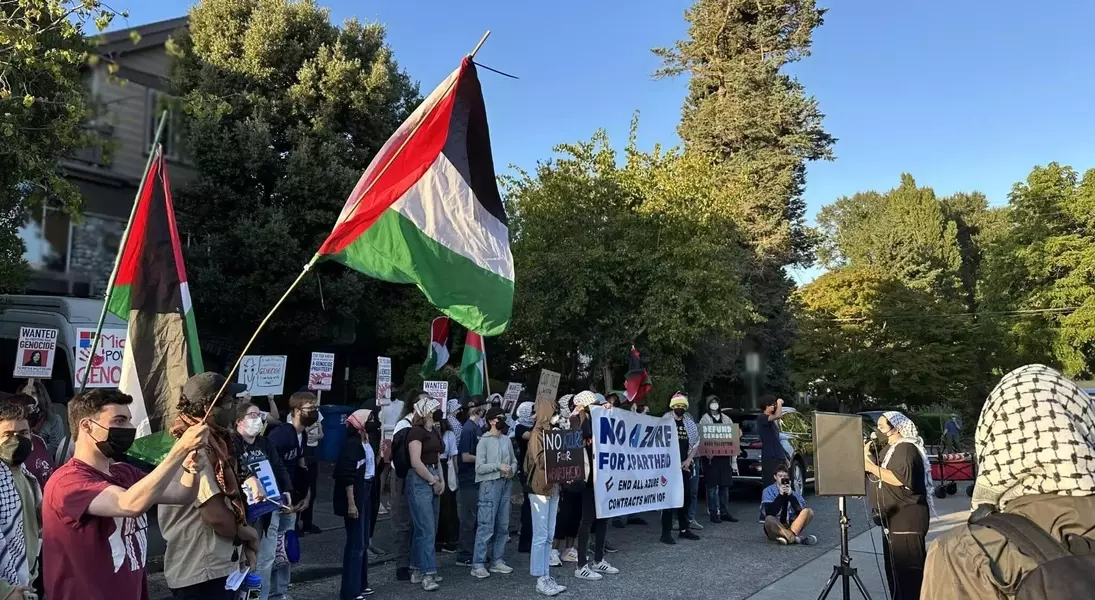
Protesters also carried wanted signs and banners(blurred to remove identifying details). Image: No Azure for Apartheid 
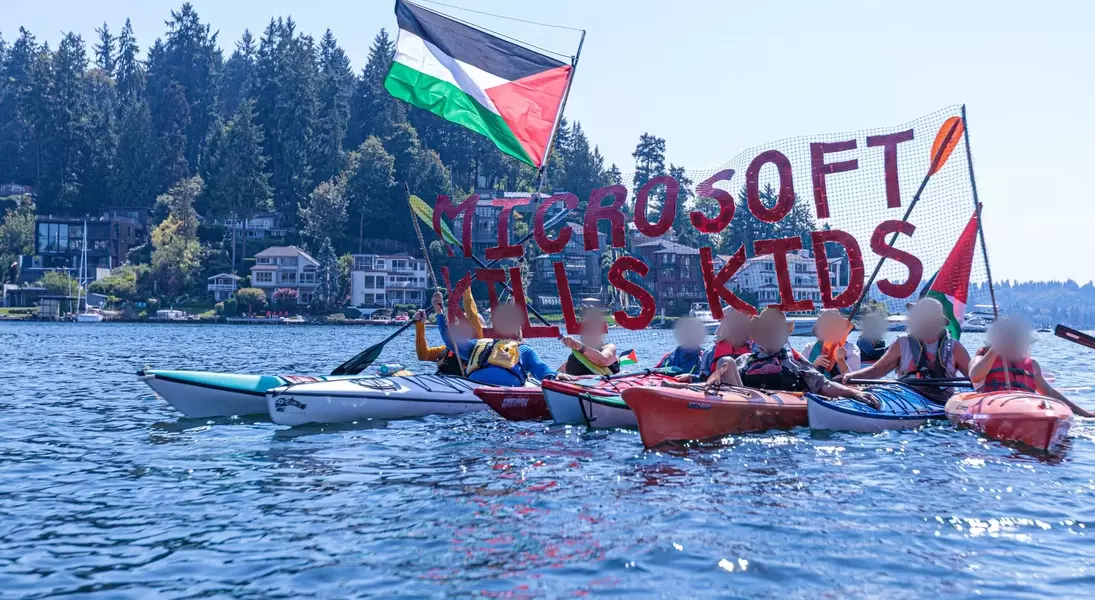
Protesters used kayaks outside Satya Nadella and Brad Smith’s homes. Image: No Azure for Apartheid
Employee Unrest: A Growing Storm Within Microsoft
The Genesis of Discontent: From Petitions to Public Outcries
A collective of current and former Microsoft personnel, identifying as 'No Azure for Apartheid,' initiated their movement with a formal plea to the company's leadership. Their core demands included severing all Azure cloud computing service agreements and collaborations with the Israeli military and government, transparent disclosure of all such affiliations, a public call for a ceasefire in Gaza, and safeguarding pro-Palestinian expression within the company. With these significant requests largely unmet, the group's tactics evolved from discreet petitions to overt public demonstrations, marking a shift towards more impactful methods.
Escalation of Tactics: Confronting Executives and Occupying Headquarters
The movement gained momentum following a boisterous protest at Microsoft's headquarters, which ignited a series of public acts of defiance. Key organizers, Abdo Mohamed and Hossam Nasr, who were subsequently dismissed for their disruptive actions involving bullhorns and speakers, have since broadened their recruitment efforts to include a wider network of tech professionals and community members. Their activism has garnered significant media attention, notably through interruptions of Microsoft executives at major corporate events, including a 50th-anniversary celebration and the annual Build developer conference. The protests reached a critical new phase with a targeted demonstration outside the residence of Microsoft executive Teresa Hutson. Over 30 individuals, displaying Palestinian flags and signs denouncing her alleged complicity, painted red streaks and chalked accusatory messages on the pavement outside her home. This act underscored the protesters' commitment to direct engagement, particularly with individuals deemed responsible for the company's policies.
Hutson, serving as Microsoft's CVP of the Trusted Technology Group, was identified by the group as a key figure due to her oversight of human rights initiatives and the Responsible AI Transparency Report. Her prior attempt to avoid protesters at an ethics conference in Seattle further cemented her as a target. The demonstration at her home, featuring speeches and 'wanted' posters with her likeness, signaled a significant escalation in the protesters' resolve.
Following these events, protesters established an encampment at Microsoft's headquarters. After being relocated to a public area on the first day, their return on the second day led to confrontations with law enforcement. An active Microsoft employee was among the 20 individuals arrested during an incident that involved red paint being splashed on a company sign and scuffles with police. The group contested the police's account of aggression, releasing footage that appeared to show an officer using a pepper-ball gun on a restrained protester. This incident marked a turning point in Microsoft's public relations strategy, as the company began to actively disseminate its own footage and images to the media, aiming to counter the protesters' narrative. This included CCTV footage of protesters dragging a security fence and images of a counterfeit Microsoft ID, alongside a list of arrests.
Targeting Leadership: Waterside Protests and Office Incursions
The protests further intensified with a unique demonstration on Lake Washington, where approximately 20 activists used kayaks to unfurl banners with provocative messages near the residences of CEO Satya Nadella and Vice Chair Brad Smith. This act, alongside previous disruptions at corporate events by individuals like former employee Ibtihal Aboussad, highlighted the protesters' willingness to bring their message directly to the company's highest echelons. The escalating nature of the protests reached a crescendo when a group of seven activists breached security at Building 34 within Microsoft's headquarters, gaining access to Brad Smith's office. This sit-in protest, involving current and former employees, led to a temporary lockdown of the executive building.
Microsoft's Counter-Response: Investigations and Enhanced Security
In the aftermath, Brad Smith convened an emergency press conference, asserting Microsoft's commitment to human rights principles and contractual terms, particularly in the Middle East. He revealed an ongoing investigation into allegations, reported by The Guardian, that Azure cloud services were being utilized for surveillance of Palestinians. This new inquiry followed a previous internal and external review by Microsoft in May, which found no evidence of its technology being used to harm Palestinian civilians. Reports from Bloomberg indicated that Microsoft had sought assistance from the FBI to track protesters following disruptions at its 50th-anniversary event and had collaborated with local authorities to enhance security for the Build developer conference. Microsoft has since amplified security measures across its campus, leading to the cancellation of a major event and increased police presence. The company's internal communications emphasized employee safety and detailed enhanced patrols and monitoring. Despite Microsoft's attempts to downplay the protests as the actions of a small number of individuals, the persistent and evolving tactics suggest a broader, anonymous support network within the company. The upcoming Ignite conference in San Francisco poses another potential flashpoint for continued activism. Microsoft's past missteps, such as blocking emails containing the word "Palestine" and its handling of previous AI-related security vulnerabilities without issuing CVEs, underscore the need for greater transparency and proactive engagement to de-escalate the situation before it spirals further out of control.
