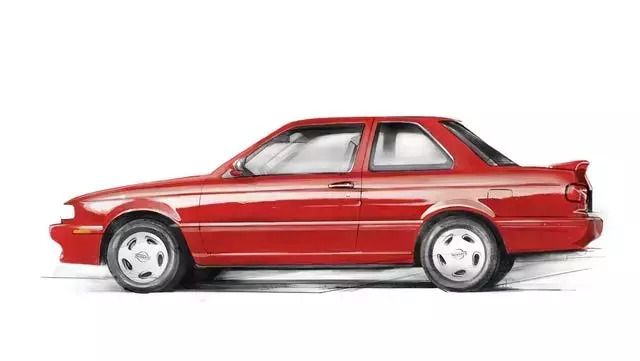
Thirty-five years ago, a specific model emerged from Nissan that captivated automotive enthusiasts and critics alike: the 1991 Sentra SE-R. Initially met with skepticism, its true prowess lay beneath the surface. This vehicle distinguished itself with an impressive 140-horsepower DOHC 16-valve 2.0-liter engine, marking it as a groundbreaking machine in the early 1990s. Its introduction caused a stir among automotive journalists, who lauded its exceptional engineering and dynamic driving characteristics, solidifying its place as a memorable automotive wonder.
The debut of the 1991 Sentra SE-R was a pivotal moment. Automotive experts at the time, despite initial health-related distractions, quickly recognized its outstanding engine. This compact sedan showcased a formidable 140-hp DOHC 16-valve 2.0-liter engine, which delivered an exhilarating performance experience. Journalists were quick to celebrate its arrival, hailing it as a significant innovation in the automotive landscape of the 1990s, particularly for its vibrant power delivery and responsive nature.
The Sentra SE-R's driving experience was often compared to that of high-performance European sedans, such as the BMW 318i, due to its engaging nature. The vehicle featured a remarkable engine with a 7500-rpm redline, complemented by a precise, close-ratio shifter. A standard limited-slip differential further enhanced its handling capabilities, ensuring excellent traction and control. Its light yet responsive steering provided an intuitive connection between the driver and the road, while stiffer springs, anti-roll bars, and front damping distinguished it from other Sentra models. The car also came equipped with supportive, Recaro-inspired seats, hinting at its track-ready potential.
On the road, the SE-R was known for its agility and spirited performance, often encouraging drivers to push its limits. One memorable incident involved a reviewer navigating a challenging road at high speeds, demonstrating the car's exceptional handling and prompting a call to the authorities. Despite its performance, the SE-R was surprisingly lightweight, weighing only 2594 pounds, contributing to its inclusion in prestigious automotive awards. However, it wasn't without its quirks; the engine's enticing revs often led drivers to accelerate even when stationary, and a slight lack of sound insulation meant a constant, albeit pleasant, engine hum. Additionally, its understated design made it an inconspicuous, almost anonymous, vehicle.
In contrast, the Infiniti G20, while sharing the SE-R's underlying platform, presented a softer, heavier, and more expensive alternative. The G20 gained an additional 235 pounds, took 1.3 seconds longer to reach 60 mph, and cost an extra $7,000. Despite these drawbacks, it offered luxurious options like creamy off-white leather upholstery. Both vehicles, however, shared a distinctive "tush-telegraphy" characteristic, conveying rich feedback through the driver's seat. For budget-conscious enthusiasts, the SE-R remained the ideal choice, offering thrilling performance without the hefty insurance premiums often associated with sports cars, often fooling parents into thinking it was just another humble Sentra.
Although a subsequent generation of the Sentra SE-R was released, it never quite recaptured the original's unique spirit and performance. Rumors suggested that the initial model's engine was so costly to produce that Nissan incurred financial losses on each unit sold. Nevertheless, the 1991 Sentra SE-R made a powerful statement about achieving exceptional performance without excessive frills, demonstrating that true value often lies in engineering excellence rather than outward extravagance. This car remains a beloved classic, cherished for its engaging drive and its enduring legacy as a true automotive marvel.
