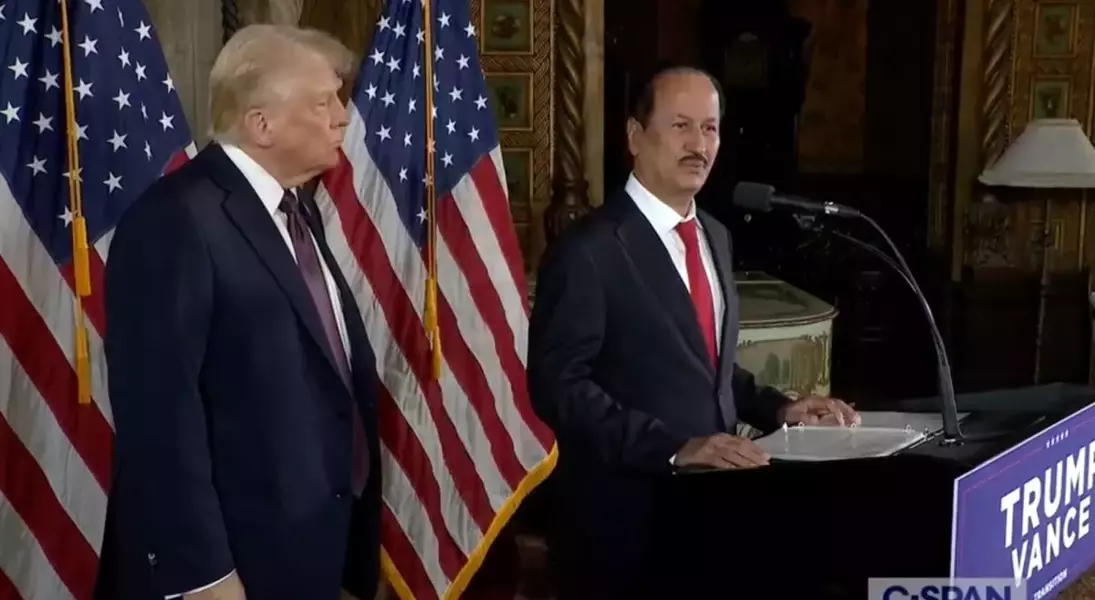
In a recent announcement, President-elect Donald Trump revealed that Hussain Sajwani, the founder of DAMAC Properties, intends to invest $20 billion in new data centers across the United States. This substantial investment aims to support the rapidly growing fields of artificial intelligence and cloud technology. The first phase of this multi-year project will establish data centers in eight states. While the investment has garnered attention, it is important to note that similar pledges have not always materialized as planned.
Detailed Report on the Emirati Investment in US Data Centers
In an eventful press conference held at Mar-a-Lago, Florida, on Tuesday, the incoming administration shared details about a significant investment plan by Hussain Sajwani, a prominent businessman from the United Arab Emirates. Sajwani’s company, DAMAC Properties, known for its real estate ventures, plans to allocate $20 billion towards developing cutting-edge data centers in the United States. These facilities will be strategically located in Arizona, Illinois, Indiana, Louisiana, Michigan, Ohio, Oklahoma, and Texas, aiming to bolster AI and cloud infrastructure.
Sajwani expressed his long-standing interest in expanding investments in the U.S., emphasizing the potential for even greater financial commitments. However, historical precedents raise some doubts. In 2017, a similar promise by Taiwanese manufacturer Foxconn to invest $10 billion in Wisconsin fizzled out, resulting in only a fraction of the promised jobs and investment. This cautionary tale underscores the need for vigilant monitoring of such announcements.
The proposed investment comes at a critical juncture when the U.S. seeks to enhance its technological capabilities. Critics of the CHIPS Act, including President-elect Trump and other Republican leaders, argue that the legislation has not met expectations. Despite bipartisan support and significant funding, challenges remain in building essential infrastructure like power plants and data centers due to bureaucratic hurdles.
Tech industry leaders, such as Microsoft’s Brad Smith, advocate for increased investment in data center infrastructure to support the burgeoning AI sector. Smith highlighted the importance of international partnerships and leveraging large-scale infrastructure investments. OpenAI CEO Sam Altman also noted the opportunity for improvement, suggesting that the Trump Administration could address existing inefficiencies and streamline processes for better outcomes.
This investment, if realized, could position the U.S. as a leader in the next wave of technological advancements. However, the success will depend on overcoming regulatory and logistical challenges to ensure that these ambitious plans translate into tangible results.
From a journalistic perspective, this news highlights the ongoing debate over how best to foster technological innovation and infrastructure development in the U.S. It underscores the need for balanced policy approaches that encourage private investment while addressing systemic barriers. The coming months will reveal whether this promising initiative can overcome past pitfalls and deliver on its lofty goals.
