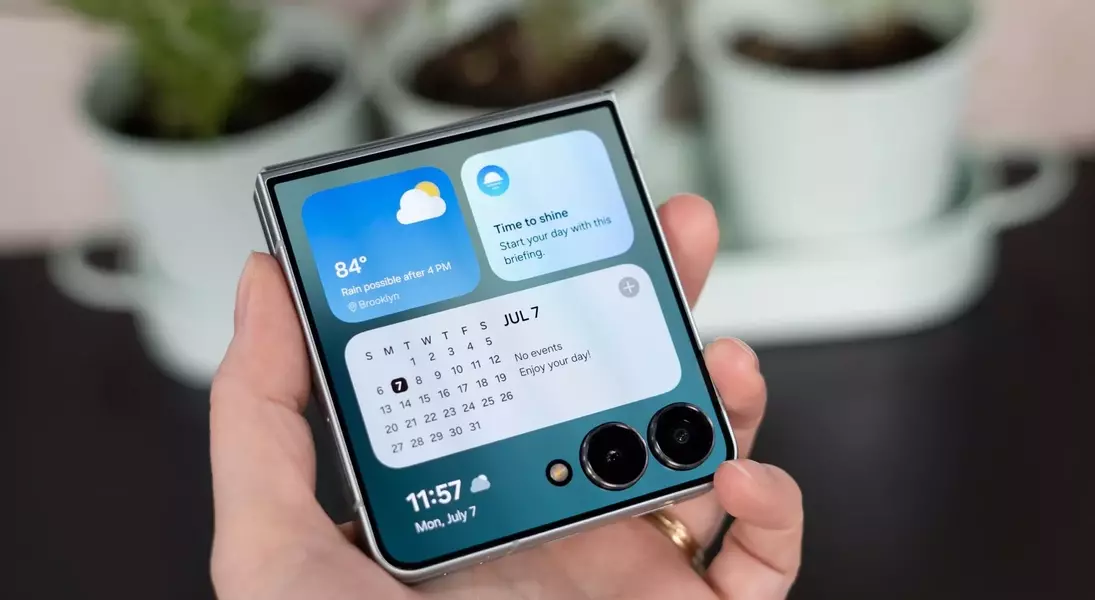
The journey of foldable smartphones has been marked by both ambitious innovation and persistent challenges, particularly concerning their internal screen's vulnerability. When these groundbreaking devices first emerged, they were met with excitement, yet quickly encountered significant hurdles. Early models, like Samsung's initial foldable, faced immediate issues with screen integrity, where even microscopic particles reportedly caused internal display damage. This susceptibility was compounded by user confusion over protective layers, leading to accidental damage and highlighting a fundamental design flaw: the inherent fragility of a flexible screen when exposed to environmental elements like dust.
While the initial iterations of modern flip phones, such as the early Motorola Razr and Samsung's first Flip, were hampered by numerous compromises in performance, durability, and cost, the industry has since made considerable strides. More recent designs, exemplified by the 2023 Motorola Razr Plus, have significantly enhanced user experience through larger external displays that enable more comprehensive interactions beyond simple notifications. This evolution has made flip phones considerably more practical and appealing, moving beyond mere novelty to genuinely useful devices. However, despite these advancements, including improved hinge mechanisms and enhanced water resistance, a critical weakness persists: their susceptibility to dust ingress. The current IP48 rating, a common standard for these devices, only offers minimal protection against small particles, leaving the internal screen vulnerable to damage from anything larger than a millimeter.
The continued absence of a comprehensive dust-proof design, akin to the IP68 rating found in many conventional smartphones, presents a significant barrier to recommending foldable devices without reservation. Even with their undeniable appeal and progress in functionality, the potential for dust to compromise a premium device remains a notable drawback, especially when compared to the robust durability of similarly priced traditional handsets. Nevertheless, the pursuit of a fully dust-resistant foldable continues, with industry whispers and manufacturer acknowledgments suggesting that such a breakthrough, though challenging, is not an insurmountable task. Achieving this would not only address a key consumer concern but also unlock the full potential of these transformative mobile technologies, paving the way for a new era of truly resilient and innovative smartphone design.
The continuous innovation in smartphone technology, particularly with the emergence of foldable devices, showcases humanity's unwavering drive to overcome perceived limitations and constantly redefine what is possible. Each step forward, even when met with setbacks, is a testament to the resilience of human ingenuity and the pursuit of perfection. This journey encourages us to embrace challenges as opportunities for growth, pushing the boundaries of what was once thought unattainable and inspiring a future where technology seamlessly integrates with and enhances our lives.
