This article explores a groundbreaking mod that enables the use of a secondary graphics card to handle Neural Rendering tasks for DLSS 5, significantly alleviating the performance impact on primary GPUs. It delves into the technical aspects of this innovation, its current limitations, and its potential implications for the future of AI-driven gaming experiences.
Unlock Peak AI Gaming Performance with Your Existing Hardware
Innovative Mod Addresses DLSS Neural Rendering Performance Challenges
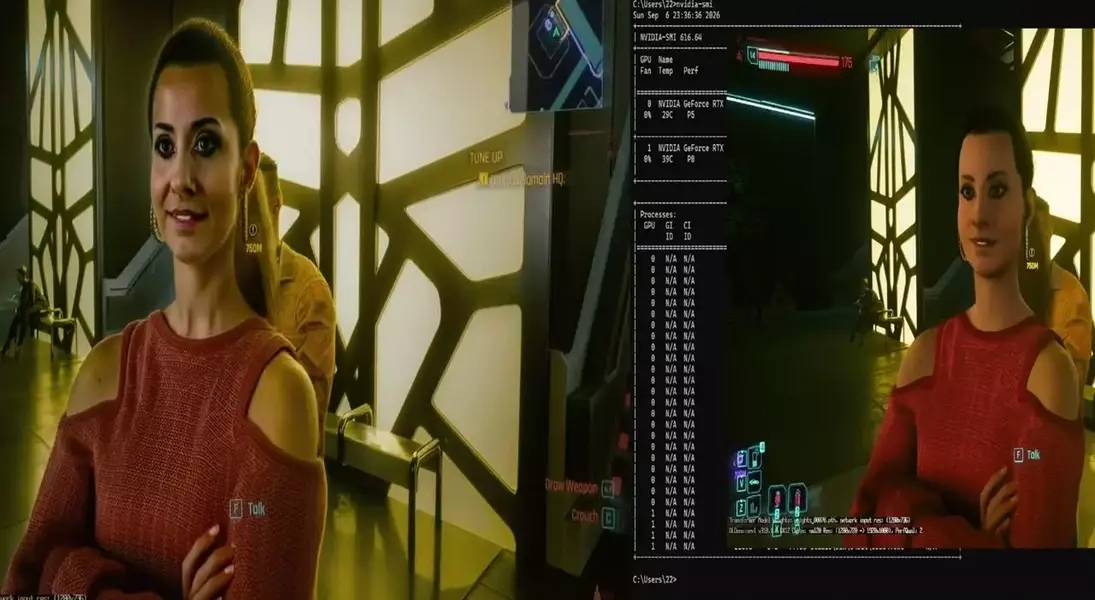
A clever developer has introduced a novel ReShade enhancement that shifts the demanding computational burden of DLSS Neural Rendering (NR) to a dedicated second graphics processing unit. This ingenious solution effectively mitigates the substantial performance penalties typically associated with DLSS NR. It's worth noting that initial demonstrations of DLSS 5 by Jensen Huang at GDC and GTC showcased the feature running on dual graphics cards, making this mod's emergence somewhat expected. This development certainly paves the way for repurposing older GPUs as neural coprocessors in future gaming setups.
The Mechanics of the Neural Coprocessor Add-on
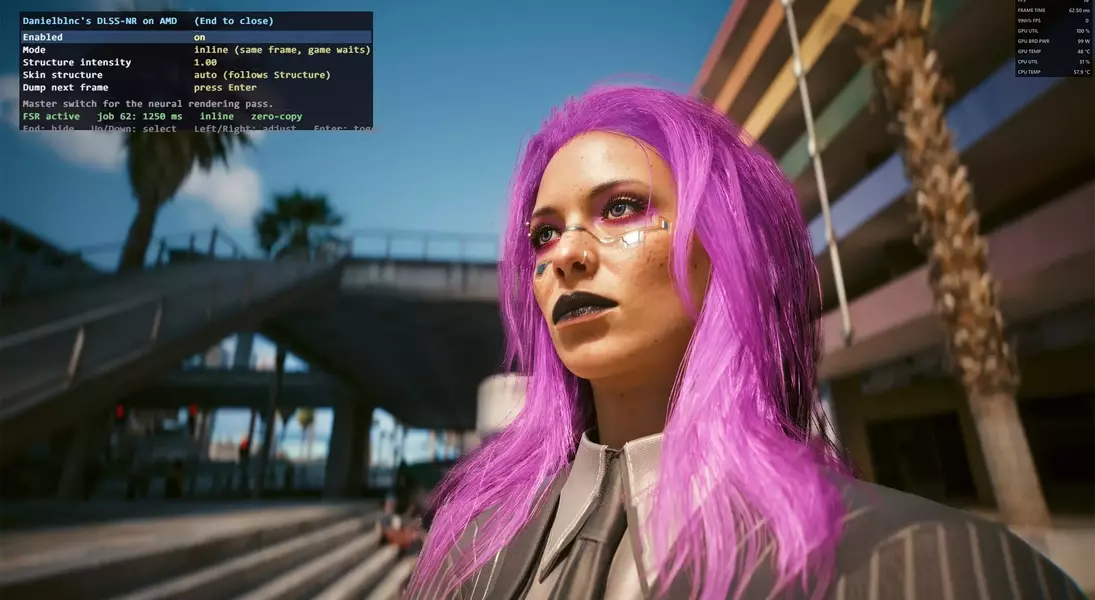
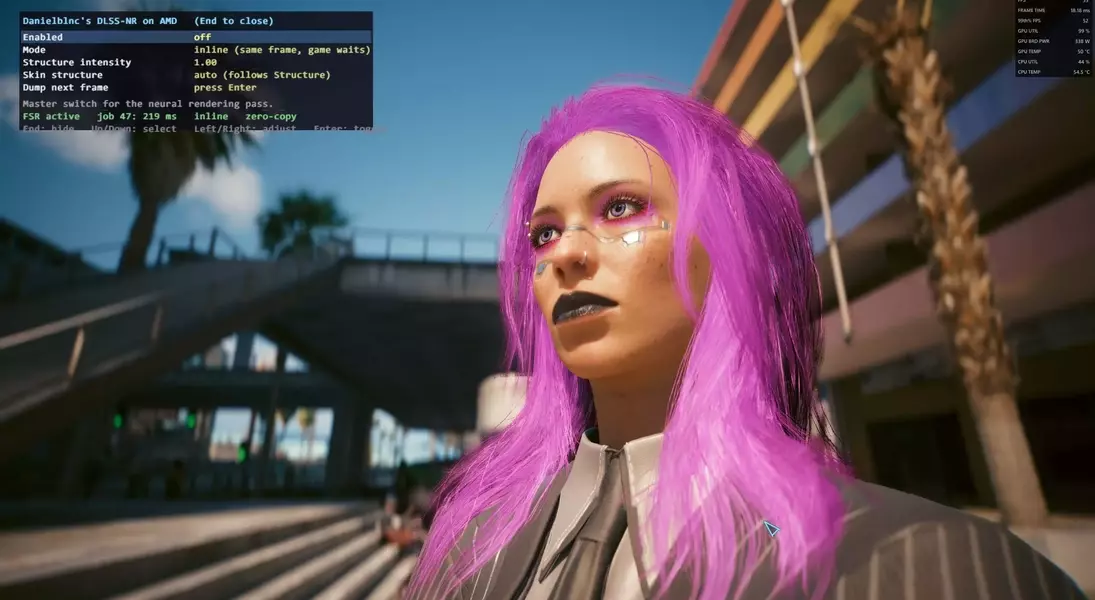
Similar to most user-implemented DLSS 5 and Neural Rendering solutions that allow users to customize game, model, and effect intensity, the "mgpu_bridge" Neural Coprocessor add-on is designed for ReShade. ReShade is a popular application used to integrate various visual enhancements into PC games. This open-source tool, available on Github, can be seamlessly incorporated into games already supporting DLSS 5, promising a dramatic improvement in gaming performance.
Addressing the Significant Performance Cost of DLSS NR
For many enthusiasts, the primary drawback of both community-developed DLSS Neural Rendering mods and official implementations from Nvidia has been the considerable performance degradation upon activation. Nvidia itself has estimated a 50-60% frame rate reduction, irrespective of the game or the extent of AI filtering applied. Benchmark tests, such as those conducted for NBA 2K27, have sometimes revealed even more severe performance impacts.
Leveraging a Second GPU for Neural Processing
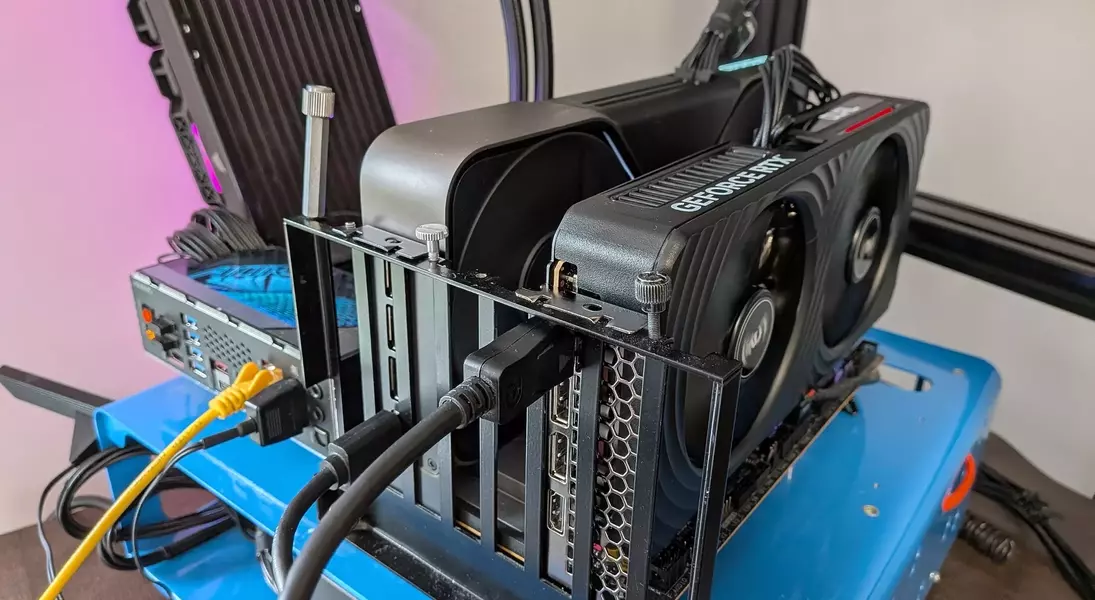
While running DLSS NR on AMD GPUs can lead to even greater performance losses, the general trend of performance hits with ReShade-enabled features remains consistent. However, Marcelo Guibout's ReShade add-on ingeniously allows a secondary GPU, exemplified by an RTX 5060 Ti 16 GB, to handle the neural rendering pass on the final frame and output directly to its own display. This eliminates the need for the primary GPU to transfer the processed frame back, thereby circumventing additional performance overhead and latency.
Development Process and Future Potential
The development of this mod began with a local model, Qwen3.8-27B-Q6_K, running on LM Studio using a pair of RTX 5060 Ti 16 GB cards. This initial setup provided the foundational "add-on scaffold." The majority of the C++ core was then written with the assistance of Claude, though Anthropic's AI also presented various confident yet inaccurate diagnoses during the process. Guibout emphasizes that this is a research-oriented add-on, not a production-ready solution, and encourages users to review the source code thoroughly. Despite these caveats, it represents a significant step forward in the DLSS 5 modding landscape.
The Economic and Practical Considerations of a Dual-GPU Setup
Guibout highlights the core advantage: "Neural post-processing fully utilizes the device it operates on. Running it on the rendering GPU means that any freed capacity from lowering render resolution is immediately consumed by the neural stage, negating the benefits of upscaling. By offloading it to a second GPU, the rendering GPU is genuinely liberated." This insight underscores the motivation behind Nvidia's initial two-GPU demonstrations. While impressive that DLSS NR can function on a single GPU, a coprocessor setup offers the ideal balance.
Challenges and Cost Implications of Adopting a Second GPU
However, there are practical considerations. The current cost of even one high-performance graphics card is substantial. A dual setup with two RTX 5060 Ti cards, considered mid-range in Nvidia's Blackwell series, still amounts to roughly $1,600 in graphics hardware. Furthermore, a second monitor is currently a prerequisite, as the neural output is displayed by the dedicated card. The current ReShade implementation also acts as a final post-processing step, meaning it lacks the integrated depth and motion vector information that official Nvidia implementations utilize. This suggests a need for tighter integration into the rendering pipeline for future advancements, though perhaps not as tightly coupled as with SLI.
A Glimpse into the Future of GPU Utilization
Despite these limitations, this mod presents an intriguing possibility for leveraging existing hardware. It could allow users to keep their current-generation card for neural coprocessing when upgrading their main GPU, potentially enhancing the value proposition of a multi-GPU setup. From a strategic perspective, Nvidia might consider incorporating such a feature to further entrench users within the GeForce ecosystem. While technologies like SLI and CrossFire have waned, and modern motherboards often have fewer PCIe x16 slots due to NVMe SSDs, the community's rapid development in this area is exciting. The ability to experiment with and modify the ReShade implementation offers invaluable insights into the technology's potential and its current constraints, inspiring further innovation in AI-enhanced graphics.
