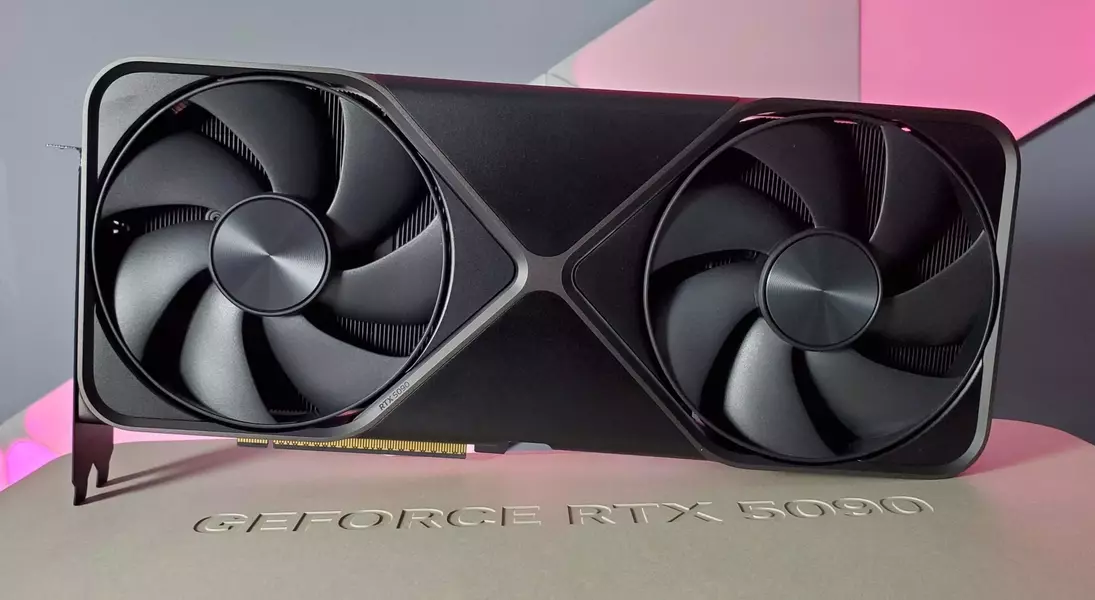
This piece humorously details the extraordinary lengths enthusiasts might go to secure an Nvidia RTX 5090 at its recommended retail price, illustrating the stark contrast between travel costs and current market inflation for high-end graphics cards. It delves into Nvidia's unique purchasing methods and its broader strategic focus on artificial intelligence, forecasting future trends in gaming hardware.
The Unbelievable Journey for a Graphics Card Bargain
The Quixotic Pursuit of an MSRP RTX 5090
Welcome to another chapter in the saga of the elusive Nvidia RTX 5090. Imagine a scenario where flying across continents to an event like PAX West to acquire a graphics card at its suggested price becomes a more financially viable option than purchasing it locally due to exorbitant market markups. This narrative explores just such a predicament, albeit with a touch of satirical exasperation.
Nvidia's Exclusive Access Programs and Event-Based Sales
During PAX West, Nvidia's "GeForce Evangelist," Jacob Freeman, announced an opportunity for attendees to purchase RTX 5090, 5080, or 5070 cards at their Manufacturer's Suggested Retail Price (MSRP). This offer wasn't for direct on-site purchase but involved receiving a code to buy from Nvidia's online store. This approach echoes past initiatives like "Verified Priority Access" (VPA), which previously granted users only a chance, not a guarantee, to buy GPUs at standard prices. Such strategies underscore the ongoing scarcity and high demand for these components.
The Financial Absurdity: Travel vs. Inflated Prices
Despite PAX West having concluded, an analysis reveals the bizarre economics at play: a hypothetical journey from the UK to Seattle, including flight, event pass, and the RTX 5090 at MSRP, would have amounted to approximately $3,440. This figure is considerably less than the $5,500 recently observed for the same card at other retailers. This highlights a market distortion where the cost of international travel can be overshadowed by scalper-driven price hikes on consumer electronics.
Nvidia's Shifting Priorities: From Gaming to AI Dominance
The continuous rise in graphics card prices, seemingly unhindered by demand, points to a broader shift in Nvidia's business focus. The company's impressive profits are increasingly driven by its artificial intelligence segment, overshadowing its gaming division. Recent moves, such as the acquisition of Hugging Face for $13 billion, further cement Nvidia's leadership in the AI industry. This strategic redirection suggests that the gaming hardware market, while still important, may not be the company's primary profit driver, allowing for pricing strategies that prioritize other objectives.
The Future of Gaming Hardware and "VPA IRL" Events
Given Nvidia's burgeoning success in AI, it is plausible that the company will continue to implement unique distribution tactics like "VPA IRL" at events such as QuakeCon and PAX West. These initiatives, while generating buzz, also reflect a market where the gaming community often faces challenges in acquiring high-performance hardware at fair prices. This trend is likely to persist as Nvidia continues to navigate its dual role as a leader in both gaming and the rapidly expanding field of artificial intelligence.
