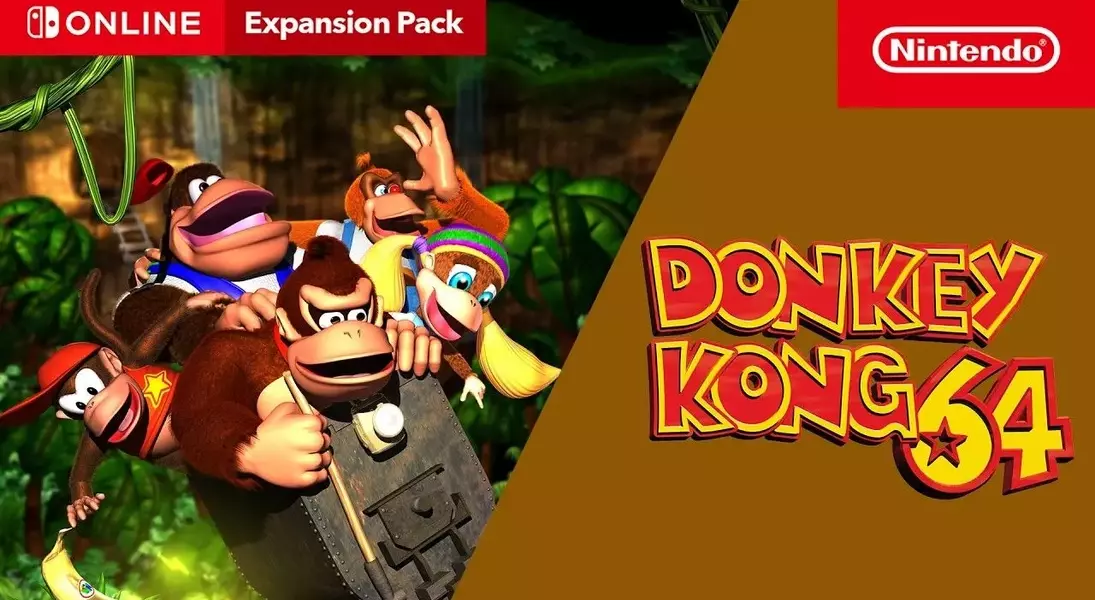
Nintendo has revealed that Rare's esteemed 3D platformer, Donkey Kong 64, will soon be available on the Nintendo 64 collection within Nintendo Switch Online + Expansion Pack. This addition, set for June 3, brings the 1999 title to a new generation of players and allows long-time fans to re-experience its unique blend of exploration and collection-focused gameplay. Despite a reputation that has evolved over time, its arrival marks a notable moment for the service, offering a classic entry from Nintendo's rich history.
Released in 1999, Donkey Kong 64 was a pivotal moment for the franchise, transitioning the beloved ape into a full 3D environment. While initially met with positive reviews, its design philosophy, which heavily emphasized collecting a vast array of items, has since become a subject of debate among critics and players. This approach, similar to Rare's earlier success with Banjo-Kazooie, led to discussions about whether it constituted innovative gameplay or unnecessary padding, with some even suggesting it influenced the trajectory of 3D platformers.
The game's legacy is further complicated by its standing within the broader Donkey Kong series. Polygon, in a 2018 ranking, placed Donkey Kong 64 relatively low among all Donkey Kong titles, suggesting a nuanced appreciation for its contributions. This perspective highlights the divide between the game's initial acclaim and its more critical re-evaluation in subsequent years, contrasting it with the generally revered 2D platformers that preceded it.
Another distinctive element of Donkey Kong 64 is its infamous theme song, the "DK Rap." Composed by Grant Kirkhope, this track has gained a reputation for being both cringeworthy and, paradoxically, beloved. Its unique style has transcended its original context, becoming a cult classic that is arguably more recognized than the game itself, exemplifying the game's quirky and memorable aspects.
While Donkey Kong 64 may not be universally considered Rare's most polished or best 3D platformer for the Nintendo 64, its inclusion in the Nintendo Classics collection is undeniably significant. It represents an important chapter in Nintendo's gaming heritage, providing subscribers with an opportunity to delve into a title that, despite its quirks and controversies, has left an indelible mark on video game culture.
