
The landscape of PC gaming graphics is undergoing a notable transformation, particularly concerning the adoption of ray tracing technology. While once considered a revolutionary visual enhancement, its presence in the most widely played new titles is now surprisingly limited. This article delves into the reasons behind this evolving trend, examining developer choices, hardware accessibility, and the broader implications for game design and player experience.
The Fading Brilliance: Ray Tracing's Evolving Place in Gaming
The Shifting Sands of Graphical Innovation
For a considerable period, the term 'ray tracing' was ubiquitous, synonymous with the pinnacle of visual fidelity in video games. It promised unparalleled realism through advanced light simulation. However, recent economic pressures, such as the persistent memory crisis driving up hardware prices, coupled with the unpredictable performance of games, have brought about a renewed focus on optimization. This emphasis has inadvertently pushed ray tracing to the periphery of mainstream gaming development.
A Closer Look at Recent Releases
An examination of the most popular PC games released over the last twelve months reveals a stark reality: very few incorporate any form of ray tracing, whether optional or integral to gameplay. Delving into Steam's player data, including both current and all-time peak player counts for the top 100 titles, a distinctive pattern emerges. Out of 21 prominent games, a mere five feature genuine ray tracing, and in one notable instance, 'Monster Hunter Wilds', its application is limited to basic reflections.
Beyond Traditional Ray Tracing: Alternative Rendering Approaches
It is important to acknowledge that some titles, while not employing conventional hardware-based ray tracing, utilize sophisticated alternative rendering techniques. For example, 'Borderlands 4' leverages software-driven Lumen, an innovation from Unreal Engine 5, and 'Kingdom Come: Deliverance 2' integrates voxel-based global illumination. These methods, while resource-intensive, demonstrate developers' ingenuity in achieving advanced lighting effects without relying solely on dedicated ray tracing hardware. The prevalence of indie games among top titles further underscores a preference for more budget-friendly and accessible experiences, where high-performance techniques are often secondary to broad compatibility.
The Influence of Engine Defaults and Performance Considerations
The widespread adoption of Unreal Engine 5, with its default software ray tracing solution, Lumen, might lead to an increase in games featuring this technology. However, while hardware-accelerated ray tracing in Lumen offers superior visual quality, it often comes at the cost of performance. Developers must weigh these trade-offs, and many may opt for the engine's default settings to prioritize a smoother player experience. This choice was exemplified by the decision regarding 'Elden Ring: Nightreign', which, unlike its predecessor, has not yet implemented hardware ray tracing, despite the original 'Elden Ring' receiving it post-launch.
A New Era of Prioritizing Playability
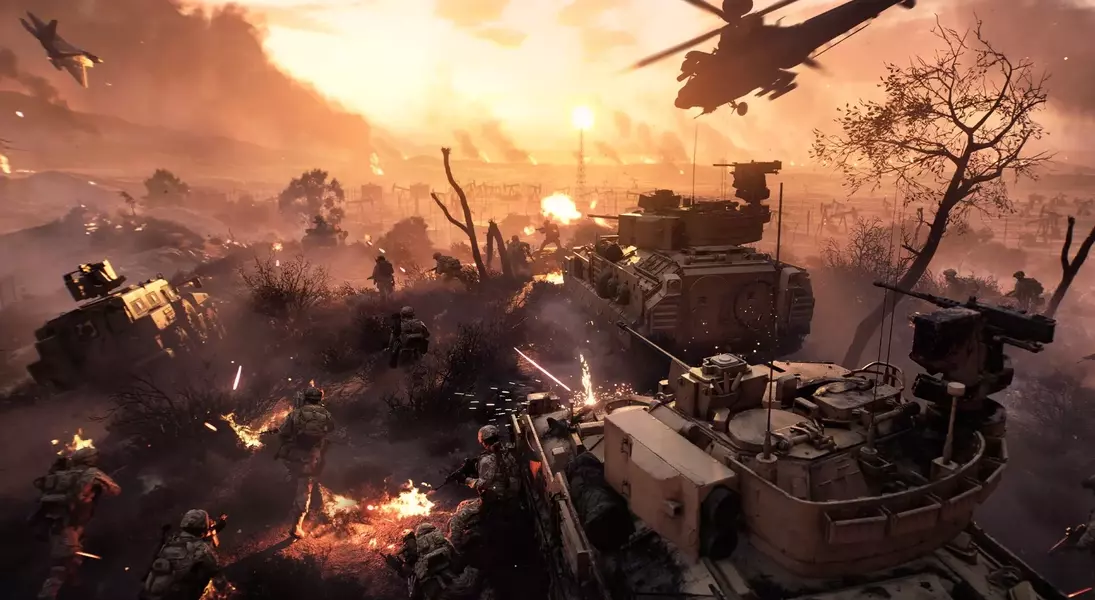
The introduction of the RTX 20 series graphically highlighted hardware-based ray tracing, often overshadowing other advancements like DLSS. Titles such as 'Battlefield' were initially showcased as exemplars of this technology's potential. Yet, 'Battlefield 6' notably launched without it, with its technical director emphasizing playability and performance over the inclusion of ray tracing. This move illustrates a broader industry trend where game fluidity and accessibility are becoming paramount, ensuring a wider audience can enjoy visually impressive games without requiring the absolute latest high-end hardware.
Ray Tracing's Evolving Role: A Tool, Not a Mandate
This shift doesn't signal the demise of hardware-based ray tracing. Upcoming titles like 'Assassin's Creed: Shadows' and 'Doom: The Dark Ages' are confirmed to feature it, or even path tracing. Instead, it suggests a maturation of the technology, transitioning from a mandatory marketing feature to a deliberate artistic and technical choice. When integrated, ray tracing becomes a fundamental component of the game's world-building, rather than a superficial overlay. Despite the increasing availability of compatible graphics cards and the undeniable visual benefits, developers are strategically incorporating ray tracing where it genuinely enhances the game's core experience, balancing visual splendor with optimal performance and wider player access, especially in an era of constrained hardware supply and rising costs. Even without photorealistic puddles, games can still achieve stunning visuals and strong player engagement.
