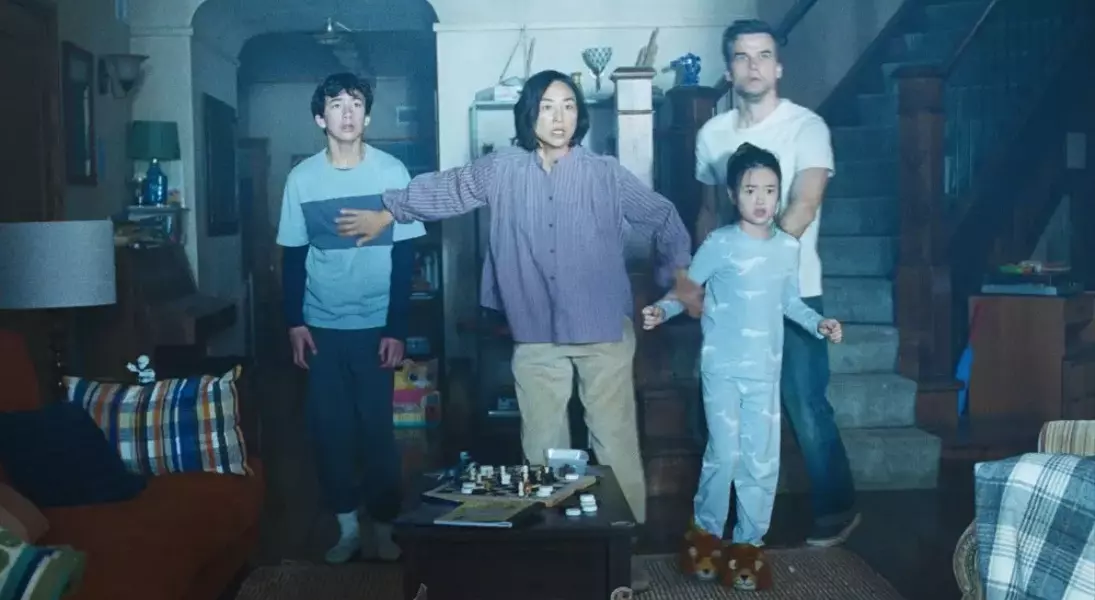
"The Last House," directed by Louis Leterrier, skillfully transforms the shared global experience of lockdown into a suspenseful thriller, premiering on Netflix. This film, featuring convincing performances from Wagner Moura and Greta Lee, delves into the psychological and emotional impacts of involuntary confinement on a family in Seattle. While the narrative occasionally ventures into less convincing science fiction, its strength lies in portraying domestic tensions and the human struggle for survival and adaptation under extreme circumstances. The movie captures the unsettling mood of uncertainty and panic, making a familiar scenario feel fresh and claustrophobic.
The movie effectively balances atmospheric tension with the evolving dynamics within the Delgado family. Despite some plot ambiguities regarding the cause of their entrapment, the film shines through its character-driven storytelling, emphasizing the parents' struggle to maintain authority and protect their children amid escalating fear. The intricate production design of their home, which becomes their entire world, further amplifies the sense of pressure and ingenuity required to adapt. "The Last House" ultimately poses profound questions about resilience, community, and the essence of human connection when faced with an inexplicable crisis.
The Psychological Grip of Confinement
"The Last House" masterfully leverages the collective memory of recent global lockdowns to create a deeply unsettling experience, where a Seattle family finds themselves inexplicably sealed within their home. The film, directed by Louis Leterrier and available on Netflix, effectively generates a pervasive sense of claustrophobia. While the overarching sci-fi explanation for their predicament is at times less robust, the movie consistently excels in its portrayal of a straightforward domestic drama. The unfolding events within the house, marked by increasingly strained family relationships, lend a profound sense of authenticity to the narrative. This focus on human interaction under duress allows the film to resonate deeply with viewers, drawing them into the characters' protective panic and the unsettling uncertainty of their new reality.
The narrative skillfully explores the psychological toll of indefinite isolation on the Delgado family, highlighting their evolving coping mechanisms. Wagner Moura and Greta Lee deliver powerful performances as parents grappling with their roles, torn between nurturing their children and confronting harsh survival realities. Their nuanced portrayals are central to the film's credibility, grounding the fantastical elements in relatable human emotion. The production design, meticulously detailing the house's transformation from a comfortable home to a decaying yet resourceful sanctuary, underscores the constant pressure and ingenuity required for survival. Even as the external mystery deepens, the film's commitment to depicting the internal struggles and adaptations of its characters ensures a compelling and emotionally resonant viewing experience.
Family Dynamics and Existential Questions Amidst Crisis
In "The Last House," the initial camaraderie and resilient spirit of the trapped family and their neighbors gradually give way to the harsh realities of their indefinite confinement. The film effectively depicts how what begins with ingenious hacks and rationed supplies transitions into a more profound realization of a grim new normal. The script, though occasionally vague on the precise logistics of their imprisonment, expertly focuses on the escalating tensions and evolving dynamics within the family unit. The children, Graham and Ruth, are compellingly portrayed as they navigate a rapid and unsettling maturation process, devoid of external societal guidance. Their journey, along with their parents' desperate attempts to maintain a semblance of order and hope, forms the emotional core of the narrative, making their struggle intensely personal and impactful.
The film, while at times venturing into the absurd with its digital effects, is most impactful when it hinges on the unseen and the psychological weight of the unknown. Kevin Jenkins' production design stands out, illustrating the house's gradual deterioration and its ingenious modifications, reflecting both the passage of time and the family's resourcefulness. This attention to detail, showing the persistent clutter and everyday mess amidst the apocalyptic scenario, lends a powerful realism to the fantastical premise. "The Last House" ultimately poses significant existential questions about human resilience, adaptation, and the enduring nature of family bonds in the face of insurmountable odds, offering a unique and thought-provoking cinematic experience about how life persists even when everything seems to end.
