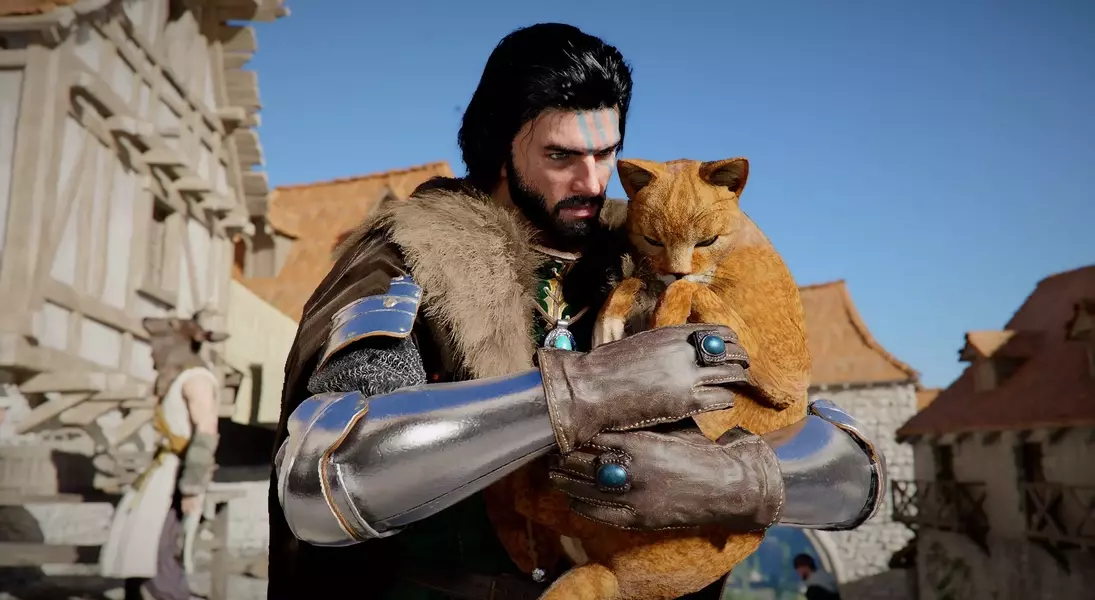
The integration of artificial intelligence in creative industries, particularly gaming, has recently sparked considerable debate. This article explores an incident involving the game 'Crimson Desert,' where the developer, Pearl Abyss, faced community backlash for the use of AI-generated visuals. It delves into the company's response, their explanation for the oversight, and the broader implications for transparency in game development.
Transparency in Art: A New Frontier in Gaming
Unveiling AI's Unintended Presence in Crimson Desert's Visuals
In a recent development that has drawn significant attention within the gaming community, players of 'Crimson Desert' have reported finding elements of AI-generated art embedded within the game's visuals. This discovery, initially highlighted by IGN, prompted a swift and public response from Pearl Abyss, the game's developer. The studio addressed these concerns directly on social media, acknowledging the legitimacy of the players' observations regarding the presence of AI-assisted imagery.
Developer's Rationale for AI Tool Implementation in Initial Stages
Pearl Abyss clarified that the AI-generated visuals were not intended for the final release. According to their statement, these 2D visual assets were created using experimental AI generative tools during the early phases of development. The primary purpose was to quickly iterate and explore various artistic styles and atmospheric concepts. The studio emphasized that this approach allowed for rapid prototyping and conceptualization, streamlining the initial stages of the creative process.
Community's Vigilance Highlights Departure from Quality Standards
The developer further explained that internal protocols dictate the eventual replacement of all placeholder assets, including those generated by AI, with bespoke content that meets their stringent quality and artistic criteria. However, it was the keen eye of the 'Crimson Desert' community that brought to light assets that had inadvertently remained in the game, failing to align with the company's stated standards. This situation mirrors similar controversies encountered by other major titles, such as the latest 'Anno' game and 'Clair Obscur: Expedition 33,' where AI-generated content also slipped through the cracks, leading to public criticism.
Industry-Wide Dialogue on AI Use and the Imperative for Disclosure
The recurring nature of such incidents has fueled an industry-wide discussion about the ethical and practical implications of using generative AI tools. While some studios, like Larian (developers of 'Divinity' and 'Baldur's Gate'), initially experimented with AI for concept art, they have since reconsidered their stance due to community feedback. There is a growing consensus among developers and players alike regarding the critical need for transparent disclosure whenever AI technologies are employed in game development, underscoring a demand for clarity and accountability.
Pearl Abyss's Commitment to Rectification and Enhanced Transparency
In response to the community's feedback, Pearl Abyss expressed sincere apologies for the lack of transparency surrounding their use of AI tools. They acknowledged that while these tools were primarily utilized in preliminary stages with the expectation of replacement, this did not justify the failure to communicate their presence. The company has committed to undertaking a thorough audit of all in-game assets, with a pledge to replace any identified AI-generated art in forthcoming updates. This proactive step aims to restore trust and ensure that all visual content aligns with their established quality benchmarks
