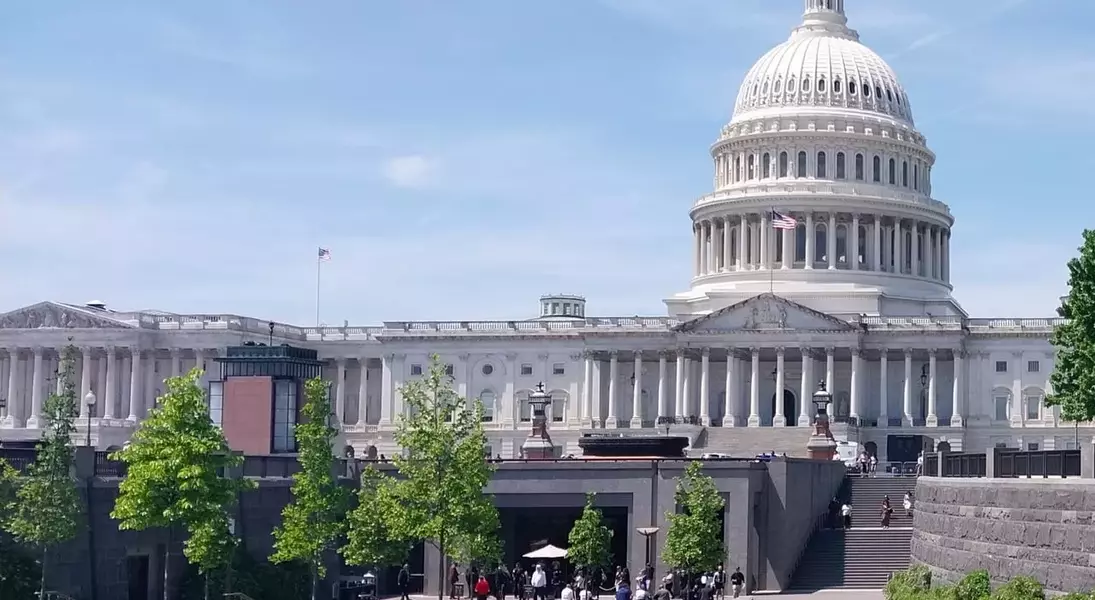
For far too long, the United States Congress has been perceived as a body content to defer to the executive branch on significant policy matters, a trend particularly evident in the realm of immigration. However, recent developments, including the reintroduction of critical agricultural workforce legislation and growing public discontent over immigration enforcement, suggest a potential shift. This moment offers a crucial opportunity for legislative leaders to reclaim their constitutional role and champion comprehensive solutions to one of the nation's most pressing and divisive issues.
Historically, the legislative branch has often struggled to find consensus on immigration, leading to a policy vacuum that presidents have frequently filled through executive actions. Yet, there are precedents where Congress has defied presidential opposition and successfully enacted landmark legislation, demonstrating its capacity for independent and decisive action. Whether current circumstances will galvanize lawmakers to overcome partisan gridlock and address the complexities of immigration reform remains a pivotal question, with profound implications for both the agricultural sector and the nation at large.
The Stalled Legislative Landscape of Immigration Reform
The U.S. Congress has exhibited a prolonged pattern of inaction on immigration policy, frequently delegating the responsibility to the presidential administration. This trend is particularly noticeable in recent decades, leading to a perception that the legislative body has become less influential in shaping the nation's direction. Despite periodic attempts to introduce reform, such as the Farm Workforce Modernization Act, a bipartisan initiative aimed at updating the H-2A guest worker program and offering pathways to permanent residency, success has been elusive. The bill's reintroduction in May sparked cautious optimism in some agricultural circles, yet many remain skeptical given Congress's history of failed efforts, including the widely discussed "Gang of Eight" bill that faltered in the House after passing the Senate. This ongoing struggle reflects a deeper issue of legislative effectiveness and a reluctance to tackle contentious issues head-on, allowing the executive branch to dominate policy discourse.
The current legislative environment, marked by widespread political polarization, has further exacerbated the difficulty of passing meaningful immigration reform. Stakeholders in the agricultural industry, while recognizing the urgent need for a stable workforce, are divided on the likelihood of legislative breakthrough. Some farm leaders express hope that the renewed bipartisan push might signal a genuine desire for resolution. However, others point to the 118th Congress's historical lack of productivity as a testament to the challenges inherent in achieving consensus. This legislative paralysis has meant that critical issues, such as the status of undocumented farmworkers and the future of agricultural labor, remain in limbo. The consequence is a system characterized by uncertainty and instability, impacting not only the livelihoods of countless individuals but also the economic viability of vital sectors. The question then becomes whether the gravity of the situation will finally compel Congress to set aside differences and forge a path forward, echoing past moments of legislative triumph.
Reasserting Congressional Authority: Lessons from History
Despite the recent inclination of Congress to cede policy-making to the executive branch, historical precedents reveal periods where the legislative body asserted its authority and successfully enacted significant reforms, even in the face of presidential opposition. Two notable examples underscore this capacity for leadership: the Family and Medical Leave Act and the welfare reform law of 1996. The Family and Medical Leave Act, which mandates unpaid leave for family and medical reasons, was eventually signed into law by President Bill Clinton after his predecessor, George H.W. Bush, had twice vetoed it. This demonstrates Congress's persistence in pushing through legislation supported by a broad public interest, despite initial executive resistance. Similarly, the welfare reform legislation, a key component of the Republican "Contract With America," was ultimately signed by Clinton after earlier versions faced presidential vetoes, illustrating how legislative priorities can compel executive compromise.
These historical instances serve as a powerful reminder that Congress possesses the inherent capacity to drive major policy changes, even on highly contentious issues. The lessons from these past legislative battles suggest that sustained public pressure and strategic political maneuvering can overcome seemingly insurmountable obstacles. With public opinion increasingly favoring more structured immigration policies, particularly in response to recent enforcement actions, there is a growing demand for legislative solutions that clearly define immigration pathways. This escalating public sentiment could provide the necessary impetus for Congress to act decisively on immigration reform. Should legislative leaders embrace this opportunity, they could not only address a critical national issue but also reassert the long-standing principle of congressional leadership in shaping national policy, potentially influencing future electoral outcomes and restoring faith in the legislative process.
