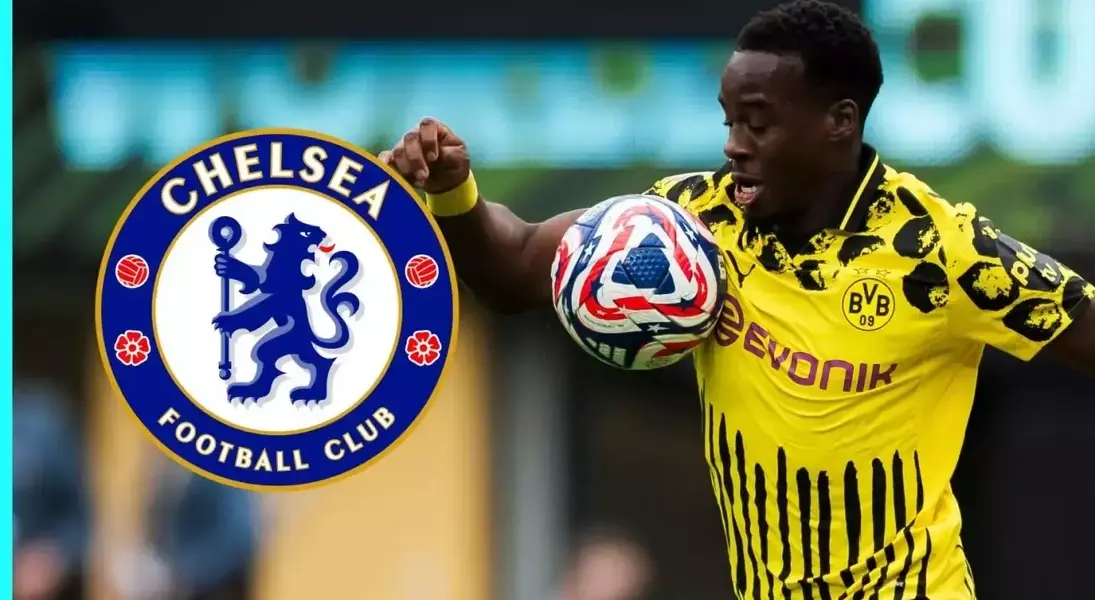
Chelsea's recent transfer market activity has reshaped the landscape of football economics, with their unprecedented spending placing them firmly among the top ten highest-spending clubs in individual transfer windows. This financial might is particularly evident as Chelsea uniquely features four times on this exclusive list, a testament to their ambitious and often controversial recruitment strategy. Despite significant outlays by other European giants, Chelsea's audacious approach to player acquisition remains a dominant force, prompting discussions about sustainable spending and competitive balance within the sport.
The extensive financial commitments made by top football clubs in pursuit of on-field success reveal a fascinating dynamic of ambition and fiscal risk. While some expenditures have yielded impressive returns in terms of trophies and club prestige, others have been met with skepticism and disappointment. The narrative of colossal transfer fees is not new, but the sheer scale and frequency of Chelsea’s investments in recent years have set new benchmarks, compelling rivals to re-evaluate their own financial models in an ever-inflating market.
Chelsea's Unrivaled Financial Power
Chelsea's recent transfer market activity has positioned them as an unparalleled financial powerhouse in football, with their expenditures consistently placing them among the highest-spending clubs globally. The club's aggressive recruitment strategy has seen them make an astonishing four appearances on the list of the ten biggest transfer window spends ever. This includes their summer 2025/26 outlay of over £210.6 million, featuring significant additions like Estevao, Dario Essugo, Mamadou Sarr, Kendry Paez, Liam Delap, Joao Pedro for £55 million, and Jamie Gittens. Their massive spending spree continued in the summer of 2022/23, reaching £254 million on players such as Wesley Fofana, Raheem Sterling, Marc Cucurella, and Kalidou Koulibaly. Furthermore, the winter window of 2022/23 saw an additional £278 million invested in talents like Enzo Fernandez, Mykhailo Mudryk, and Noni Madueke, reflecting an 'anything goes' approach to player acquisition. The most striking figure is the £391 million spent in the summer of 2023/24, a record-breaking sum that brought in 11 players for over £10 million each, including high-profile signings like Moises Caicedo, Romeo Lavia, Cole Palmer, Axel Disasi, Nicolas Jackson, and Christopher Nkunku, significantly outstripping previous records and marking Chelsea as the undisputed leader in transfer market spending.
The club's continuous and substantial investment has not only broken transfer records but also redefined the norms of club expenditure in modern football. This relentless pursuit of talent, particularly highlighted by their £391 million summer 2023/24 spend—a figure that is expected to remain unmatched for at least a decade—demonstrates a clear intent to dominate. While other clubs, like Real Madrid in 2009/10 with £218 million for iconic players such as Cristiano Ronaldo and Karim Benzema, and Juventus in 2018/19 with £223 million for Cristiano Ronaldo, have also made significant splashes, Chelsea's strategy is characterized by its sustained intensity across multiple windows. Barcelona's £235 million spend in 2019/20 on players like Frenkie de Jong and Antoine Griezmann, and PSG's £295 million in 2023/24 for Ousmane Dembele and Bradley Barcola, also represent major investments, but none match Chelsea's repeated presence at the pinnacle of the spending charts. The emergence of Saudi clubs like Al-Hilal, which spent £298 million in 2023/24 for global stars such as Neymar and Ruben Neves, signifies a new era of competitive spending, yet Chelsea remains distinct for its historical and recent financial audacity within the traditional European power structures. The long-term implications of such massive outlays on squad integration and financial sustainability will undoubtedly continue to be a central topic of discussion in the football world.
Comparative Spending Trends Across Elite Football
The analysis of top transfer market expenditures reveals a broader trend beyond just Chelsea's dominance, illustrating how major clubs globally leverage financial might to reshape their squads. Real Madrid's 2009/10 spending spree of £218 million, bringing in football legends like Cristiano Ronaldo and Karim Benzema, set a significant precedent for high-impact transfers, though interestingly, it didn't guarantee immediate domestic supremacy. Similarly, Juventus's 2018/19 outlay of £223 million, largely driven by the acquisition of Cristiano Ronaldo, underscored an ambition for Champions League glory that ultimately remained unfulfilled. These instances highlight that while massive financial investment can attract top talent, it does not inherently translate to instant success or desired outcomes, indicating the complex interplay between financial power and sporting achievement. The historical data also shows diverse strategies, with some clubs focusing on a few marquee signings, while others, like Chelsea, opt for a more widespread acquisition approach.
Barcelona's £235 million expenditure in the 2019/20 season on players such as Frenkie de Jong and Antoine Griezmann, though substantial, preceded a period of significant challenges for the club, raising questions about the efficiency of their investment given their subsequent trophyless season. In contrast, Real Madrid's £279 million spend in 2019/20, which included Eden Hazard, Eder Militao, and Rodrygo, had mixed results; while some players proved pivotal in their 2022 Champions League triumph, others had less impact, illustrating the inherent risks in large-scale transfers. PSG's aggressive spending, exemplified by their £295 million outlay in 2023/24 on players like Ousmane Dembele and Bradley Barcola, reflects the burgeoning financial power of state-backed entities, aiming to assert dominance both domestically and in European competitions. The entry of Saudi Arabian clubs, particularly Al-Hilal's £298 million investment in 2023/24 for an array of international stars including Neymar and Kalidou Koulibaly, further complicates the global transfer market, demonstrating a readiness to compete with traditional European giants for elite players. This trend indicates a widening geographical distribution of financial power and a heightened competition for football talent, forcing clubs to consider not just the cost but the strategic fit and potential long-term value of their acquisitions in an increasingly competitive global market.
