

Chelsea Football Club, under the astute guidance of Enzo Maresca, has remarkably ascended to a new echelon of tactical sophistication and competitive prowess. This resurgence is not merely a testament to financial investment but a profound demonstration of strategic football evolution. The club's recent triumphs, including a strong Premier League finish securing Champions League qualification and an impressive UEFA Conference League victory, underscore a deliberate and successful shift in their playing philosophy. Maresca's approach emphasizes a meticulously structured, possession-oriented game, marking a pivotal moment in the team's trajectory and reshaping perceptions of their footballing identity.
Maresca's Masterclass: Unpacking Chelsea's Winning Strategy
The Dawn of a New Era: Chelsea's Footballing Renaissance
Despite external skepticism, Chelsea's significant investment under Clearlake Capital and Todd Boehly has undeniably propelled the club into a period of genuine footballing credibility. This transformation culminated in May with their return to the Champions League, securing a top-four Premier League finish, swiftly followed by their triumph in the UEFA Conference League. Head coach Enzo Maresca views this evolution as his greatest achievement, shifting the narrative from financial might to on-field tactical brilliance and competitive success.
Tactical Ingenuity: Maresca's Positional Play Philosophy Unveiled
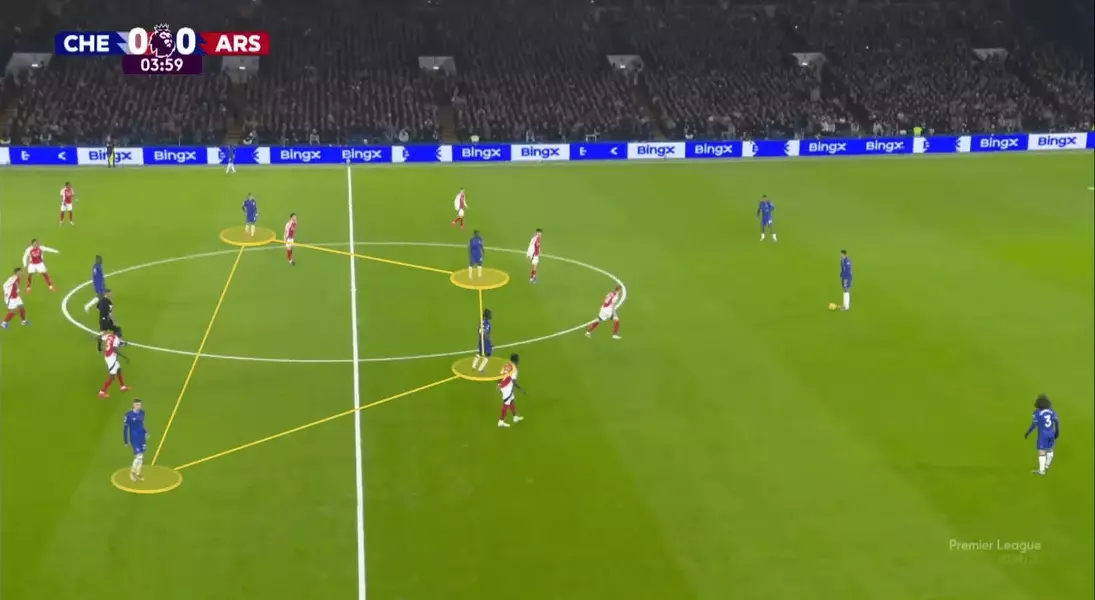
Enzo Maresca's arrival in the summer of 2024 heralded a distinct shift in Chelsea's strategic direction, aligning with Pep Guardiola's principles of possession-based, positional football. Maresca, having served as Guardiola's assistant, adapted this philosophy into a flexible 4-2-3-1 formation that seamlessly transitions into a 3-4-3 in possession. Central to this system is a 'box-shaped' midfield, featuring two defensive midfielders (often including an inverted full-back) and two attacking midfielders exploiting half-spaces, providing both offensive thrust and defensive stability.
Dynamic Adaptability: Flexible Formations and Player Roles
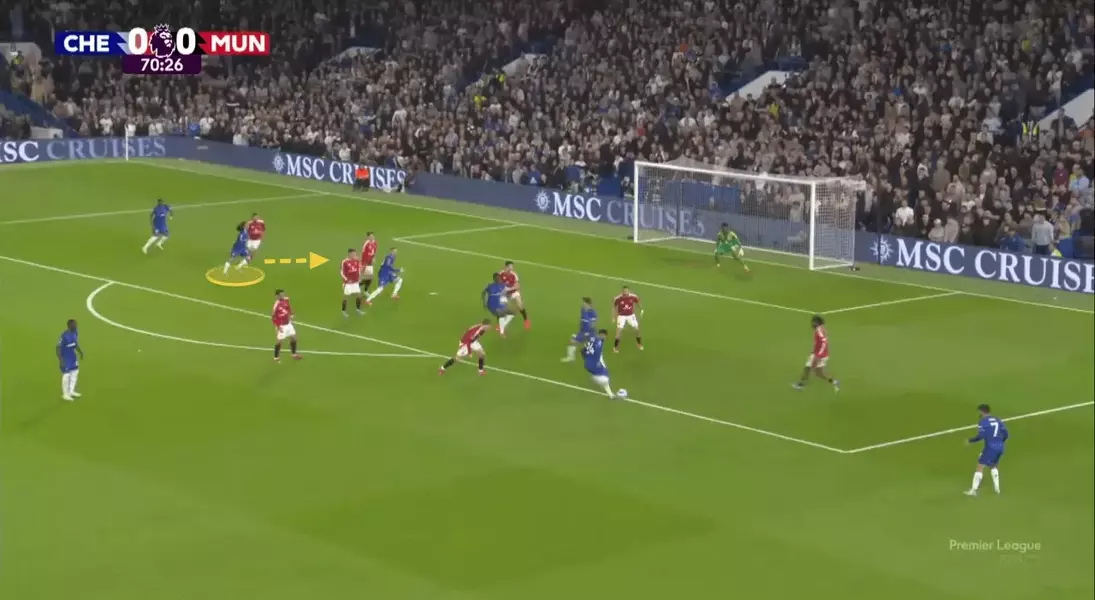
Maresca's tactical blueprint for Chelsea demonstrates remarkable flexibility. The team's structure, while often defaulting to the box midfield, can be dynamically altered based on game situations. Players like Marc Cucurella and Malo Gusto showcase this versatility, inverting into midfield or pushing forward into attacking roles. Cucurella's advanced positioning, for instance, has led to crucial goals, highlighting Maresca's willingness to deploy players in unconventional ways to unlock new attacking dimensions.
Evolving Strategies: Innovation in the United States Campaign
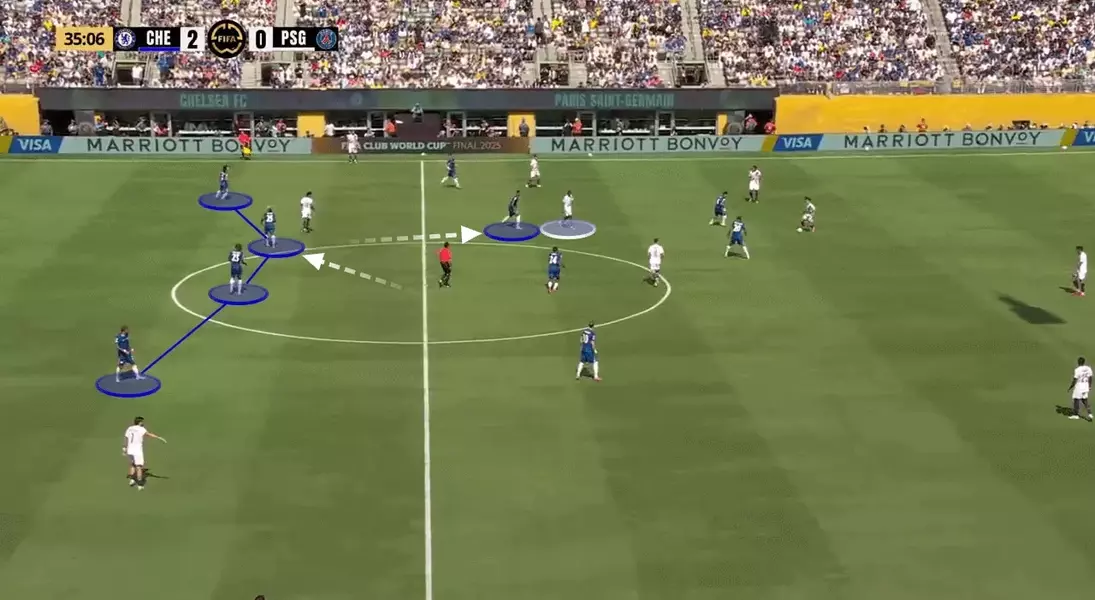
Chelsea's pre-season tour in the United States provided a fertile ground for Maresca to experiment with tactical variations. Although some experimental formations faced challenges, the team's adaptation to a 4-3-3 against Fluminense significantly enhanced their pressing game. In the Club World Cup final against PSG, Maresca showcased further innovation by strategically positioning key players like Cole Palmer and Reece James to maximize offensive output and defensive solidity, demonstrating a proactive approach to exploiting opponent weaknesses.
Defensive Solidity: Pressing, Mid-Blocks, and Offside Traps
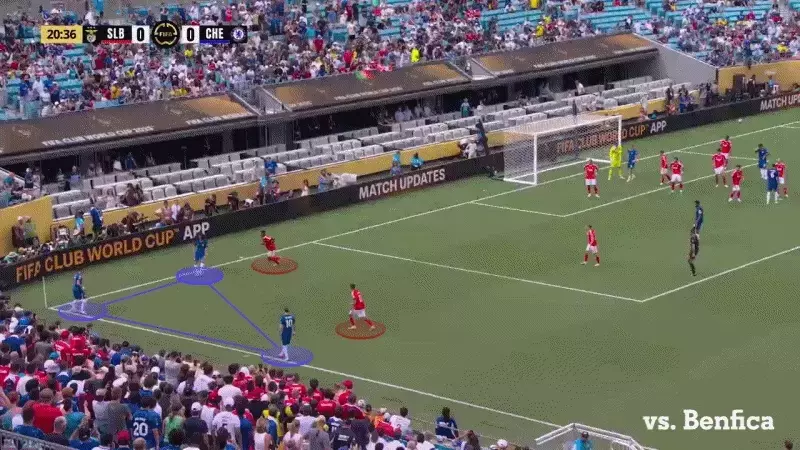
Maresca's defensive schemes for Chelsea are multifaceted, ranging from aggressive man-to-man pressing against top-tier opponents to disciplined mid-blocks that channel opposition attacks. The team's ability to maintain high defensive lines, sometimes employing an offside trap reminiscent of Manuel Pellegrini's tactics, highlights their strategic depth. While occasionally susceptible, this approach frequently catches attackers offside, showcasing a calculated risk-reward strategy aimed at disrupting opponent rhythm and regaining possession.
Building from the Back: Goalkeeper Involvement and Short Corners
Chelsea's offensive philosophy under Maresca begins with the goalkeeper, emphasizing short passes to bait opponents into a press and create space further up the field. This build-up allows for rapid forward transitions, leveraging the pace of their attackers and the elite passing of players like Palmer. Additionally, Maresca has significantly evolved Chelsea's set-piece strategy, favoring short corners to bypass aerial deficiencies and mitigate defensive transition risks. This innovative approach has already yielded tangible results, demonstrating a keen understanding of the squad's strengths and weaknesses.
Squad Depth and Versatility: Reinforcing Maresca's Vision
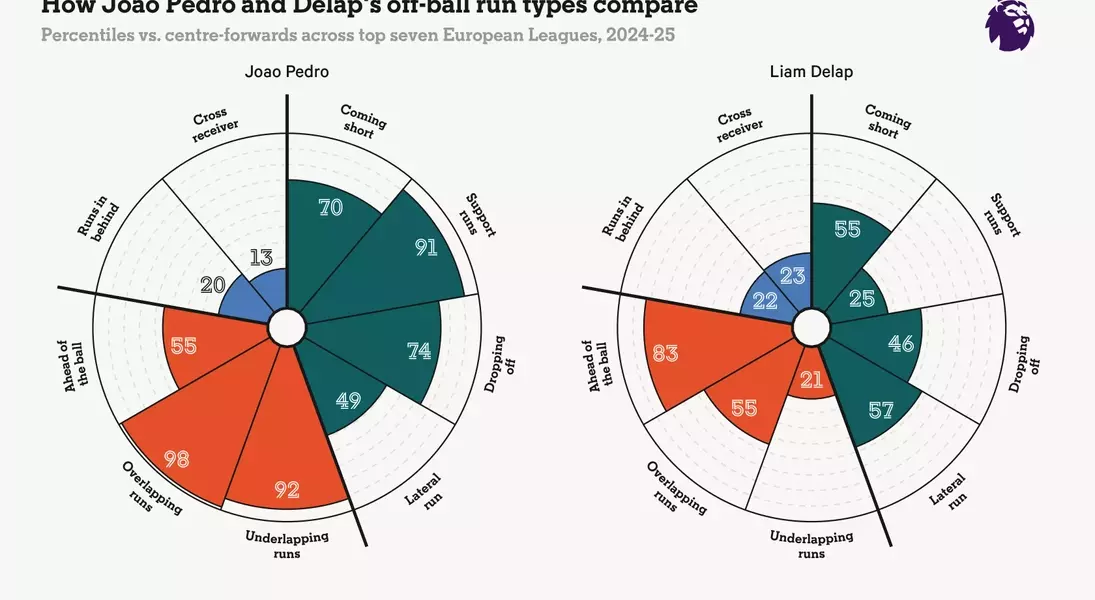
The strategic recruitment during the summer transfer window has further enhanced Chelsea's tactical versatility. New additions like Liam Delap and Joao Pedro provide varied attacking options, while Brazilian prodigy Estevao offers a creative spark on the right flank, alleviating pressure on Palmer. The return of Andrey Santos, coupled with specialist understudies for key defensive roles, ensures greater midfield fluidity and defensive cover. Maresca's willingness to utilize a broad spectrum of players underscores a commitment to tactical adaptability and a sophisticated team identity.
