The latest iteration of OpenAI's large language model, GPT-5, introduces a significant leap forward in personal productivity by offering direct integration with Google's widely-used services, Gmail and Google Calendar. This innovative feature enables the AI chatbot to access and process user data from these platforms, providing personalized assistance for daily organization and communication. This development marks a pivotal moment in how artificial intelligence can interface with our digital lives, moving beyond conversational interactions to actively participate in managing our personal and professional schedules. While the immediate benefits of enhanced organization are clear, this advanced connectivity also raises important discussions regarding data privacy and the extent to which users are comfortable sharing their personal information with AI systems.
Seamless Integration with Google Ecosystem
OpenAI's GPT-5 now offers users the unprecedented ability to link their Gmail and Google Calendar accounts directly to the chatbot. This integration allows the AI to leverage contextual information from emails and scheduled events, transforming it into a proactive personal assistant. By analyzing the data within these Google services, ChatGPT can provide tailored support for various tasks, from generating comprehensive daily outlines to managing urgent communications.
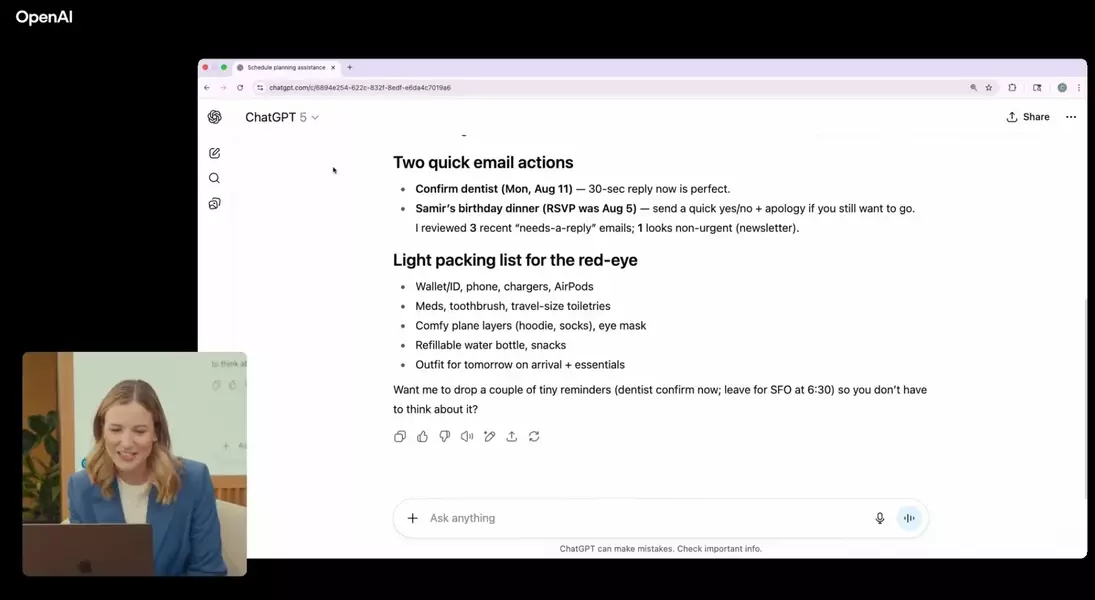
During its announcement, OpenAI provided a live demonstration showcasing the practical applications of this new feature. A presenter successfully utilized ChatGPT to organize her day, illustrating how the AI could intelligently compile a schedule based on calendar entries and prioritize unread emails, even prompting responses to important ones. This functionality suggests a future where AI actively anticipates user needs and automates aspects of personal and professional management, potentially streamlining workflows and enhancing overall productivity. The core value lies in the AI's capacity to synthesize information across different platforms to offer truly personalized and actionable insights.
Privacy Implications and Future Outlook
The introduction of deep integration between ChatGPT and personal Google accounts, such as Gmail and Google Calendar, brings to the forefront critical questions regarding data privacy. For many users, their email inboxes and calendars contain a wealth of sensitive and personal information accumulated over years. Granting an AI chatbot access to such a vast reservoir of data, especially one designed to process and learn from information, naturally raises concerns about the security and ethical handling of this private content.
While the immediate utility of having an AI manage and summarize daily activities is undeniable, users must weigh these benefits against the potential risks associated with sharing their digital footprint. As GPT-5 begins its rollout, the conversation around data governance, user consent, and the boundaries of AI access to personal information will intensify. The success and adoption of this feature will likely hinge on OpenAI's ability to transparently address these privacy concerns and ensure robust data protection measures are in place, allowing users to confidently leverage the AI's capabilities without compromising their personal security.
