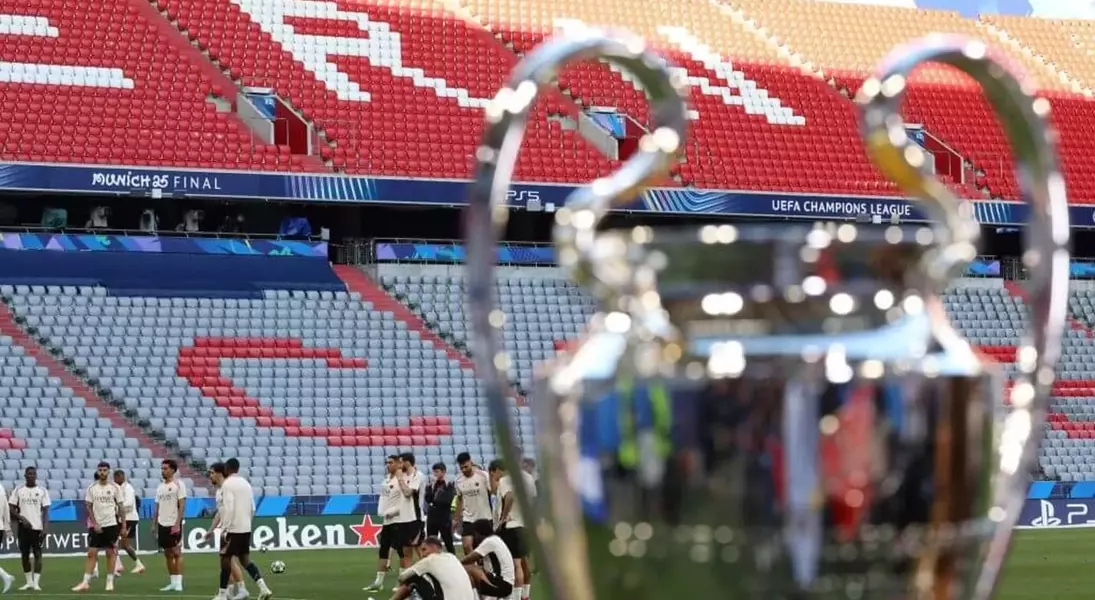
The Union of European Football Associations (UEFA) has declared a notable alteration to its marquee men's club competition, the Champions League final, by rescheduling its start time to an earlier slot. This strategic move, effective from the 2026 tournament in Budapest, is designed to enhance various aspects of the event, from spectator convenience to global viewership.
Reshaping the Final: A New Era for European Football's Grand Finale
A Strategic Shift in Kick-off Time
Beginning with the 2026 Champions League final in Budapest, UEFA will implement an earlier kick-off. The match will now commence at 6 PM Central European Time (CET), a three-hour advancement from the previous 9 PM CET start. This adjustment translates to noon ET and 5 PM BST, aiming to cater to a wider audience and provide a more accommodating schedule for attendees.
Enhancing Fan Engagement and Accessibility
UEFA's rationale behind this time change is multi-faceted. Key reasons cited include the creation of a more favorable broadcasting window, particularly for international viewers, and improved logistical benefits for fans attending the event. An earlier finish will facilitate better access to public transportation and ensure a safer, more convenient journey for supporters returning from the stadium. This consideration underscores UEFA's commitment to prioritizing the fan experience, aligning with comments from UEFA president Aleksander Ceferin, who emphasized the importance of allowing fans to celebrate and reflect on the season's pinnacle match with family and friends.
Economic Boost for Host Cities
The altered kick-off time is also expected to yield positive economic impacts for the host cities. By concluding the match earlier, fans will have ample opportunity to engage in post-game celebrations and activities within the city, thereby contributing more significantly to the local economy. This foresight demonstrates UEFA's holistic approach to event planning, considering not just the match itself but its broader implications for the host locale.
Precedent and Global Market Implications
This isn't the first time UEFA has adjusted the Champions League final's timing; a previous shift saw the final moved to a Saturday in 2010. The current change, while primarily motivated by fan convenience, also inherently opens up new avenues for broadcast reach. Notably, it stands to significantly benefit the Asian market, where the new kick-off time will be more viewer-friendly (e.g., 9:30 PM in India, as opposed to 12:30 AM). While the earlier start may impact the American market, requiring them to tune in earlier, the overarching goal is to cultivate a larger, more global audience for European football's most prestigious club competition.
