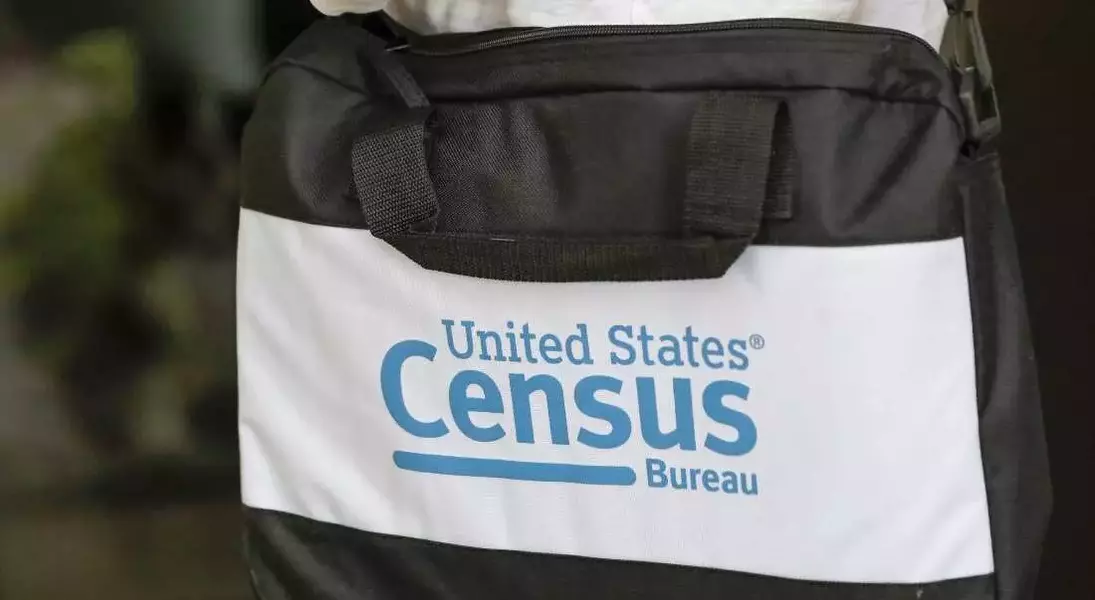
The U.S. Census Bureau has significantly curtailed its 2026 operational trial for the upcoming 2030 census, sparking concerns about the future accuracy of the nationwide population count. Initially designed to test improved methods across various communities, the trial will now proceed with a reduced scope, consolidating operations and introducing the utilization of U.S. Postal Service employees for field work. These adjustments, coupled with the elimination of multilingual support for the online test, have raised questions about the bureau's commitment to a comprehensive and equitable enumeration, particularly for diverse and hard-to-reach populations.
Critics express apprehension that these modifications could hinder the bureau's ability to effectively prepare for the 2030 census, potentially impacting the accurate distribution of political representation and vital federal funding. The integration of postal workers, while potentially offering cost savings, has also drawn scrutiny regarding its efficiency and effectiveness compared to dedicated temporary census personnel. Stakeholders underscore the importance of robust testing to ensure the integrity of the decennial count, which is fundamental to democratic processes and resource allocation across the nation.
Revised Plans for the 2030 Census Operational Test
The U.S. Census Bureau's 2026 operational test, a crucial preliminary step for the 2030 census, has undergone substantial revisions. What was once envisioned as a comprehensive trial involving communities in six states, alongside a national sample of households, has been scaled back to focus on just two locations: Spartanburg, South Carolina, and Huntsville, Alabama. This reduction in scope is a significant departure from original plans, which aimed to evaluate a broader range of demographic and geographic challenges. Furthermore, the bureau is exploring a novel approach by deploying U.S. Postal Service employees to assist with data collection, moving away from the traditional model of hiring temporary census workers. This strategic shift is intended to streamline operations, but it has prompted debate over its potential impact on the test's efficacy and overall cost-effectiveness. The bureau has also decided to limit the online test form to English only, eliminating previously planned Spanish and Chinese language options, which has sparked criticism regarding inclusivity.
These adjustments have generated considerable unease among census advocates and experts, who fear that such cutbacks could jeopardize the precision and reliability of the forthcoming 2030 census. The decision to reduce the number of test sites means that valuable insights from diverse communities, particularly those with unique enumeration challenges like rural areas and Indigenous tribal lands, will be missed. The absence of multilingual support could also disadvantage non-English-speaking populations, potentially leading to undercounts. While the bureau maintains its dedication to conducting an accurate count, these modifications suggest a constrained approach that may not adequately address the complexities of a nationwide census. Concerns also persist regarding the experience and training of postal workers for specialized census tasks, as well as the overall transparency of the planning process, with the administration having disbanded advisory committees and reportedly refused to update lawmakers.
Concerns Over Accuracy and Inclusivity in Future Counts
The recent decisions regarding the 2026 census test have ignited considerable apprehension concerning the ultimate accuracy and inclusivity of the 2030 national count. By significantly narrowing the scope of the test and removing crucial language options, the Census Bureau risks overlooking critical operational lessons essential for a comprehensive enumeration. The exclusion of rural communities and Indigenous tribal lands, initially part of the broader test design, is particularly troubling. These areas often present distinct challenges in data collection, and without thorough testing in such environments, the bureau may be ill-prepared to ensure an accurate count for these populations in 2030. This could lead to a less precise representation of the nation's demographics, affecting both political representation and the equitable allocation of federal resources.
The move to incorporate U.S. Postal Service staff into census operations, while potentially a cost-saving measure, introduces new uncertainties. Experts question whether postal workers possess the specialized training and capacity to effectively perform census tasks in addition to their regular duties. Past analyses, such as a Government Accountability Office report, have indicated that replacing temporary census workers with higher-paid mail carriers may not be the most economical solution. Moreover, the lack of transparency surrounding these changes, including the disbandment of advisory committees and limited communication with Congress, further exacerbates concerns about the integrity of the planning process. Without robust testing across diverse scenarios and sustained engagement with stakeholders, the bureau's ability to achieve its stated goal of an accurate historical count for the 2030 Census appears increasingly compromised, potentially leading to significant undercounts and inequities for various communities.
