
The 2026 Milano Cortina Winter Olympics and Paralympics are set to introduce their official mascots, Milo and Tina, a brother-and-sister duo of stoats. These energetic characters, representing Milan and Cortina d'Ampezzo respectively, are designed to embody the spirit of the Games for a new generation. They symbolize youthfulness, determination, and a contemporary outlook, reflecting the values of agility, environmental consciousness, and embracing differences.
For many decades, every Olympic and Paralympic Games has presented a unique mascot to represent its spirit. The public's response to these symbols has varied significantly over time, from the much-discussed "Izzy" of Atlanta's 1996 Games to the highly popular panda in Beijing 2022, and the distinctive hat-themed mascots of Paris 2024. Now, for the 2026 Winter Games, the role falls to Milo and Tina, two stoats clad in scarves. These creatures are also known as short-haired weasels in North America.
The mascots' creation was a collaborative process involving Italian schoolchildren. Italy's Ministry of Education invited primary and secondary students to submit their ideas, resulting in over 1,600 entries. The public then voted on two shortlisted concepts: a pair of flowers representing a journey from mountain to city, and the sporty stoats with Olympic aspirations. The stoats, Milo and Tina, emerged as the winners, officially revealed in February 2024, two years before the Milan opening ceremony. They are joined by six small snowdrop companions, known as The Flo, symbolizing rebirth and inspired by the runner-up idea.
Tina, the Olympic mascot, is characterized by her cream-colored fur and brown-tipped tail. She is portrayed as a creative and grounded urbanite who enjoys live performances and is captivated by the transformative power of beauty. Her biography emphasizes her adventurous spirit and love for her mountainous homeland. Milo, the Paralympic mascot, features brown fur and a white belly. He is a mountain dweller, known for his playful nature, love for snow, and knack for inventing musical instruments. Milo, born without a paw, has ingeniously learned to use his tail for mobility, demonstrating resilience and an ability to view challenges as opportunities.
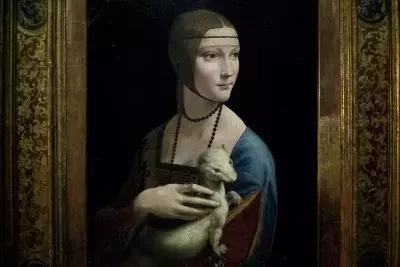
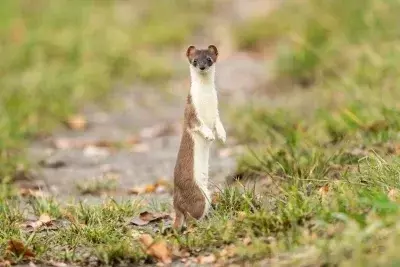
Organizers selected stoats as the ideal animals to capture the essence of modern Italian culture, highlighting their vigor, nimbleness, and speed. They are inherently inquisitive, possess the remarkable ability to change their fur color with the seasons, and exhibit the fortitude needed to thrive in harsh mountain environments. These qualities make them perfect symbols for guiding society towards a more sustainable and equitable future. Belonging to the mustelid family, which includes weasels and otters, stoats are found across Eurasia and North America, including the Italian Alps, where they are often called ermine due to their white winter coats. Historically, their black-tipped tails adorned royal garments, signifying purity, though the term "weasel" has unfairly developed a negative connotation. Despite their small size, stoats are formidable hunters, known for their unique "dance" that can disorient and capture prey significantly larger than themselves.
The chosen mascots, Milo and Tina, are expected to be compelling ambassadors for the 2026 Winter Games. Their unique characteristics and backstories aim to inspire and engage a broad audience, particularly Generation Z. By embodying values such as resilience, adaptability, and environmental awareness, these mascots will promote the ideals of the Olympic and Paralympic movements and foster a sense of unity and excitement leading up to the Games.
