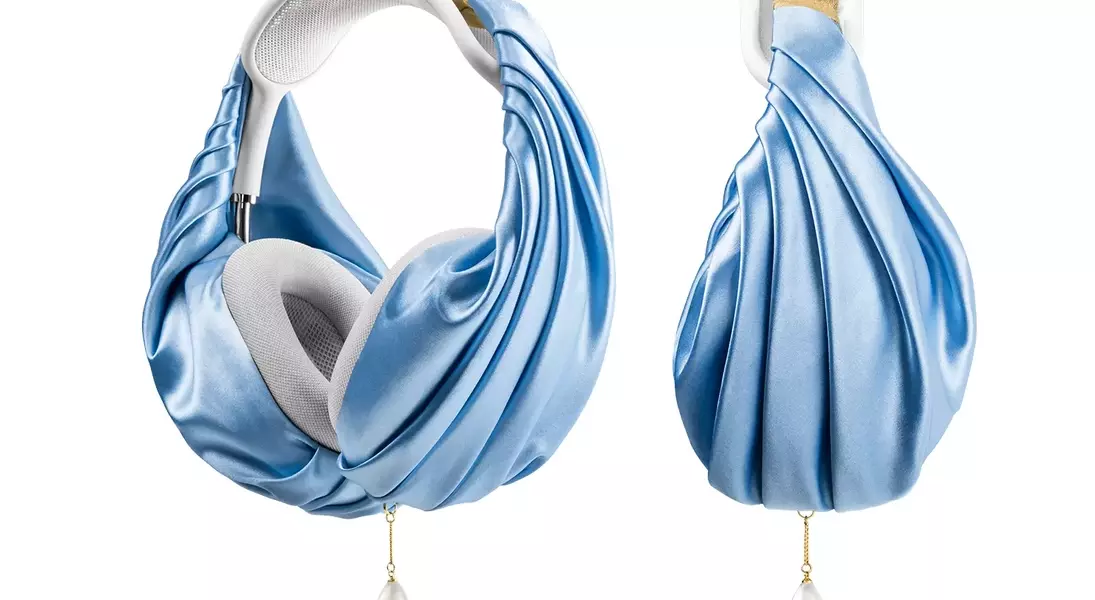

Casetify has recently introduced a novel accessory designed for Apple’s AirPods Max, drawing profound inspiration from a celebrated artwork. This innovative product transcends mere protection, offering a distinct aesthetic transformation for the wearer. The creative approach highlights a growing trend where technology meets classical art, allowing users to express their individuality through iconic imagery. The strong market response, despite a notable price point, underscores the appeal of such unique fusions.
Casetify Launches Art-Inspired Headphone Accessory Transforming Wearers into Classic Portrait
In a fascinating convergence of technology and fine art, Casetify, a renowned accessory brand, has launched an intriguing new product for Apple AirPods Max headphones. This groundbreaking accessory, released on August 8, 2025, forms part of a broader collection celebrating the treasured pieces housed within The Hague’s Mauritshuis museum in the Netherlands. The standout piece, a “silk-like textile” wrap, reimagines Johannes Vermeer’s timeless 1665 masterpiece, “Girl with a Pearl Earring.”
Crafted with a meticulously pleated design, the fabric of this headphone cover ingeniously mimics the distinctive headscarf donned by the enigmatic subject of Vermeer’s painting. Beyond its artistic flair, the wrap serves a practical purpose, safeguarding the outer earcups of the AirPods Max. An additional charming detail is a dangling pearl affixed to one side, designed to complete the illusion and allow the wearer to subtly “cosplay” the famous portrait with a simple over-the-shoulder glance. This artistic cover, priced at a substantial $199 — approximately half the cost of the $549 AirPods Max — surprisingly saw its initial stock rapidly depleted from Casetify’s online store, indicating a high demand for such niche, high-concept tech embellishments.
This innovative product from Casetify challenges our conventional perceptions of technology and art. It prompts us to consider how everyday gadgets can evolve from purely functional items into canvases for artistic expression. As a journalist, I find this development particularly intriguing because it signifies a shift in consumer behavior — people are no longer just seeking utility; they crave personalization and a connection to culture. This trend suggests a future where our devices become extensions of our personal style and artistic preferences, blurring the lines between the digital and the aesthetic. It’s a reminder that even in our fast-paced, tech-driven world, there’s still a deep appreciation for the beauty and narrative that art provides.
