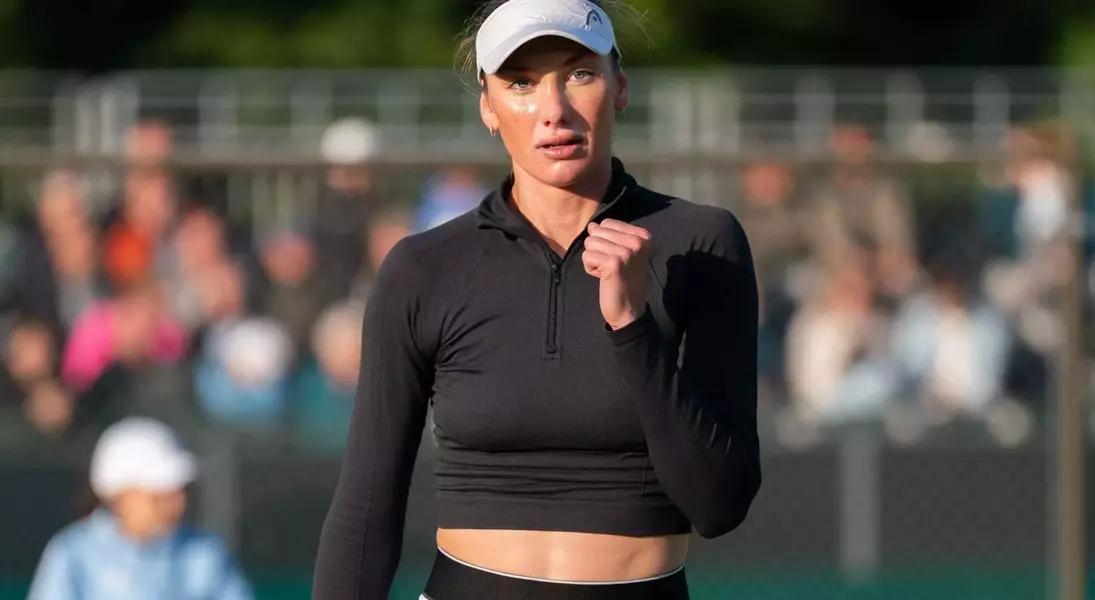
This article chronicles the inspiring journey of Canadian tennis sensation Carson Branstine, highlighting her recent impactful participation at Wimbledon, where she demonstrated immense resilience and newfound confidence. It delves into her surprising contemplation of an alternative career path outside of professional tennis and her unique motivation to ascend the WTA rankings. Branstine's narrative underscores the critical role of self-belief and strategic goal-setting in achieving sporting excellence, even in the face of daunting challenges.
Branstine's Resurgent Path and Ambitious Goals Following Wimbledon
On Monday, July 14, 2025, Canadian tennis player Carson Branstine, at 24 years old, concluded her spirited run at the prestigious Wimbledon Championships. Despite successfully navigating through three demanding qualifying rounds, her campaign ended in the first main draw match, where she faced a formidable opponent in the world's top-ranked player, Aryna Sabalenka. Branstine ultimately succumbed in straight sets, with a scoreline of 6-1, 7-5, marking the end of her journey at the tournament.
However, Branstine's Wimbledon experience proved to be profoundly transformative. In a revealing interview on The Slice Tennis podcast, released on July 9, she disclosed a significant turning point in her career: a period where she considered leaving professional tennis entirely. She even pursued a venture capital job in Downtown Los Angeles, reaching the final interview stage. Yet, at a crucial juncture, Branstine decided to recommit to her tennis dreams, opting not to attend the final job interview and instead giving her athletic pursuits another chance.
Looking ahead, Branstine has set an ambitious and uniquely motivated objective for her tennis career. As she shared in a social media post on July 8, her immediate aspiration is to break into the top 100 of the WTA rankings. This professional milestone holds a special personal significance: she intends to keep her Uber driver app on her phone until she achieves this ranking, serving as a constant, albeit humorous, reminder and motivator. Branstine also noted that, due to age restrictions, she has not yet given any rides through the platform.
During the same podcast discussion, Branstine reflected on her match against Sabalenka, describing it as a significant confidence booster. Despite the initial struggles in the first set, where she felt she was "beating herself" with unforced errors rather than being outplayed, she realized she possessed the necessary "game" and "weapons" to compete with the sport's elite. Her analysis of the match statistics, which showed an equal number of winners (17 each) and her superior ace count (seven to Sabalenka's three), reinforced her belief in her capabilities and potential for future success against top-tier opponents.
Reflections on Resilience and Unconventional Motivation in Professional Sports
Carson Branstine's candid revelation offers a compelling glimpse into the intense pressures and often solitary struggles faced by aspiring professional athletes. Her story is a testament to the power of resilience and the courage it takes to pursue a demanding dream. In a world where success often seems linear, Branstine's journey reminds us that the path to achievement can be filled with doubts and detours. Her unconventional motivational tactic—keeping the Uber driver app as a tangible symbol of her commitment—is both quirky and profoundly relatable. It highlights the deeply personal nature of ambition and how individuals find unique ways to propel themselves forward, even when the finish line feels distant. This narrative challenges us to consider what unconventional motivators might exist within our own lives that, if embraced, could push us toward our aspirations with renewed vigor and determination.
