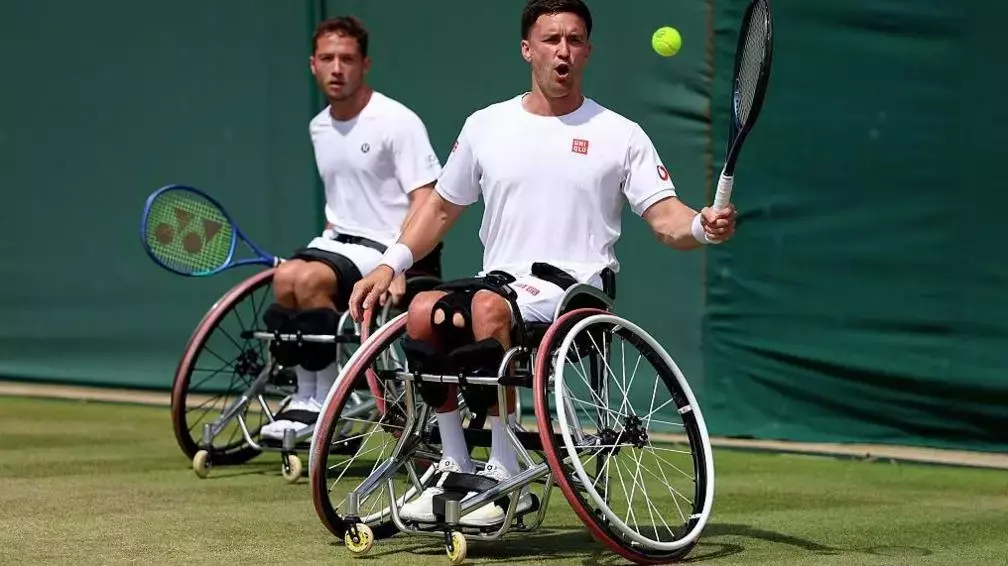
In a compelling display of elite wheelchair tennis, British stalwarts Alfie Hewett and Gordon Reid faced a tough challenge in the Wimbledon men's doubles final. Despite their aspirations for a historic 24th Grand Slam victory and a third consecutive title on home soil, the duo ultimately succumbed to the strong play of their opponents. This hard-fought contest highlighted the intense competition and high stakes present in professional wheelchair tennis, where every point and set can shift the momentum. The match, filled with skillful rallies and strategic plays, served as a testament to the dedication and talent of all athletes involved, underscoring the unpredictable nature of high-level sporting encounters.
Wheelchair Tennis Duos Battle for Wimbledon Crown
On a bright and sunny afternoon of July 12, 2025, the hallowed grounds of Wimbledon's Court One witnessed an enthralling men's wheelchair doubles final. Great Britain's celebrated pair, Alfie Hewett and Gordon Reid, stepped onto the iconic court aiming for a remarkable hat-trick of Wimbledon titles and their 24th Grand Slam together. However, they were met by a resolute challenge from the skilled combination of Spain's Martin de la Puente and the Netherlands' Ruben Spaargaren. The atmosphere was electric, with a passionate home crowd vociferously supporting the British duo, contributing to a vibrant and unforgettable spectacle.
The match began with intense exchanges, showcasing the high caliber of both teams. Neither pair conceded ground easily, leading to a closely contested first set. The score remained tight at 5-5 before de la Puente and Spaargaren secured a crucial break. Yet, Hewett and Reid immediately retaliated, breaking back to force a tie-break. Despite this resurgence, the Spanish-Dutch alliance demonstrated remarkable composure, dominating the tie-break with a commanding 7-1 scoreline to claim the opening set.
Entering the second set, the top-seeded British pair, known for their dominance in wheelchair doubles, showed resilience by breaking early and consolidating their lead to 2-0. Nevertheless, a series of unforced errors began to plague their game. A critical double fault by Hewett at a crucial breakpoint allowed their opponents to draw level. Capitalizing on these newfound opportunities, de la Puente and Spaargaren seized another vital break, ultimately closing out the set 7-5 and securing the coveted Wimbledon title. The day also saw disappointment for another British contender, Gregory Slade, who alongside Donald Ramphadi, faced defeat in the quad doubles final against the top-seeded duo of Guy Sasson and Niels Vink, with a final score of 6-0, 6-2.
Following their intense battle, Gordon Reid expressed his disappointment, acknowledging their rivals' well-deserved victory. He emphasized the honor of competing before such an appreciative Wimbledon crowd, suggesting that even in defeat, the experience remained profoundly meaningful. Alfie Hewett echoed these sentiments, highlighting the incredible privilege of playing on such a renowned court and expressing hope for continued opportunities to compete in future years, further solidifying the legacy of wheelchair tennis at Wimbledon.
The Wimbledon Championships consistently offer a platform for extraordinary athletic prowess and emotional narratives, and this year's wheelchair doubles finals were no exception. The matches served as a powerful reminder of the incredible dedication and skill possessed by these athletes, who overcome physical challenges to compete at the highest echelons of their sport. While victory eluded the British pairs on this occasion, their performances undoubtedly inspired many, reinforcing the importance of perseverance, sportsmanship, and the sheer love of the game. Such events not only celebrate sporting achievements but also champion inclusivity and showcase the remarkable capabilities of individuals, encouraging broader participation and appreciation for disability sports globally.
