
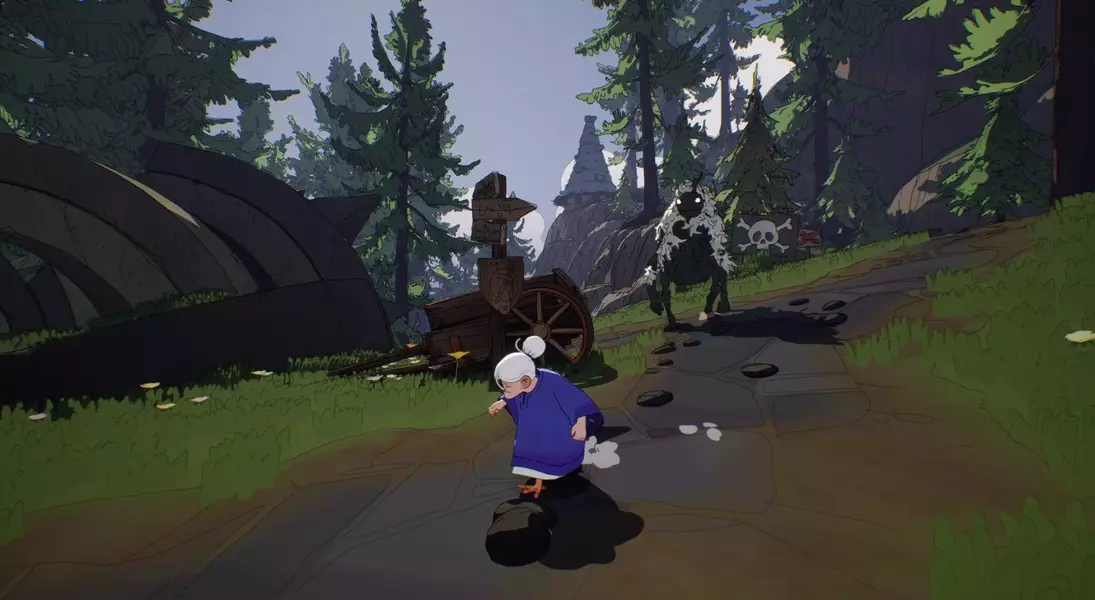

Bruce Straley, known for his directorial work on 'The Last of Us', is back in the gaming world with his new studio, Wildflower Interactive, introducing their debut title, 'Coven of the Chicken Foot'. This PC adventure game centers around an elderly witch, Gertie, and her unique, reactive companion, emphasizing a fresh approach to character dynamics and player-driven narratives. Unveiled at the 2025 Game Awards, the game promises an innovative experience where the companion learns and adapts based on the player's interactions, moving away from traditional scripted events. Straley aims to challenge conventional hero archetypes by placing a less conventional protagonist at the forefront, encouraging players to explore and uncover stories that are uniquely their own.
The inspiration for 'Coven of the Chicken Foot' stems from Straley's desire to evolve the companion system seen in his previous works. He aimed to create a character that is far more responsive and integrated into the gameplay than a typical NPC. The companion in this new title functions almost like a child, progressing through stages of curiosity, mimicry, and ultimately, assimilation. This dynamic learning process means that the companion's behavior and abilities will directly reflect the player's actions and choices within the game world, making every playthrough distinct.
Gertie, the protagonist, is portrayed not as a powerful, traditional video game hero, but as an aging witch with limitations. Her magic is taxing, and she is prone to errors, which adds to her charm and complexity. Straley deliberately designed Gertie to challenge the typical hero's journey, exploring themes of sacrifice, loyalty, and determination through a character who is not inherently equipped for grand adventures. This narrative choice injects a layer of moral ambiguity, echoing the thematic depth found in 'The Last of Us'.
The companion's learning mechanism is a core innovative aspect. For example, if Gertie places a puzzle piece, the companion observes the action, then begins to mimic it by trying to slot various objects into different places. This behavior, initially driven by pure mimicry, eventually evolves into an understanding of purpose when the companion inadvertently solves a puzzle. Furthermore, the companion reacts to environmental cues and player actions, such as donning headgear. If Gertie wears a hat, the companion will notice, eventually try to wear hats itself, and even offer them to Gertie in certain situations, creating a deeply personalized and evolving relationship.
Straley emphasizes that this game prioritizes a slower, exploration-focused pace over a strict, linear storyline. The design intentionally moves away from traditional three-act structures and hardcore narrative beats to allow the organic development of the player-companion relationship to drive the experience. This approach ensures that each player will foster a unique bond with the companion and generate their own distinct narrative sparks, providing a fresh and unpredictable adventure. The game is currently in development for Windows PC and is available to wishlist on Steam.
This groundbreaking title redefines companion AI, offering players an unparalleled level of interaction and emergent storytelling. By embracing an open-ended design and challenging conventional heroic narratives, 'Coven of the Chicken Foot' invites players to engage with a world where their actions profoundly shape their companion's growth and the unfolding journey, promising a profoundly personal and memorable gaming experience.
