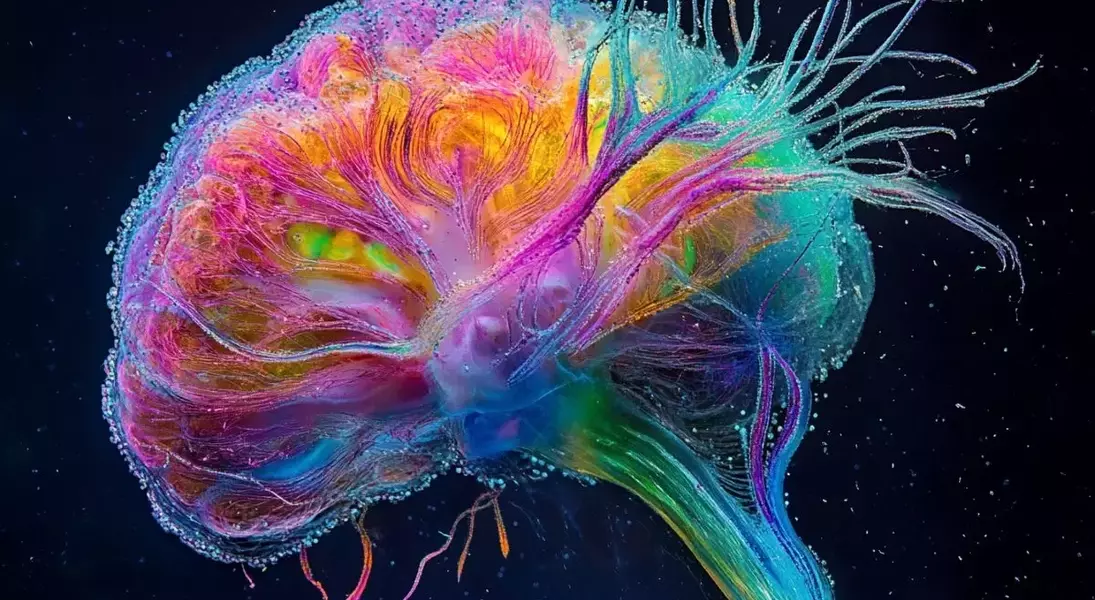
Recent scientific advancements have unveiled groundbreaking insights into how the brain processes learning. Researchers at Johns Hopkins University identified the precise moment when an animal acquires a new skill by observing individual neurons in mice. Contrary to prior assumptions, this study revealed that learning can occur astonishingly quickly, within 20 to 40 attempts, and takes place in the sensory cortex—a region traditionally linked to perception rather than cognition. Additionally, the findings suggest that even after mastering a task, animals may continue making errors as part of deliberate knowledge testing.
Innovative research conducted by neuroscientists has redefined our understanding of the mechanics behind learning. By monitoring neural activity in mice during auditory tasks, scientists discovered that learning happens much faster than previously believed. This rapid acquisition of skills occurs not only in higher-order brain regions but also in the sensory cortex, which is typically associated with sensory processing rather than cognitive functions. The study highlights that even after achieving mastery over a task, animals still make occasional mistakes, possibly to test or reinforce their understanding.
The investigation focused on teaching mice to respond differently to specific tones. As the training commenced, researchers recorded neuron activity in the auditory cortex, uncovering two major surprises. First, the speed at which mice learned was significantly faster than expected. Second, the learning process was driven by the sensory cortex, challenging conventional wisdom about its role. According to lead researcher Kishore Kuchibhotla, these findings suggest that animals might possess latent knowledge they choose not to display consistently, indicating a distinction between learning and performance.
Further exploration revealed distinct patterns of neural activity linked to learning and performance improvements. A reward-prediction signal emerged early in the learning process, fading once the mice became experts. Another ensemble of cells controlled licking suppression, contributing to gradual performance enhancement. These discoveries indicate that the sensory cortex performs higher-order computations beyond mere sensory input processing, driving both swift learning and steady performance gains.
This research reshapes our comprehension of the sensory cortex's fundamental role in learning. It suggests that animals are more intelligent than previously thought, capable of toggling between learning and performance as they refine their skills. Such findings could pave the way for deeper insights into human cognition and learning mechanisms, offering potential applications in education and therapy. Through this work, scientists have illuminated the intricate dynamics of brain activity during the learning process, marking a significant step forward in neuroscience.
