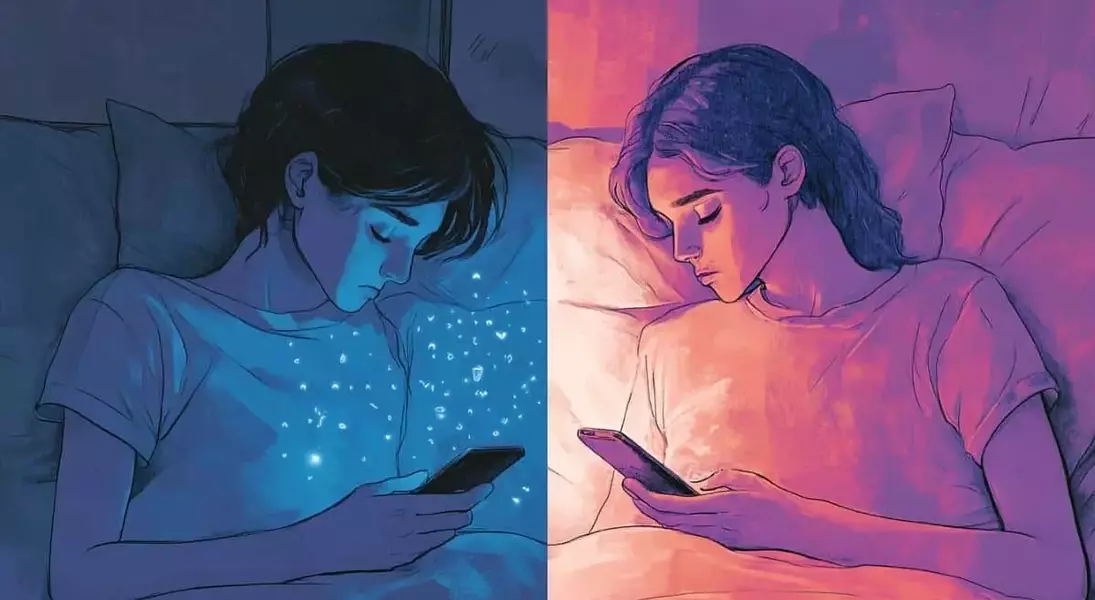
A groundbreaking study has uncovered a significant correlation between staying up late and an increased risk of depression among young adults. By analyzing data from 546 university students, researchers have identified key factors such as sleep quality, alcohol consumption, and mindfulness levels that may contribute to this association. The findings suggest that interventions targeting these areas could potentially mitigate mental health risks in this demographic.
Exploring the Connection Between Sleep Patterns and Mental Health
In the vibrant yet demanding environment of university life, where schedules often fluctuate, a recent investigation conducted by Simon Evans and his team at the University of Surrey delves into the impact of sleep patterns on mental well-being. During the course of their research, which involved an online questionnaire completed by 546 students, it was revealed that individuals categorized as "evening chronotypes" exhibited notable differences compared to their "morning chronotype" counterparts. These differences included diminished sleep quality, elevated alcohol intake, and reduced mindfulness.
The study, published on March 19, 2025, in the open-access journal PLOS One, highlights that participants with a preference for late-night activities reported poorer restorative sleep, consumed higher quantities of alcohol, and demonstrated lower levels of mindfulness. Such disparities were found to significantly influence the likelihood of experiencing depressive symptoms. Furthermore, the cross-sectional nature of the study means that while a strong association is evident, causality cannot be definitively established without longitudinal research.
Despite these limitations, the insights provided by the study offer valuable directions for future interventions. Enhancing mindfulness practices, improving sleep hygiene, and addressing alcohol consumption habits could play pivotal roles in reducing the prevalence of depression among young adults.
From a journalist's perspective, this research underscores the importance of recognizing individual differences in circadian rhythms and their implications for mental health. It challenges educators and policymakers to integrate more holistic approaches into campus wellness programs, emphasizing not just academic success but also overall well-being. For readers, especially those within the targeted age group, it serves as a reminder to prioritize self-care and consider how daily habits might subtly shape emotional landscapes over time. In a world increasingly dominated by late-night screens and bustling social calendars, fostering healthier routines could pave the way toward brighter tomorrows.
