
This analysis delves into the recent performance of the cryptocurrency market, specifically focusing on Bitcoin's surprising decline amidst otherwise favorable macroeconomic and regulatory conditions. It explores the lack of correlation between crypto assets and traditional safe havens like gold, as well as the dollar, while highlighting a persistent, albeit diverging, correlation with equities. The core argument centers on Bitcoin's technical constraints, such as limited transaction speeds and a plateauing user network, as the key factors impeding its growth and potentially paving the way for newer, more efficient blockchain technologies.
Bitcoin's Shifting Tides: Why the Digital Gold Narrative is Being Rewritten
Crypto's Current Market Paradox: A Deep Dive into Declining Valuations
The cryptocurrency sector currently presents a perplexing scenario: a significant downturn in market value, contrasting sharply with what appear to be supportive macroeconomic and regulatory backdrops. This unusual behavior suggests that the forces at play are not merely external, such as the fluctuations of gold or the US dollar, but rather deeply rooted in the intrinsic characteristics of Bitcoin itself.
Unpacking the Recent Crypto Market Sell-Off: Beyond Macroeconomic Influences
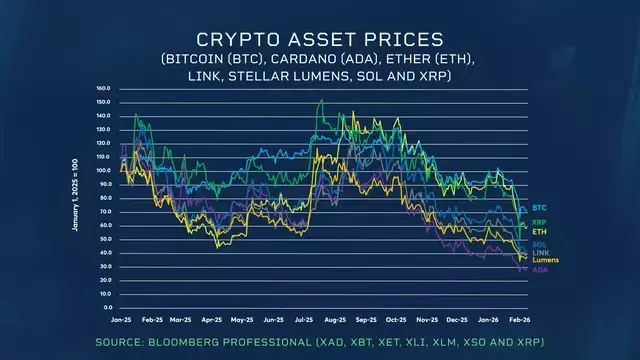
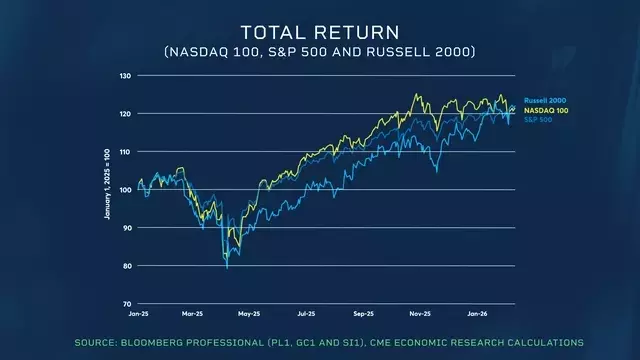
The commencement of the year has witnessed a substantial sell-off across the cryptocurrency landscape. Bitcoin has experienced declines of up to 30%, while other digital currencies like Cardano and Stellar Lumens have seen their values plummet by as much as 70%. This widespread depreciation is particularly noteworthy given the prevailing economic climate, which, in theory, should have fostered a more positive environment for digital assets. Surprisingly, this period has also seen an increase in precious metals prices, a weakening US dollar, and a continued upward trend in equity markets. These disparate movements prompt a critical examination of the true determinants of cryptocurrency valuations.
The Unraveling Threads: Crypto's Disconnect from Traditional Investment Narratives
A closer look at the relationship between cryptocurrencies and established assets like gold reveals a surprising lack of strong correlation. Apart from a brief period of alignment between 2020 and 2021, crypto assets have largely moved independently of gold. This divergence is significant, especially considering that both asset classes share the fundamental appeal of scarcity, acting as potential hedges against inflationary pressures that traditional currencies might face. Yet, despite this shared foundational principle, their market performances remain distinctly separated. Similarly, while there's an intuitive expectation for cryptocurrencies to exhibit an inverse relationship with the US dollar, this correlation has been almost non-existent in recent years, despite a negative trend in 2022 and 2023. Intriguingly, cryptocurrencies have maintained a positive correlation with the US stock market since 2020, even as their price trajectories have recently diverged, with equities rising and crypto values generally falling.
Bitcoin's Foundational Bottlenecks: A Hurdle to Widespread Adoption and Growth
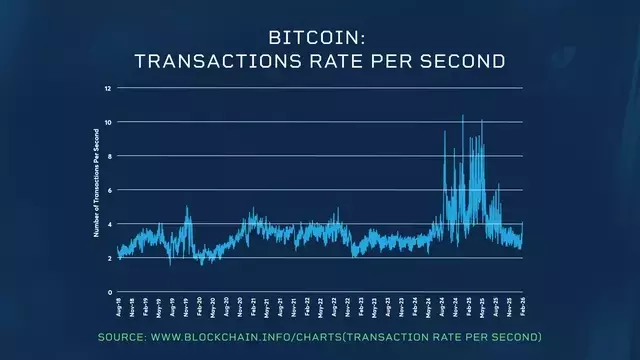
When examining other prominent digital tokens such as Ether, Solana, XRP, and Chainlink, a singular, dominant correlation emerges: their performance is largely tethered to Bitcoin. However, the market leader itself appears to be facing considerable internal challenges. For instance, Bitcoin's user network expansion has largely stagnated. Its daily transaction volume peaked around December 2017 and has shown little growth since. This plateau is primarily attributable to the blockchain's inherent slowness, capable of processing only three to seven transactions per second. In stark contrast, high-performance networks like Solana can manage thousands of transactions per second. While Bitcoin's value continues to be underpinned by its scarcity, akin to gold, the critical question for investors is whether alternative tokens, with their practical applications and superior blockchain efficiencies, can eventually break free from Bitcoin's gravitational pull and usher in a new era for the cryptocurrency space.
