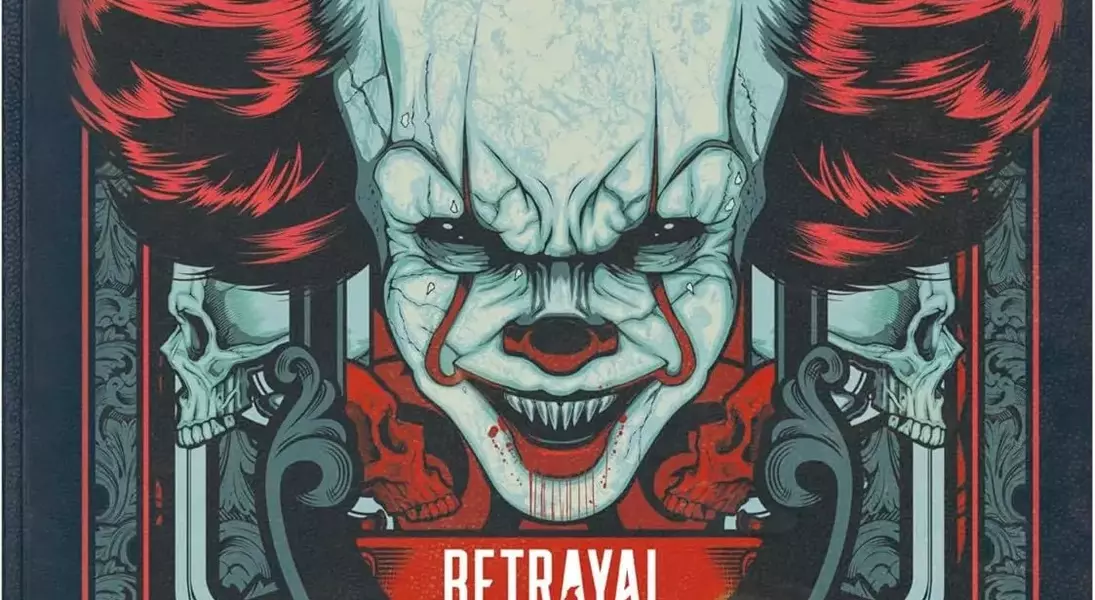

The "Evil of Pennywise" expansion for "Betrayal at House on the Hill" immerses players in the chilling universe of Stephen King's "It." Drawing heavily from the HBO Max series "It: Welcome to Derry" and Andy Muschietti's film adaptations, this expansion eschews lengthy introductions, immediately thrusting players into a fight against the notorious Pennywise the Clown. Designed for three to six participants, the game casts players as former child survivors from Derry, Maine, who must return to confront a reawakened Pennywise, twenty-seven years after their initial triumph. This narrative setup allows for a rich, continuity-driven experience that resonates with fans of King's horror lore, while the gameplay mechanics, though challenging, aim to evoke the pervasive dread associated with the terrifying entity.
Mechanically, "The Evil of Pennywise" builds upon the established framework of the third edition of "Betrayal at House on the Hill," introducing a handful of new elements to enhance the thematic horror. It replaces the original Omen cards with ten "Pennywise Encounter" cards and adds four unique location tiles, yet largely retains the core gameplay loop. Players collaboratively construct the haunted house by drawing and placing tiles, revealing items and supernatural occurrences that alter character statistics. The accumulation of event cards eventually triggers a "Haunt," where players must achieve specific win conditions to survive. The expansion includes five new Haunts, directly inspired by King's narrative. Some of these transform one player into a "Traitor," creating a dynamic many-versus-one scenario, while others present cooperative challenges against automated adversaries, all designed to test players' strategic thinking and resilience against overwhelming odds.
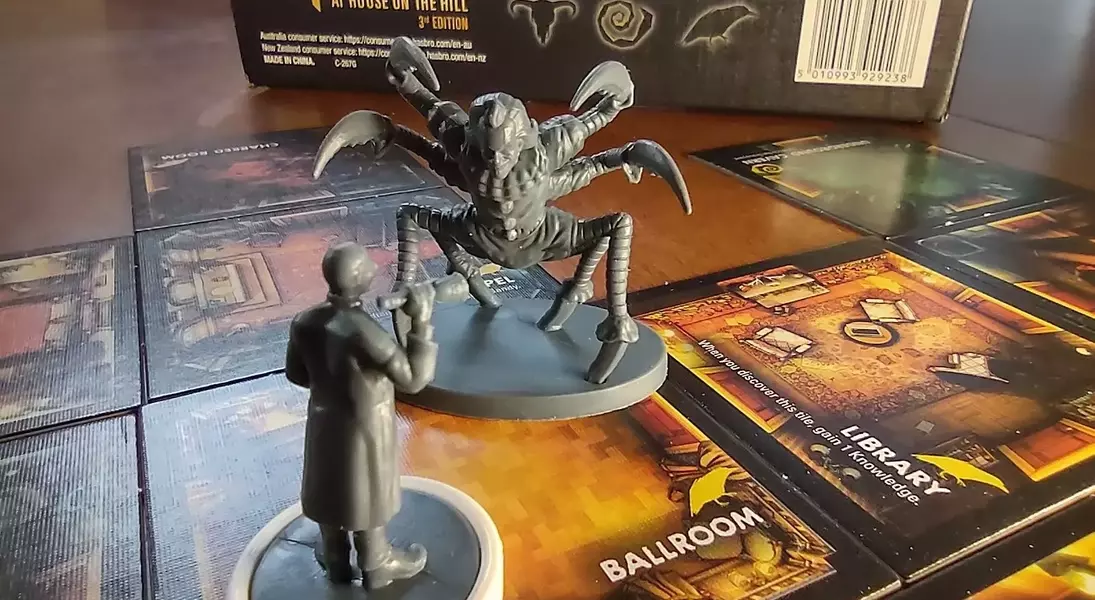
While the expansion successfully captures the unsettling atmosphere of the "It" universe, its difficulty and content volume have drawn some observations. The Haunts, particularly those involving a knife-wielding Henry Bowers or a mutant spider-clown Pennywise, are commendably eerie and thematic. However, their impact can vary based on players' familiarity with the source material, with those unacquainted with "It" potentially finding the more creature-focused encounters more terrifying than the psychological ones. Furthermore, the expansion's high lethality often leads to early player elimination, a common point of contention in the base game that can leave some players disengaged. Priced at $25, the expansion provides new tiles, cards, and character miniatures. Despite the perceived limited number of Haunts compared to other expansions, the thrilling sense of peril and the razor-thin margins of victory create an incredibly rewarding, if intense, gaming experience that authentically channels the pervasive fear embodied by Pennywise.
The game masterfully instills a sense of being outmatched, reflecting the struggle against a formidable evil in the face of overwhelming fear and power. Despite the inherent terror of Pennywise, the expansion encourages collaboration and strategic thought, highlighting the power of collective resilience against seemingly insurmountable odds. It reminds us that even in the darkest of narratives, courage and unity can lead to triumphant, albeit hard-won, victories.
