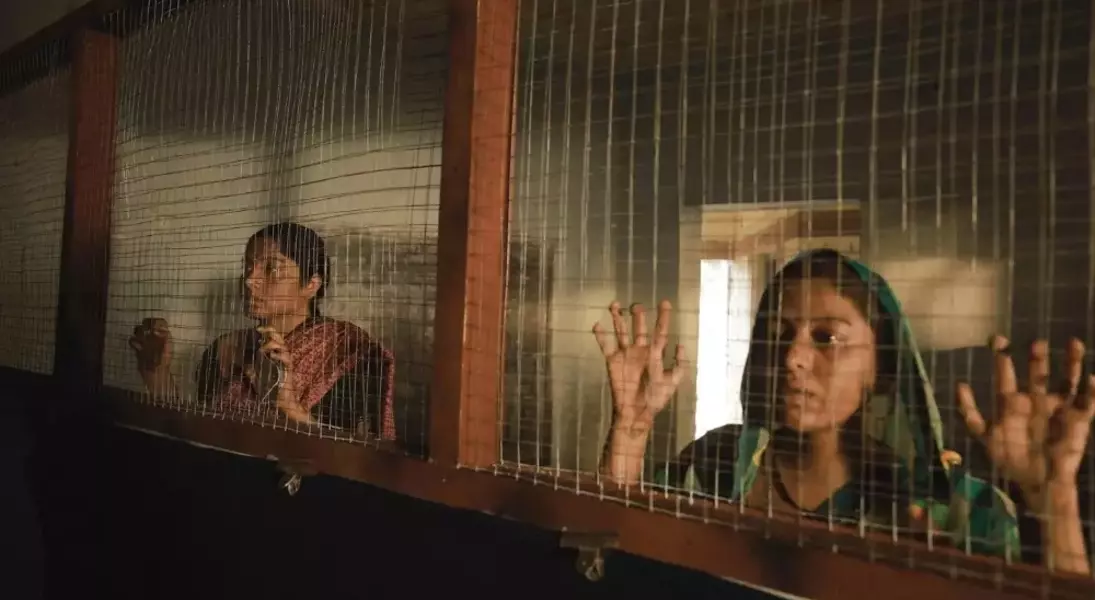
The Bengaluru International Short Film Festival (BISFF) is set to host its 16th edition, showcasing an unprecedented array of cinematic talent. This year's festival expands its competitive landscape to include ten distinct film categories, introducing groundbreaking sections for films integrating artificial intelligence and those dedicated to screendance. The organizers have reported a remarkable influx of submissions, totaling 3,340 entries from more than one hundred nations, reflecting the festival's increasing prominence on the global stage. This comprehensive event anticipates welcoming over 5,000 delegates and more than a thousand filmmakers and artists.
Bengaluru International Short Film Festival Embraces Innovation and Global Talent
Commencing on July 31, 2026, the Oscar-qualifying Bengaluru International Short Film Festival (BISFF) proudly unveiled its expanded 16th edition, broadening its scope to ten distinct cinematic categories. A significant highlight is the introduction of dedicated competitions for films conceived or executed with artificial intelligence, dubbed 'Machine Made Movies,' and 'Dancing Lens,' a segment celebrating screendance where choreography and cinematography are inextricably linked. The festival's enduring Oscar-qualifying sections—International, Indian, and Animation—continue to draw immense talent.
This year has witnessed an extraordinary surge in submissions, with 3,340 entries pouring in from over 100 countries. Among these, 1,726 originated from international creators, 756 from India, and 306 specifically from Karnataka. Furthermore, the festival received 284 animation entries, alongside 118 each in the burgeoning queer, AI film, and screendance categories. Organizers anticipate a vibrant gathering of over 5,000 delegates, accompanied by more than a thousand filmmakers and artists.
Anand Varadaraj, the visionary founder and artistic director of BISFF, reminisced about the festival's humble beginnings sixteen years prior, when it emerged from a collective desire to provide a genuine platform for emerging talent. He highlighted the festival's remarkable evolution from featuring merely 30 films to now processing over 3,000 submissions, noting that many alumni have gone on to achieve Oscar recognition. Varadaraj underscored the festival's commitment to treating short films with the seriousness they deserve, asserting that the most dynamic cinematic expressions today often reside in works under thirty minutes.
The 2026 edition is anchored by the theme “ACT,” which is thoughtfully structured around three guiding principles: Do, Perform, and Behave. Festival organizers proudly announced that every competitive category this year boasts more than 30 titles from both India and abroad, marking the most extensive lineup in the festival’s history. Varadaraj commended the exceptional quality of this year’s submissions, describing the selection process as his most challenging yet. He emphasized the rigorous re-evaluation of shortlists to guarantee equitable assessment and ensure the final program truly represents the finest submitted works, expressing his hope that audiences will relish discovering these films as much as the team enjoyed curating them.
The international competition will present 28 films making their Indian debut. Notable selections include Hugo Becker's “La Ligne de Vie (The Lifeline)” from France, Amir Zaza's “Close Your Eyes Hind” from the Netherlands, Alexandra Strunin’s “I Gaze at the Sky” from Poland, Coke Arijo’s “The Written Hour” from Spain, and Hayato Otogi’s “Round and Round” from Japan. An esteemed panel comprising Maike Hohne, an artistic director from Hamburg, Germany; Indian filmmaker Umesh Vinayak Kulkarni; and international film critic Christopher Dalton will adjudicate this section.
More than 20 Indian films are set to make their public premiere at BISFF. Highlights feature “Hudke Ki Pyaang Pyaang, Dhol Ki Ghamaika” by Arun N. Fulara, “Small Clouds” by Shubham Sumit, “Aasmani” by Sayani Gupta, “Bandini” by Deepti Chawla, “Mehta & Co.” by Rohit Sen, and Mehar Malhotra's “Shadows Of The Moonless Nights,” which recently garnered acclaim at La Cinef in Cannes. The Indian jury consists of Sridhar Rangayan, Sulakhyana Baruah, and Devanshu Singh.
The newly introduced AI Films Competition aims to delve into the transformative influence of artificial intelligence on storytelling, prompting vital discussions about creative authorship and the evolving trajectory of filmmaking. Beyond film screenings, BISFF 2026 will facilitate three crucial industry initiatives: the Discovery Film Market with a Producer Bazaar, connecting over 100 filmmakers with more than 50 buyers, distributors, broadcasters, OTT platforms, and financiers; the Echoes Film School Conference, a collaboration with RV University; and a series of panels, workshops, and masterclasses that have previously featured luminaries such as Shoojit Sircar, Sriram Raghavan, Naseeruddin Shah, and Mahesh Narayanan. Industry dialogues this year will explore themes such as “New Pathways for Global Distribution” and “Vertical Cinema: The Next Screen?”, focusing on innovative distribution models and the growing trend of mobile-first viewing experiences. The festival boasts an annual attendance of over 5,000 delegates and accrues more than 300,000 website hits each year, underscoring its significant reach and impact. The in-person festival will take place from August 14-16 across various venues, including Suchitra Film Society, RV University, LitSchool, Knowledgium Academy, Bangalore International Centre, Indian Heritage Academy, Alliance Française, and Goethe Institut – Max Muellar Bhavan, complemented by an online component accessible from August 6-16.
The expansion of the Bengaluru International Short Film Festival with new categories like AI-made films and screendance highlights a forward-thinking approach to cinema. This demonstrates a vital adaptation to technological advancements and evolving artistic expressions, ensuring the festival remains at the forefront of the global film landscape. It also underscores the importance of fostering platforms for diverse storytelling, particularly for short films which often serve as a crucial launching pad for emerging talent. The record number of submissions and broad international participation reflect a robust and thriving short film ecosystem, promising a rich and engaging experience for both creators and audiences.
