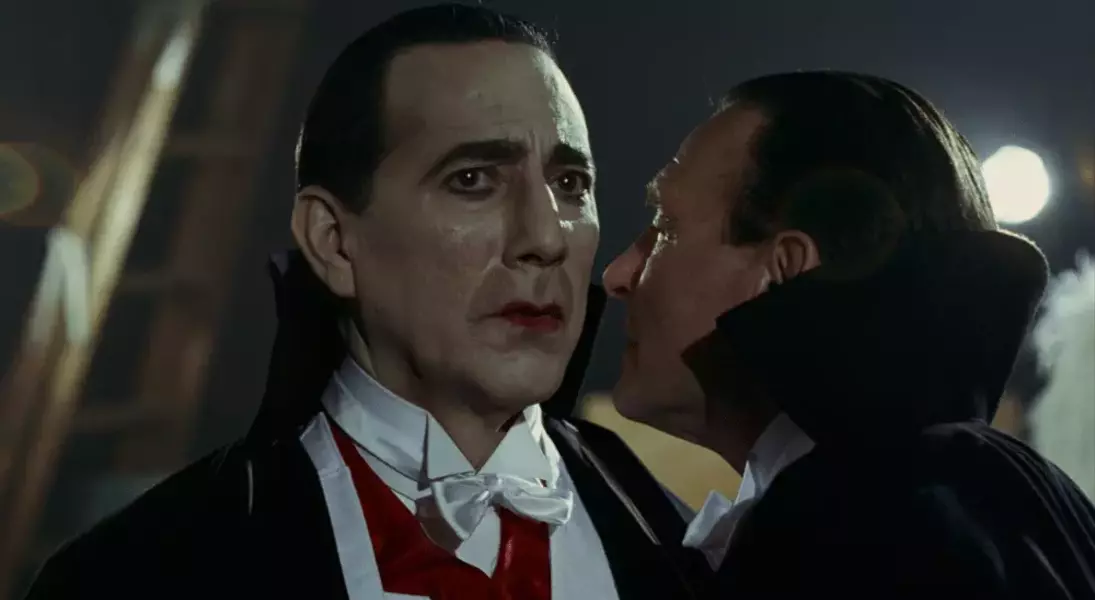
Craig Mitchell's 'Los Vampires' offers a fascinating exploration into the early days of sound cinema, specifically focusing on Universal's ambitious dual productions of 'Dracula' in 1931. The film, a fictionalized account based on real events, navigates the complexities and tensions that arose from shooting both English and Spanish versions of the iconic vampire tale on the same sets, with entirely different casts and crews. This unique cinematic endeavor, largely forgotten for decades, now serves as the backdrop for a narrative that blends historical homage with elements of horror and mystery, captivating audiences with its portrayal of a bygone era.
The dawn of 'talkies' presented significant challenges for the film industry. The need for expensive new equipment in theaters and the difficulty of exporting films to international markets pushed studios to innovate. Universal's decision to produce 'Dracula' in two languages simultaneously was one such solution. The English version, starring Bela Lugosi and directed by Tod Browning, became a legend. However, the Spanish counterpart, directed by George Melford and featuring Carlos Villarias as the Count, remained largely obscure until a 1990s resurgence led some critics to consider it the superior adaptation.
'Los Vampires', directed by Craig Mitchell, reimagines this historical curiosity. It draws parallels with films like 'Shadow of the Vampire,' crafting a fictional narrative around the real-life production. Henry Ian Cusick and Thomas Kretschmann portray the fictionalized versions of Villarias and Lugosi, capturing the competitive spirit and professional anxieties of immigrant actors vying for a career-defining role. The film delves into the clash of egos, which eventually gives way to a more chilling fear: the presence of a genuine killer, or perhaps even a real vampire, haunting the set.
The film's plot, while occasionally complex, attempts to balance horror, tribute, and detective elements. The atmospheric recreation of studio-Gothic sets stands out, although the limited use of black-and-white film-within-a-film sequences is a missed opportunity. Despite some tonal inconsistencies and evident budgetary constraints, the production design by Ricardo Jattan and costume work by Petra Larsen effectively evoke the period. The lead performances from Cusick and Kretschmann convincingly convey their characters' blend of insecurity and ambition, while Daniela Couso skillfully navigates her character's evolving complexities. The film concludes with an intriguing epilogue, providing an unexpected yet satisfying resolution to the narrative's lingering questions.
While Lugosi's 'Dracula' achieved widespread success, the Spanish version's modest box office performance influenced Hollywood's approach to foreign language productions. Rapid advancements in dubbing technology soon offered a more cost-effective alternative. However, Melford's version distinguished itself by being considerably longer, featuring distinct dialogue, narrative progressions, and costuming. Many who found Browning's rendition overly theatrical praised its doppelgänger for its more fluid cinematic style. Yet, despite its artistic merits, only one actor from this cinematic experiment achieved enduring legendary status: Bela Lugosi, leaving Carlos Villarias, who lived two decades longer, to a lesser-known legacy.
