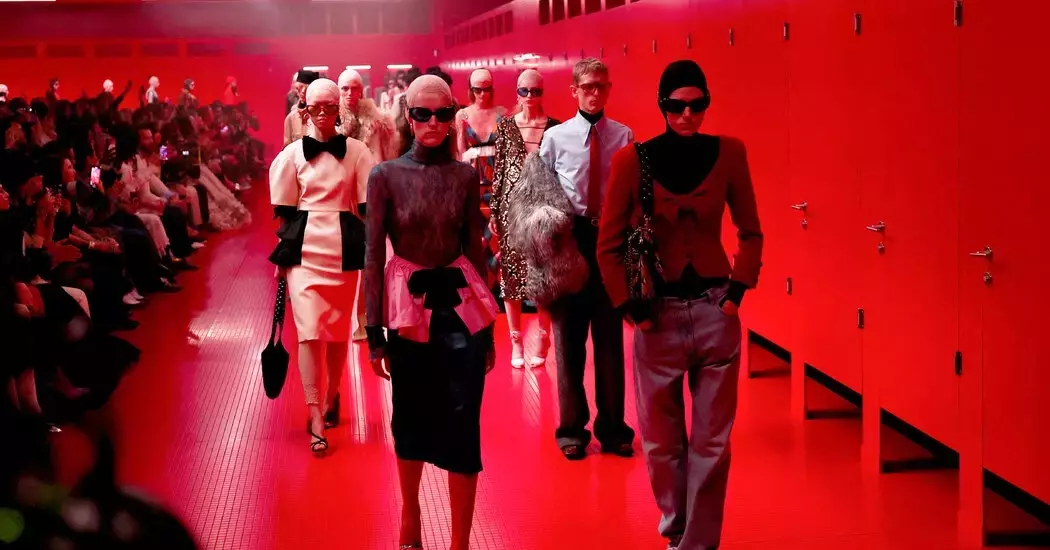
In the ever-evolving world of high fashion, recent runway shows have sparked both admiration and criticism. While brands like Valentino, McQueen, and Dior seem to struggle with their theatrical presentations, Balenciaga has managed to strike the right chord. This divergence highlights a growing issue in the fashion industry: the balance between creativity and practicality. Valentino’s recent show, set in an unconventional location resembling a public restroom, showcased extravagant designs that seemed more about spectacle than substance. This approach, while visually striking, raises questions about the purpose of fashion shows and whether they are becoming too focused on entertainment rather than innovation.
Valentino's Unconventional Runway Show and Its Implications
In the heart of Paris, during the autumn season, Valentino staged its fall 2025 collection in an unusual setting—a structure designed to mimic a large, gender-neutral public bathroom. The models emerged from toilet stalls adorned in elaborate garments, including lace dresses emblazoned with cat faces and polka-dot pants paired with floral neckties. Alessandro Michele, the creative director, intended this setup to explore the concept of "metatheater" and the transformation of private selves into public personas through clothing. However, the choice of venue inadvertently suggested a less favorable metaphor for the brand's future direction. This event exemplifies a broader trend in fashion where theatrics overshadow the essence of design, leading to a disconnect between the audience and the clothing itself.
On the other hand, Balenciaga's approach stood out for its focus on meaningful innovation. By avoiding excessive theatrics, the brand successfully connected with its audience, offering fresh perspectives on fashion without relying on over-the-top staging. This contrast underscores the importance of maintaining a balance between creativity and practicality in the fashion world.
The evolution of fashion shows has seen a shift towards entertainment, often at the expense of the core reason for these events—to present new and exciting designs. In the early 2000s, designers like Alexander McQueen and John Galliano used theatrical elements to tell compelling stories and create emotional connections with their audiences. Today, however, many designers seem to prioritize visual spectacle over substantive design, potentially alienating viewers who seek genuine innovation.
Ultimately, Balenciaga's success serves as a reminder that fashion should not only be visually appealing but also offer practical and innovative solutions for how we want to dress in the future. As the industry continues to evolve, it is crucial for designers to find ways to captivate audiences while staying true to the art of fashion.
From a journalist's perspective, this contrast between Valentino's and Balenciaga's approaches offers valuable insights. It challenges us to question the purpose of fashion shows and encourages designers to rethink their strategies. Perhaps, by focusing more on the essence of fashion—innovation, functionality, and storytelling—the industry can regain its lost connection with its audience. Balenciaga's triumph suggests that there is still room for creativity within the bounds of practicality, paving the way for a brighter future in fashion.
