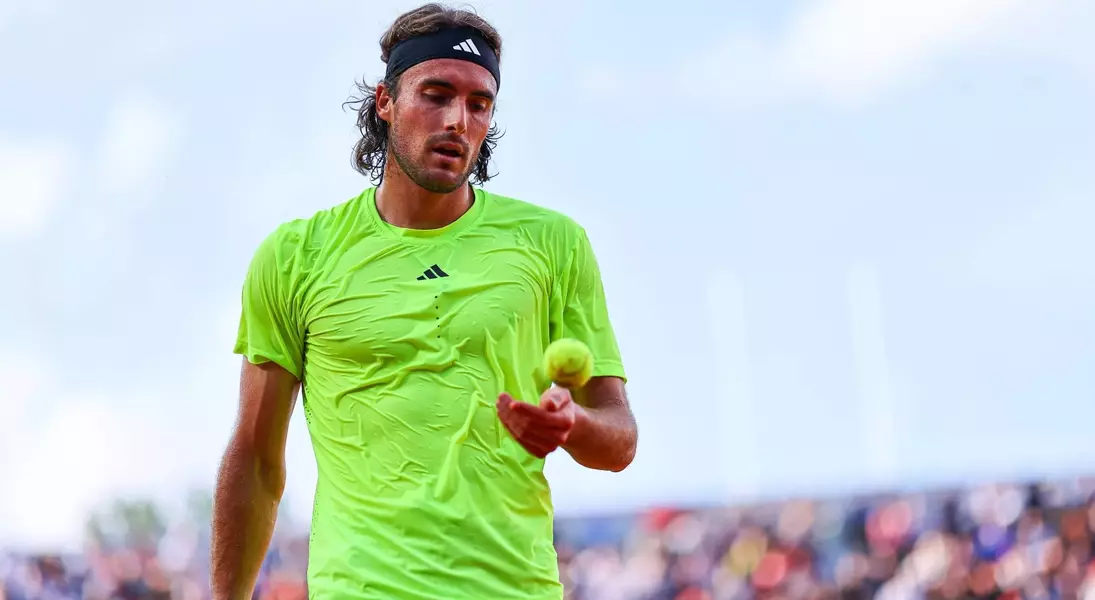
In the aftermath of Goran Ivanisevic's blunt remarks concerning Stefanos Tsitsipas's form, former Australian Open finalist Marcos Baghdatis has offered his measured opinion. Ivanisevic, who recently began coaching Tsitsipas, expressed significant disappointment following the Greek player's first-round retirement at Wimbledon, citing inadequate preparation. Baghdatis acknowledges the validity of Ivanisevic's observations but suggests a more private approach to such critiques, focusing on reigniting Tsitsipas's fundamental affection for tennis as key to his resurgence.
The partnership between Stefanos Tsitsipas and Goran Ivanisevic commenced shortly before Wimbledon, where their initial collaboration resulted in an unfortunate outcome. Tsitsipas was compelled to withdraw from his opening match against Valentin Royer, marking his twelfth defeat in thirty-one matches this year. This early exit prompted Ivanisevic to speak with Serbian media, where he openly criticized Tsitsipas's lack of readiness, expressing shock at what he perceived as an unparalleled level of unpreparedness.
Ivanisevic's comments were stark, emphasizing the need for Tsitsipas to resolve off-court issues to reclaim his position among the sport's elite. He noted a discrepancy between Tsitsipas's stated desire for improvement and his observed lack of progress. The coach controversially claimed his own physical condition, despite a knee injury, was superior, underscoring the severity of Tsitsipas's state.
Marcos Baghdatis, at 40 years old, later commented on the situation to UBI Tennis. He concurred with the essence of Ivanisevic's critique, asserting that approximately ninety-nine percent of what was said was likely accurate, given Ivanisevic's straightforward nature. However, Baghdatis diverged on the method of delivery, stating that if he were a coach, he would prefer to address such concerns directly with the player and team, rather than through public channels. He conveyed his hope that Ivanisevic's candidness would act as a catalyst for Tsitsipas, prompting him to confront his challenges and ultimately rediscover his passion for the game, propelling him back to his rightful place at the top of the sport.
The current period appears to be one of introspection for Tsitsipas, as indicated by Baghdatis's observation that the player is currently experiencing self-doubt. This sentiment is understandable for an athlete navigating a difficult phase in their career. The challenge now lies in how Tsitsipas responds to this constructive, albeit publicly delivered, criticism and whether he can harness it to reignite his competitive spirit and once again embrace the demanding world of professional tennis.
