Jeremy Ford, a farmer in Homestead, Florida, despises wasting water. As a light rain misted his 5-acre farm, he lamented the high cost of running an irrigation system. Earlier that month, he installed an automated underground system powered by a solar pump to periodically saturate his crops' roots, saving "thousands of gallons of water." He views such climate-friendly investments as a necessary expense and more affordable than expanding his two-person workforce. "It's much more efficient," Ford said. "We've tried to figure out 'How do we do it?' with the least amount of adding labor."
Automation's Impact on Agriculture
A growing number of companies are bringing automation to agriculture. It has the potential to ease the sector's labor shortage and help farmers manage costs. Automation can also enhance yields by providing greater accuracy in planting, harvesting, and farm management.Automating Row Crops
On some farms, driverless tractors operate through acres of corn, soybeans, lettuce, and more. While such equipment is expensive and requires mastering new tools, row crops are relatively easy to automate. However, harvesting small, non-uniform, and easily damaged fruits like blackberries or big citruses poses a greater challenge due to the need for strength and dexterity.Xin Zhang, a biological and agricultural engineer at Mississippi State University, is working with a team at Georgia Institute of Technology to apply automation techniques used by surgeons and the object recognition power of advanced cameras and computers to create robotic berry-picking arms. These arms can pluck the fruits without creating a sticky purple mess. Although robotic harvesting is not yet widespread, some products have entered the market and can be seen in action from Washington's orchards to Florida's produce farms. "I feel like this is the future," Zhang said.Challenges and Doubts
Not all farmers and producers are convinced of the benefits of automation. Frank James, executive director of Dakota Rural Action, grew up on a cattle and crop farm in northeastern South Dakota. His family once employed farmhands but had to cut back due to the lack of available labor. Now, much of the work is done by his brother and sister-in-law, with his 80-year-old father pitching in. They rely on tractor autosteer, but it can't identify moisture levels in the fields, which can hinder tools or cause the tractor to get stuck and requires human oversight.The technology also complicates maintenance. James doubts that automation will become the "absolute" future of farm work. "You build a relationship with the land, with the animals, with the place that you're producing it. And we're moving away from that," he said.Combating Climate Change and Labor Challenges
Tim Bucher grew up on a farm in Northern California and has been in agriculture since he was 16. Climate change has brought new challenges, such as regular triple-digit temperatures and smoke ruining entire vineyards. Inspired by these challenges and his farming experience combined with his Silicon Valley engineering and startup background, he founded Agtonomy in 2021. The company works with equipment manufacturers like Doosan Bobcat to make automated tractors and other tools.Since pilot programs started in 2022, Bucher says the company has been "inundated" with customers, mainly vineyard and orchard growers in California and Washington. Will Brigham, a dairy and maple farmer in Vermont, sees such tools as solutions to the nation's agricultural workforce shortage. "A lot of farmers are struggling with labor," he said, citing "high competition" with jobs where "you don't have to deal with weather."Mechanizing Arduous Tasks
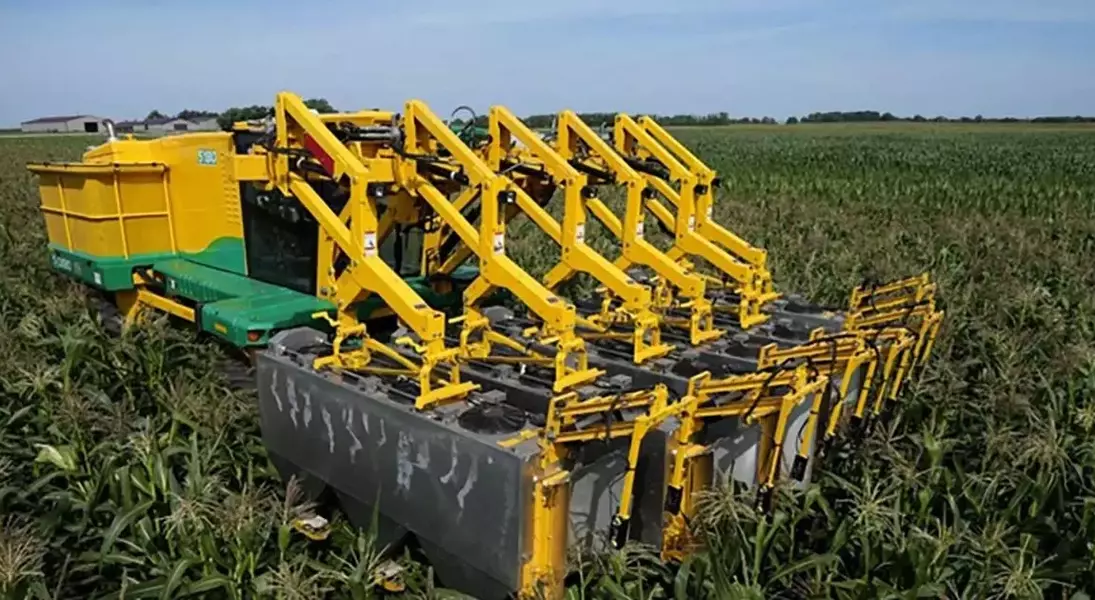
Detasseling corn used to be a rite of passage for some young people in the Midwest. But extreme heat, drought, and intense rainfall have made this labor-intensive task more difficult. Now, it's often done by migrant farm workers. Jason Cope, co-founder of farm technology company PowerPollen, believes it's essential to mechanize arduous tasks like detasseling. His team created a tool that a tractor can use to collect pollen from male plants without removing the tassel, which can then be saved for future crops."We can account for climate change by timing pollen perfectly as it's delivered," he said. "And it takes a lot of that labor that's hard to come by out of the equation."Worker Concerns
Erik Nicholson, who previously worked as a farm labor organizer and now runs Semillero de Ideas, a nonprofit focused on farmworkers and technology, has heard from farm workers concerned about losing work to automation. Some are worried about working alongside autonomous machines and are hesitant to raise issues for fear of losing their jobs.Luis Jimenez, a New York dairy worker, agrees. He described one farm using technology to monitor cows for sicknesses. These tools can sometimes identify infections sooner than a dairy worker or veterinarian. But they can also reduce the number of people needed on farms and put extra pressure on the remaining workers. That pressure is heightened by increasingly automated technology like video cameras used to monitor workers' productivity. "Automation can be 'a tactic, like a strategy, for bosses, so people are afraid and won't demand their rights,'" Jimenez said. "We don't want to be replaced by machines."Associated Press reporters Amy Taxin in Santa Ana, California, and Dorany Pineda in Los Angeles contributed.