The 2025 iteration of the Asus TUF Gaming A16 presents a compelling, albeit somewhat contradictory, proposition in the realm of entry-level gaming laptops. While it harnesses a powerful AMD Ryzen 7 260 processor, delivering performance comparable to higher-tier Intel and AMD chips, its NVIDIA GeForce RTX 5050 GPU, though efficient, contributes to a price point that might deter budget-conscious consumers. This machine excels in handling contemporary games with ease and offers a wide array of connectivity options, yet its considerable weight and fan noise during intense gaming sessions highlight certain trade-offs. The laptop's battery life also reveals a notable disparity between casual use and demanding gaming, underscoring the importance of portability considerations for potential buyers. Ultimately, the TUF Gaming A16 demonstrates impressive capabilities, but its market position suggests that a more competitive price would solidify its appeal.
Detailed Analysis of the Asus TUF Gaming A16 (2025) Performance and Features
In the fiercely competitive landscape of gaming hardware, the Asus TUF Gaming A16 (2025) emerges as a notable contender, blending a capable processor with an entry-level graphics card to offer a robust gaming experience. Priced at approximately £1,400, this machine is equipped with an AMD Ryzen 7 260 CPU from the Hawk Point generation, featuring eight Zen 4 cores capable of boosting up to 5.1 GHz. This robust CPU performance allows the A16 to rival laptops sporting Intel Core i7 and Ultra 7 chips, as well as AMD Ryzen AI 7 series processors, showcasing its unexpected processing prowess.
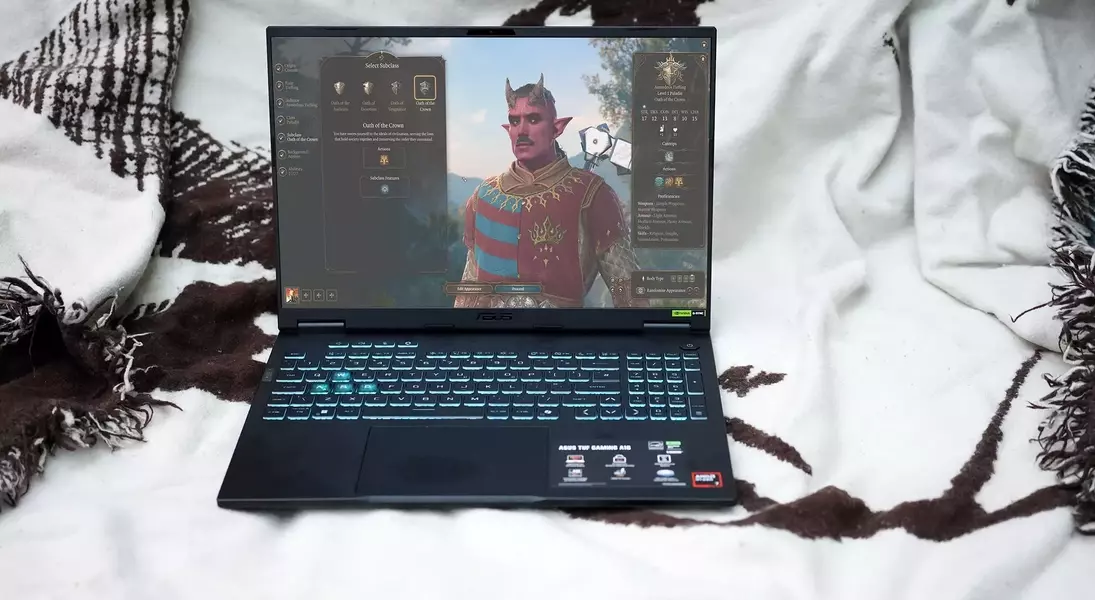
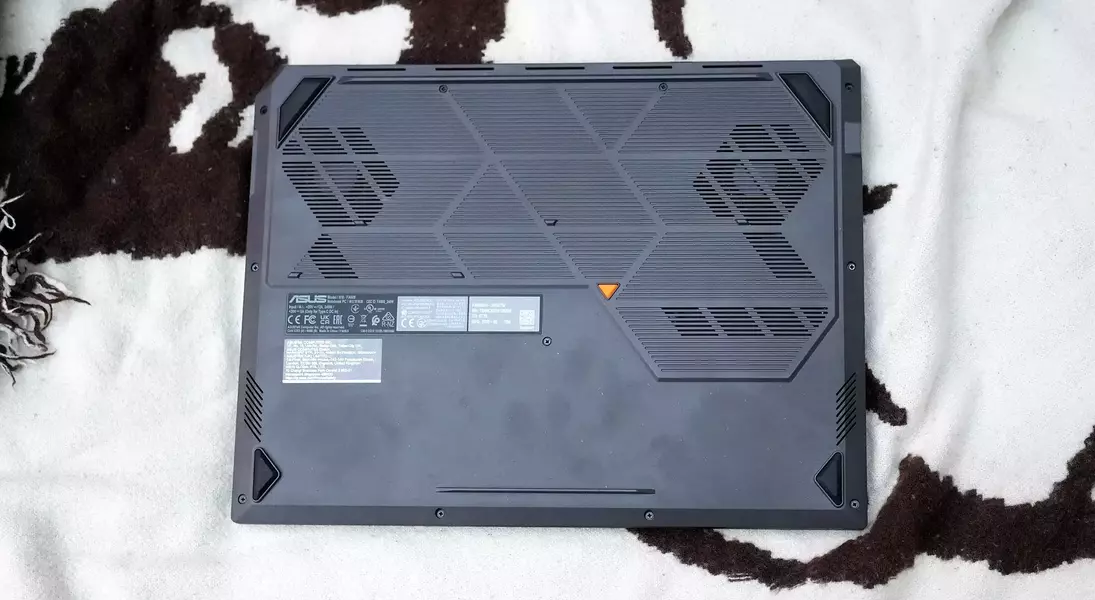
Complementing its powerful CPU is an NVIDIA GeForce RTX 5050 GPU with 8GB of VRAM. While categorized as entry-level, this 55W GPU can dynamically draw up to 115W of power, allowing it to perform impressively, often matching or even surpassing the performance of some 5060 GPUs in real-world gaming scenarios. For instance, in games like 'Baldur’s Gate 3', the A16 delivers a performance on par with systems boasting higher specifications. However, this high power draw also translates to increased heat generation and fan noise, especially when operating in the Asus Armoury Crate software's 'Turbo' mode, necessitating the use of a gaming headset for optimal comfort.
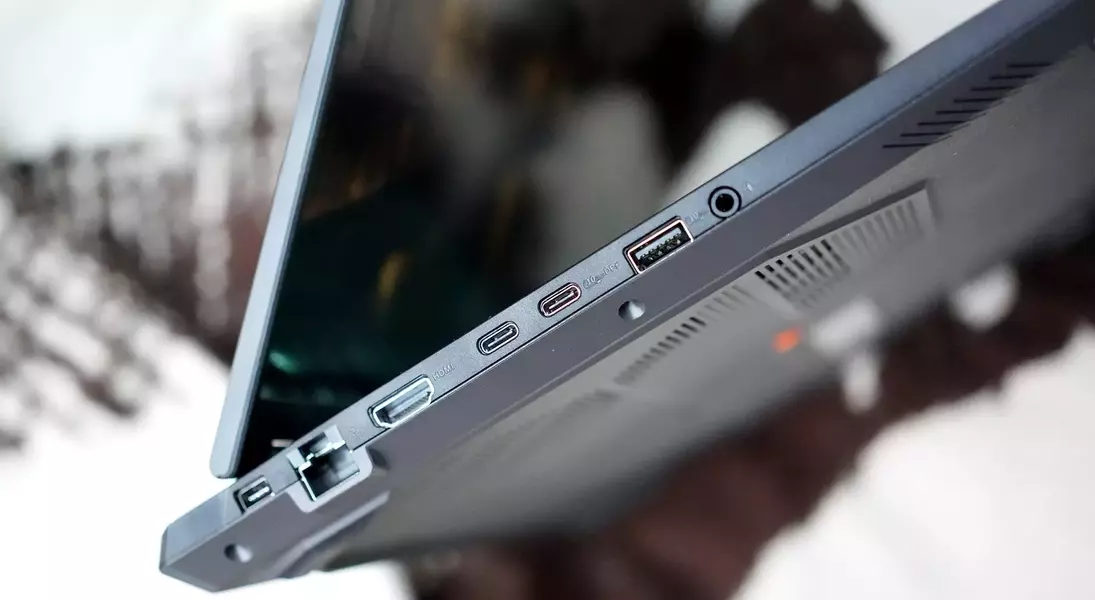
The A16's display is a 16-inch IPS panel, offering a resolution of 1920 x 1200 and a refresh rate of 165Hz. With a brightness of 385 nits, it provides vivid visuals for gaming. While it covers 100% of the sRGB color gamut, its performance in wider color spaces like Adobe RGB and DCI-P3 is around 80%, indicating that professional creative tasks requiring precise color accuracy might necessitate an external monitor. In terms of connectivity, the laptop is generously appointed with a single USB4 port (clearly labeled for user convenience), a USB 3.2 Type-C port, three USB-A ports, an HDMI 2.1 output, an Ethernet port, and a 3.5mm audio jack, ensuring comprehensive peripheral support.
Powering this setup is a substantial 90 Wh battery. Under lighter loads, such as video playback when the dedicated NVIDIA GPU is inactive and the CPU's integrated Radeon 780M cores take over, the laptop can achieve nearly eight hours of battery life. However, engaging in intensive gaming tasks that activate the RTX 5050 drastically reduces battery endurance to just over an hour, emphasizing the need for the charger during extended gaming sessions. Despite its solid build and an array of features designed for gaming, the Asus TUF Gaming A16 (2025) faces stiff competition from similarly priced or even more affordable alternatives from brands like Gigabyte and Lenovo, which offer 5060 GPUs. This places the A16 in a position where potential buyers might benefit from waiting for promotional discounts to make it a truly compelling value proposition.
From a gamer's perspective, the Asus TUF Gaming A16 embodies the spirit of a spirited underdog. Its ability to punch above its weight class, particularly with its powerful CPU and an RTX 5050 that performs beyond expectations, is genuinely impressive. It challenges the conventional wisdom that higher-tier components are always necessary for a satisfying gaming experience. However, this laptop also serves as a stark reminder of the delicate balance between performance, heat management, and pricing. While it capably handles modern titles and offers excellent connectivity, its relatively high cost at launch and the accompanying thermal and acoustic characteristics suggest that the path to market dominance for entry-level gaming machines is paved with aggressive pricing and refined engineering. For those willing to wait for a discount, this robust machine could offer considerable value, proving that sometimes, less is more when intelligently designed.
